


In a frenetic digital era, he's helping Angelenos rediscover the classic cassette player
This is read by an automated voice.Please report any issues or inconsistencies here.
Stepping into Jr.Market boutique in Highland Park is like entering a 1980s time warp.
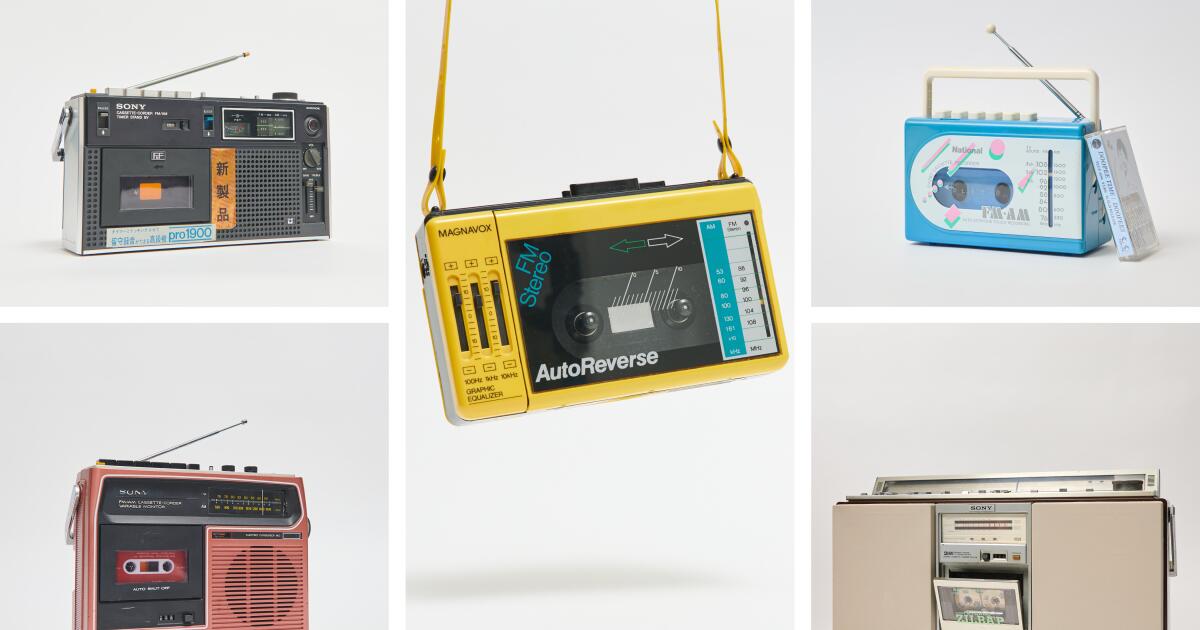
Built into a refurbished shipping container, it’s filled with everything from tiny Walkman-style portables to colorful, number-flip clock radios and, naturally, boomboxes of all sizes.Few are more imposing than the TV the Searcher, a Sharp boombox from the early ‘80s that features a built-in, 5-inch color television.“Try lifting it, it’s really heavy,” warns Spencer Richardson, the shop’s owner.
Indeed, the machine is at least 15 pounds without the 10 D batteries that power the unit.He adds, “I don’t think you’re taking this to the beach so you could watch TV while you listen to music.”An affable, hyper-knowledgeable proprietor in his early 30s, Richardson repairs and resells analog music technology from the 1980s or earlier.
In bringing these rehabbed players back into circulation, he’s helping others rediscover a musical format once left for dead.While his hobby-turned-side hustle started as “a gateway to discover sounds” that he otherwise would not have heard, it now attracts curious customers willing to drop $100-plus for a vintage Technics RS-M2 or My First Sony Walkman.
His customers include older baby boomers and Gen X‑ers nostalgic for the players of their childhood, but most have been millennials like himself, drawn to something tactile and analog in an era when everything else disappears into the digital ether.Unlike turntables, which have become increasingly high-tech thanks to the “vinyl revival” of the last 20 years, almost all cassette players in current production rely on the same, basic tape mechanism from Taiwan, Richardson explains.Though cassette culture is enjoying its own period of rediscovery — albeit on a far smaller scale — he hasn’t seen a market emerge for newly engineered tape decks.
And he’s fine with that.“I’m not one ...