


After exile, California tribes could help run their ancestral redwoods again
This is read by an automated voice.Please report any issues or inconsistencies here.
Daniel Felix, 10, looks out from atop a gargantuan stump of an old-growth redwood on his tribe’s ancestral land.Once, this forest on California’s North Coast was replete with the ancient behemoths that can live beyond 2,000 years.
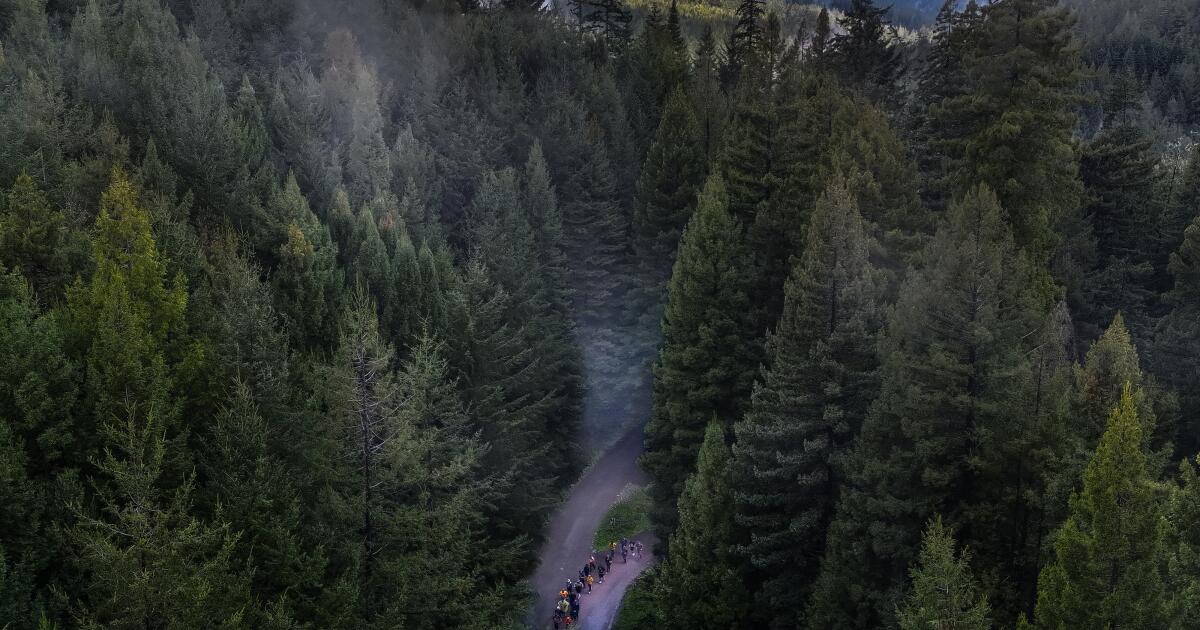
Only a fraction are left now, depleted by a logging company before the state acquired the forest in the 1940s.This is unique public land, Jackson Demonstration State Forest, spanning 50,000 acres.
Trees are plentiful here, but they might not live a millennium.California’s 14 demonstration forests are required to produce and sell timber to show — or “demonstrate” — sustainable practices.
Money from logging — roughly $8.5 million a year — pays for management of the forests by the California Department of Forestry and Fire Protection, or Cal Fire.Daniel’s tribe, the Coyote Valley Band of Pomo Indians, has pushed to rein in the cutting — spearheaded by his late great-grandmother, Priscilla Hunter.
They’re part of a diverse coalition that includes environmental activists, local politicians and other tribes.Now they may finally get their wish.
Assemblymember Chris Rogers (D-Santa Rosa) has introduced a bill that would nix the forests’ logging mandate, instead prioritizing values such as carbon storage, wildfire resilience and biodiversity.The bill represents the latest chapter in a region legendary for fierce battles over logging, and it marks an uncommon alliance between tribes and the environmental movement.
Under Assembly Bill 2494, there could still be logging, but it would have to support those new principles, and the forests would be funded differently.And it proposes another significant change.
It would pave the way for giving tribes a say in managing the lands for the first time since they were forcibly evicted more than a century ago, and for integrating Indigenous knowledge — like cultural burning — into the fo...