


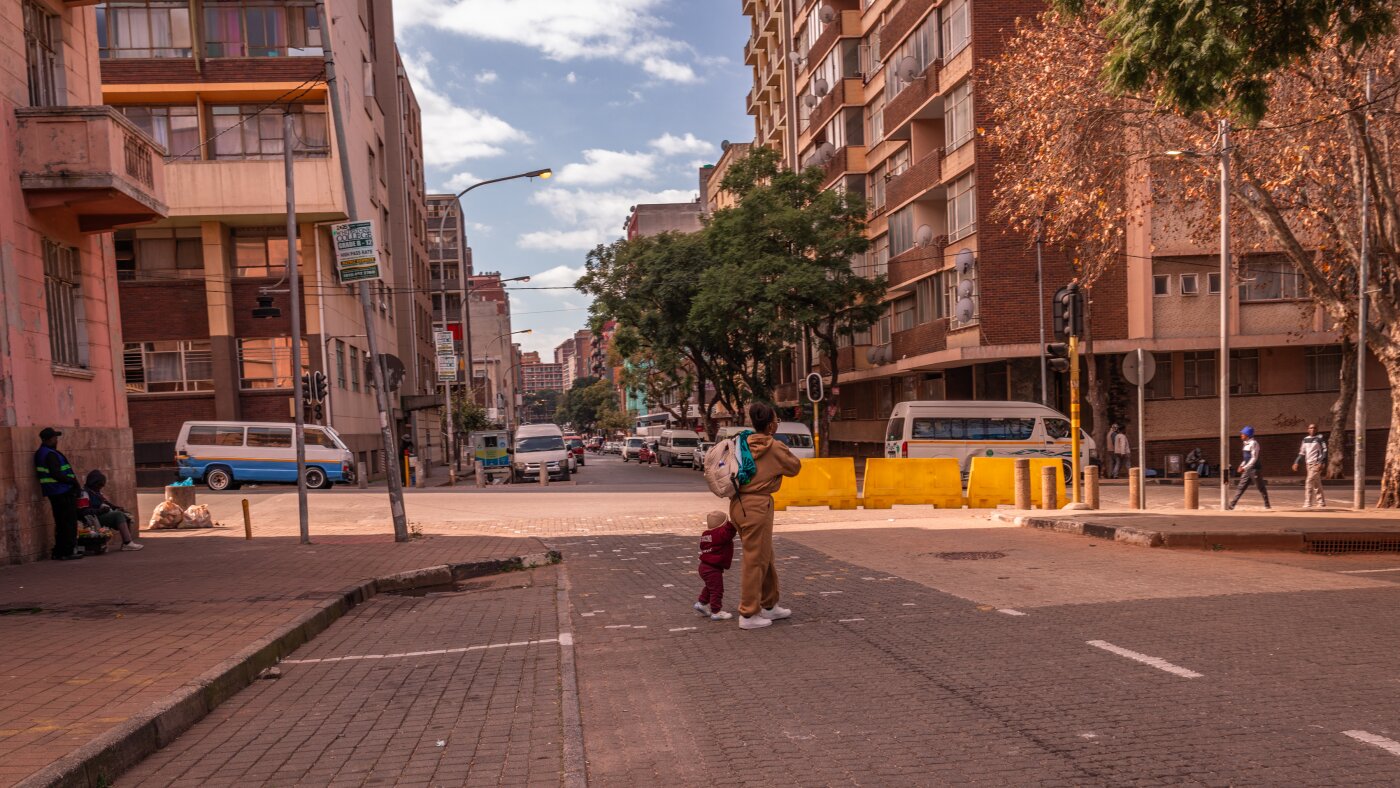
People queue outside the Unjani Clinic in Braamfischerville, Soweto, Johannesburg, South Africa on May 25, 2026.Gulshan Khan for NPR hide caption This essay first appeared in the Up First newsletter.
Sign up here.It can be hard to remember what the HIV/AIDS epidemic in Africa looked like decades ago: Hospitals across the continent were overwhelmed with young men and women, dying excruciating deaths.South Africa was at the center of the epidemic.Activist Lucky Mazibuko remembers, vividly.He told me that at the time, the country "was filled with the stench of death."It seemed, he went on to say, that there would be no end to the suffering."There was no hope, there was basically no light," he told me.
"And even if there was a light at the end of the tunnel, it looked like that of an oncoming train." The Esselen Clinic, which is situated on the same street as the WITS RHI Women's Health Clinic continues to operate with patients lining up outside on Esselen street, Hillbrow, Johannesburg, South Africa on May 25, 2026.Gulshan Khan for NPR hide caption PEPFAR changed everything — across the continent.President George W.
Bush announced the President's Emergency Plan for AIDS Relief, or PEPFAR, in January 2003.The program is often cited as the most effective public health campaign ever, and is estimated by the State Department to have saved roughly 26 million lives since its inception.
And for decades, the program enjoyed widespread bipartisan support.But the Trump administration has radically changed the way the U.S.delivers foreign assistance, making sharp cuts and creating uncertainty about future funding.
So as my colleagues and I tracked these developments, we wanted to see first-hand what these sweepin...