


'DTF St. Louis' begins with sex, death and 'deviancy.' Then things get really interesting
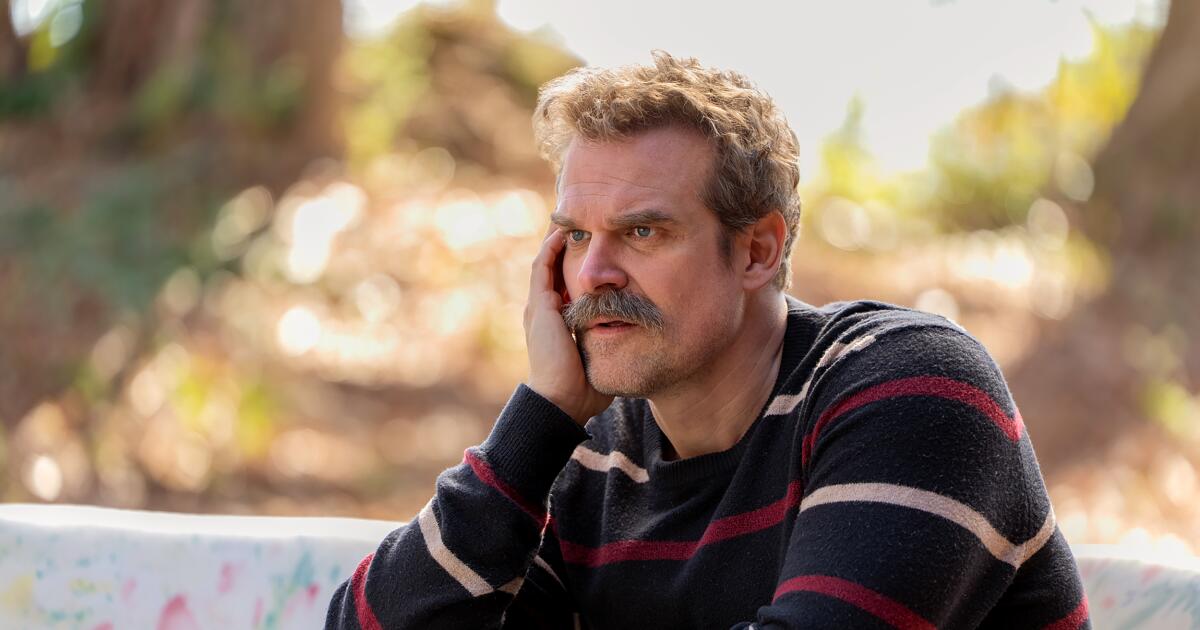
The suburban malaise subgenre of murder mystery is thriving, from “Big Little Lies” to “All Her Fault.” At first glance, HBO’s limited series “DTF St.Louis” resides among those tree-lined streets, insidious rot lurking beneath manicured lawns.
But creator Steven Conrad and star-executive producer David Harbour have distinctly different aims, including truth and beauty.Just not the truth and beauty one might expect.“We set up a lot of ‘ballistics’ early on,” says Harbour.
“We give you a [death], an app with a lot of deviancy; we give you that it’s going to be about sex.Then Steve pays them off in ways that do not satisfy your lurid expectations; in a way that is beautiful.”“DTF” finds TV weatherman Clark (Jason Bateman) befriending underemployed American Sign Language interpreter Floyd (Harbour) and his accounting clerk/Little League umpire wife Carol (Linda Cardellini).
Each has a ravenous need, the pursuits of which lead to a complex entanglement ending in one’s death.The show explores middle-age desperation, loneliness and, notably, masculinity and male friendship.
With a light, humanistic touch, it delves into kinks without shaming, asserting that “No one’s normal.It just looks like that from across the street.”The characters are “trying to find some emotional light switch,” says Conrad.
“Floyd was contending with very heavy-duty depression and found some joy and a measure of peace that summer … One of the feats of David’s performance is to be lovely and soulful, but also to have this heaviness, this mounting despair.”The nonlinear narrative structure seduces viewers into filling in the blanks themselves — as Conrad puts it, one looks for a bad guy — but “DTF” is a twisty crime drama with no villains.“Steve loves his characters beyond many other writers I’ve met.He invests them with so much humanity,” says Harbour.
“What he gives you is a somewhat depressing reality, but [also] the truth of...