


1,000 times faster than Hubble: Up close with the NASA space telescope meant to unlock the cosmos
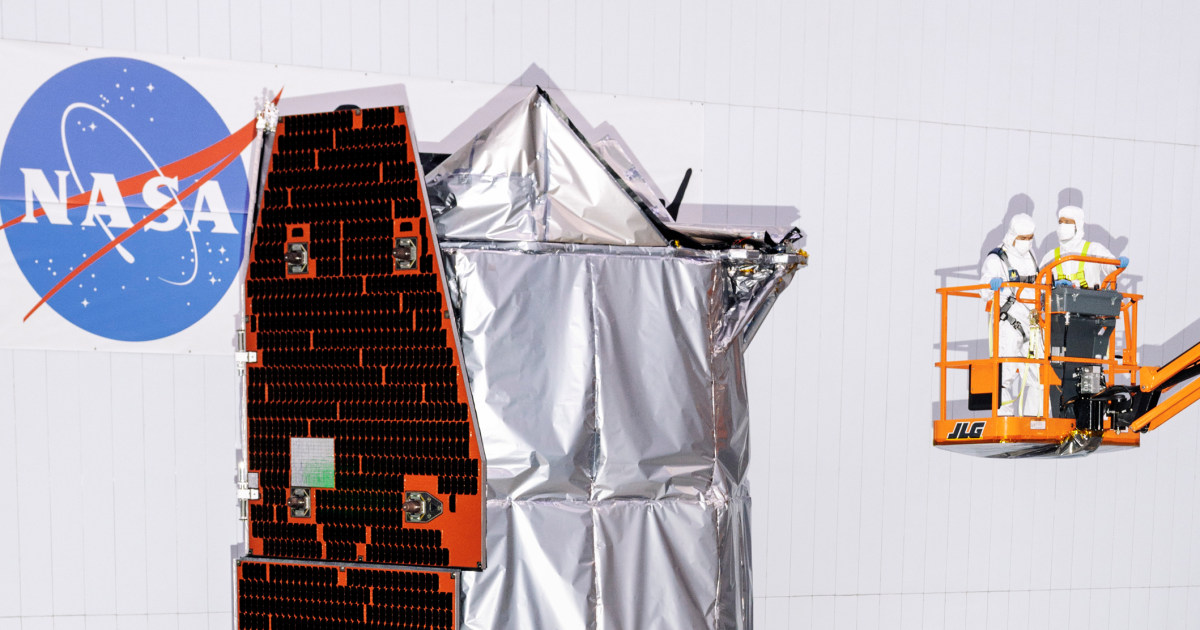
GREENBELT, Md.— It’s go time for NASA’s next-generation space telescope.Subscribe to read this story ad-free Get unlimited access to ad-free articles and exclusive content.After nearly two decades of development, $4.3 billion and the labor of hundreds of scientists and engineers, the Nancy Grace Roman Space Telescope is less than three months from launch.From a point roughly 1 million miles from Earth, the telescope is expected to survey the cosmos, capturing panoramas of hundreds of millions of stars and billions of galaxies.
With this observatory, NASA hopes to unravel the secrets of dark matter and dark energy and discover thousands of planets beyond our solar system.The Roman telescope inside the Spacecraft Systems Development and Integration facility at Goddard.Jason Andrew for NBC NewsThat’s because Roman will be able to survey and map more of the sky than ever before, at a pace hundreds of times faster.Julie McEnery, the senior project scientist for the Roman telescope here at NASA’s Goddard Space Flight Center, said that in just one month of data collection, Roman will be able to peer at underexplored parts of the Milky Way to study stars across a deep slice of the galaxy, building an astronomical catalog far larger than any that exists today.“In the mission’s first five years, it’s expected to unveil more than 100,000 distant worlds, hundreds of millions of stars, and billions of galaxies,” she said.Julie McEnery is the senior project scientist for the Roman telescope at Goddard.Jason Andrew for NBC NewsThe Nancy Grace Roman Space Telescope, named after the woman who became NASA’s first chief of astronomy in 1959, will join roughly a dozen space telescopes that the agency has in operation focused on a range of science targets.NBC News got a rare, up-close look at the telescope during its final days in the clean room, where NASA has assembled it piece by piece over the past decade.
By the end of this month, the bus-sized observatory ...