


There is a new golden rule of combat: The side that controls the data pipeline controls the war.Picture a soldier on the battlefield.They spot an enemy target, analyze.
Think through a plan, and its ramifications.Then, they react.
Those crucial few minutes of human cognitive process — the power over life and death — are being dramatically reduced from hours to seconds, day by day.When that cycle runs faster than a human adversary can think, we stop making decisions.
Combat on autopilot.We see that cycle with Iran, and what has been happening in Ukraine for the past four years.We are watching a fundamental restructuring of how military power works, and most of the institutions responsible for governing it are still thinking in the previous century.
And this is all due to how AI is rapidly changing warfare.For decades, military strategists have understood war through a succinct lens: observe, orient, decide, act.This routine was elegant and ruthless.
The side that moves through that cycle faster forces its adversary into a permanent reactive posture.For most of the 20th century, the bottleneck in that cycle was human cognition.
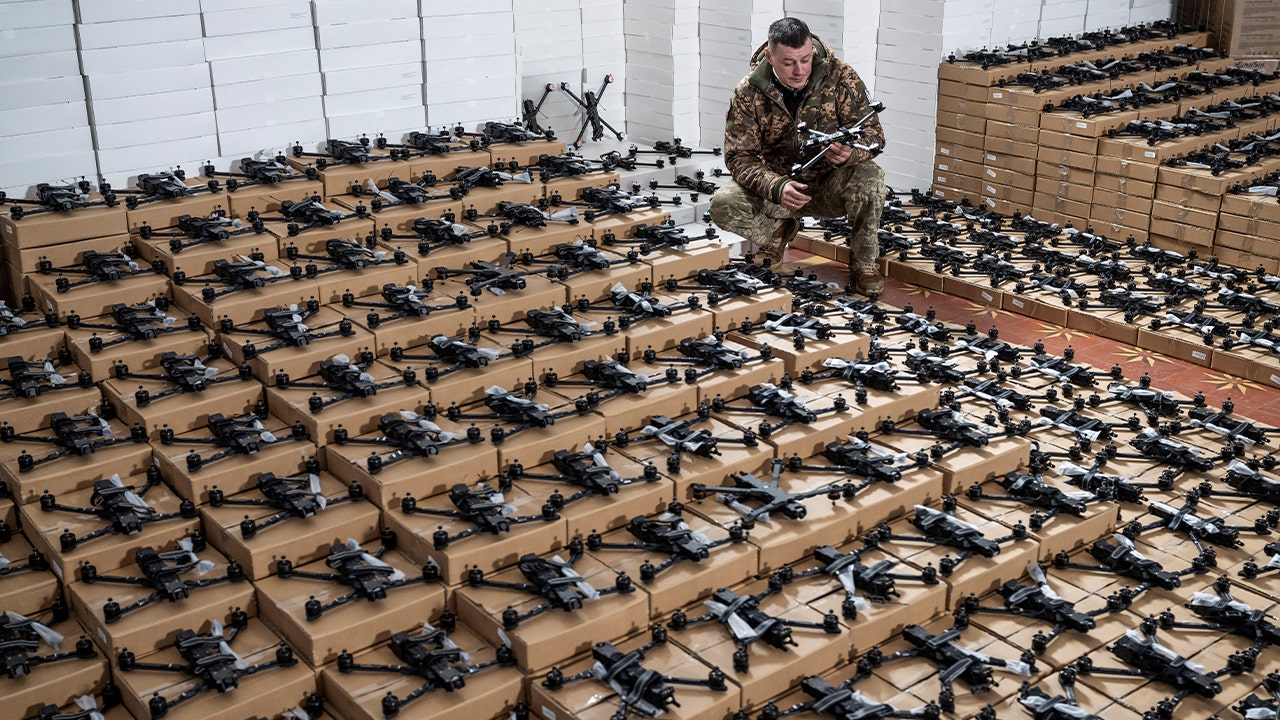
How fast could analysts process intelligence? How quickly could commanders coordinate a response? Those limits defined the pace of conflict.SEN TOM COTTON URGES DOJ TO PROBE CHINESE BID TO 'KNEECAP' AMERICAN AIA Ukrainian serviceman inspects a first person view (FPV) drone provided by the Come Back Alive foundation to one of Ukrainian Airborne Brigades, amid Russia's attack on Ukraine, in Kyiv, Ukraine, Feb.14, 2024.
(Viacheslav Ratynskyi/Reuters/File photo)AI has removed that bottleneck entirely.What’s left is a speed advantage that no human institution, legal framework or command structure was designed to handle.Ukraine was the first large-scale example.
It built its own data advantage from the ground up.One Ukrainian nonprofit collected over 2 million hours of battlefield drone footage since 2022, storing five to six terabytes...