


Review: Dour and dull, 'The Death of Robin Hood' steals our time to give to the gloom
This is read by an automated voice.Please report any issues or inconsistencies here.
Over eons of mythmaking, the 13th century bandit Robin Hood has evolved from a scamp adored by King Henry VIII to a symbol of sticking it to the rich.He’s been called a thief, a benefactor, a commoner, a lord, a killer and a hero.
During the Great Depression, Robin was a dashing champion of the people.At the height of the Red Scare, he was a Communist threat; then, in the ‘70s, a sexy cartoon fox.
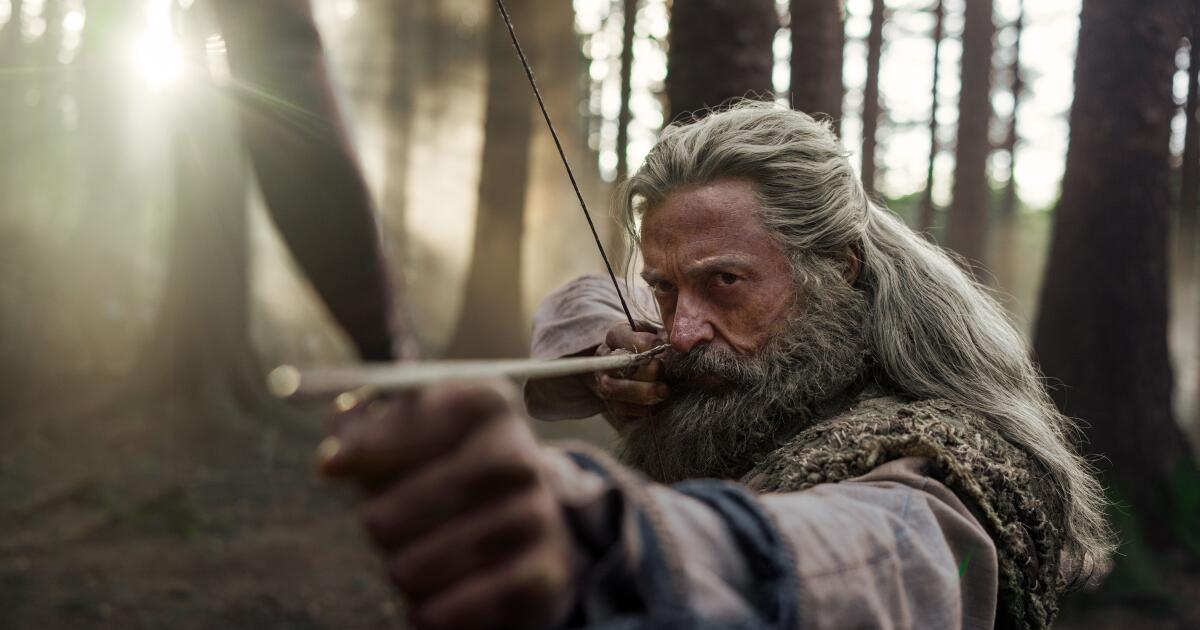
But never until Michael Sarnoski’s “The Death of Robin Hood,” which imagines the folk legend as a benumbed mass murderer, has this outlaw been duller than the rock piles he builds to bury his corpses.Hugh Jackman plays Robin Hood in his final days, a loose retelling of a 500-year-old ballad, and seems to have ancient dirt creased into his wrinkles.Injuries and exhaustion have him aching to retire.
Yet the family members of his casualties won’t let him quit.Out of duty to their bloodlines, these vengeful mourners — even the grandchildren of his victims — continue attempting to assassinate him even though he doesn’t remember, or care about, their beloved dead.
Robin is enduring a nightmare version of a party at which every unfamiliar face huffily claims they’ve met you before.It’s relatable, except for the throat-slitting.This savage, amoral and unfeeling Robin Hood has been written to invert everything modern fans like about him.
He doesn’t wear green.He doesn’t sport a feather.
He’s never loved a Maid Marian.He doesn’t even romp around a forest with a pack of merry men.
Instead, he starts the film on a barren mountaintop, alone.(Similarly, Jim Ghedi’s transporting score has the sound of traditional ballads like “Silver Dagger” splintering apart mid-verse to reassemble as funeral hymns.)From his gray hair to limping stride, Jackson’s Robin is so battered by decades of violence and outdoor camping that, at first glance, I thought his bare feet w...