


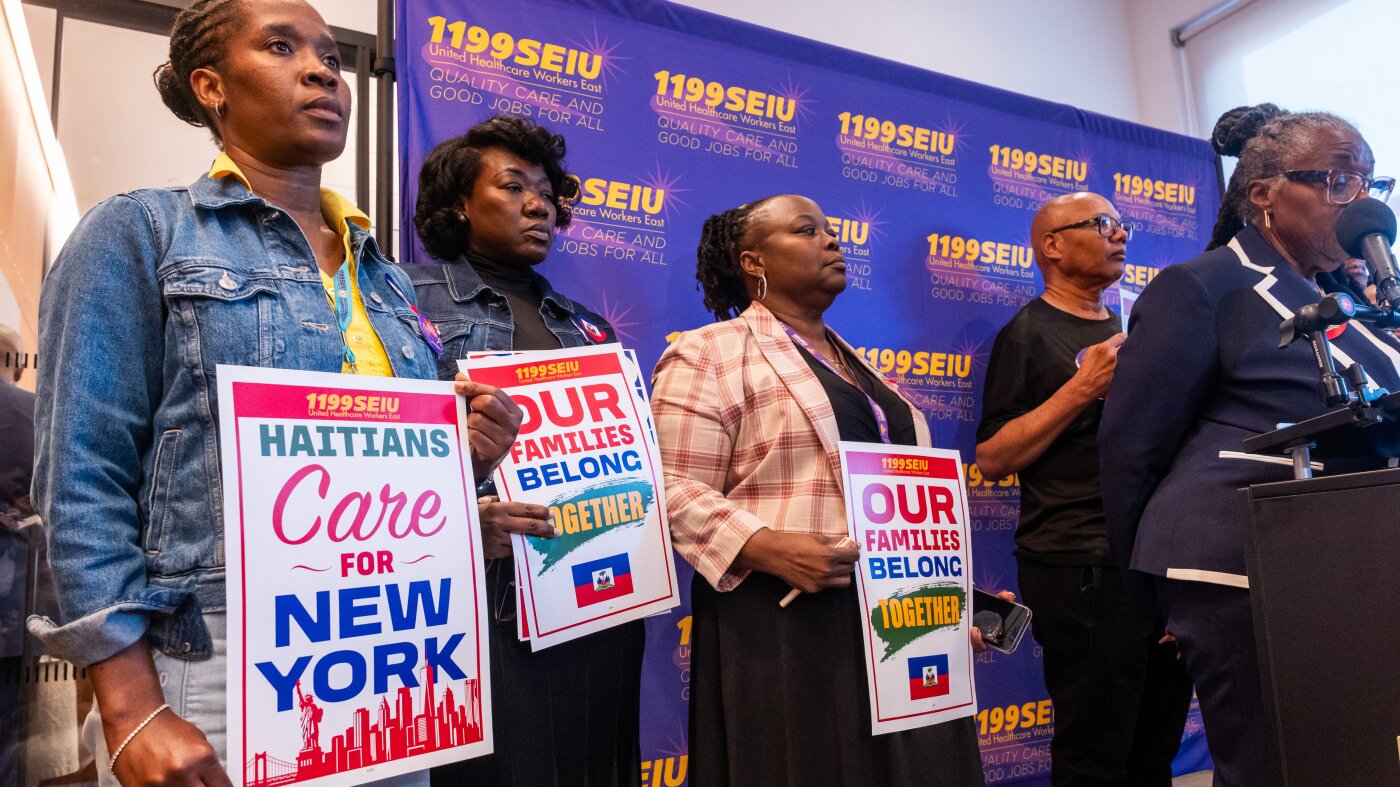
Amid the flurry of consequential Supreme Court decisions that have come down recently, it's the one about Temporary Protected Status that has America's health care sector the most worried.The ruling last week cleared the way for the Trump administration to cancel TPS for Haitians and Syrians.Experts say deporting Haitian TPS recipients will have a catastrophic impact on the nationwide health care workforce crisis — a workforce that is hugely dependent on immigrant labor.The pain will be felt across hospitals and emergency rooms, which already operate under persistent staffing shortfalls, but it's the long-term care sector, including senior care facilities and home care, that will suffer the greatest disruptions, said Steffie Woolhandler, a distinguished professor of health policy at City University of New York at Hunter College and a faculty member at Harvard Medical School."It's going to be a disaster in the Boston area, where a lot of our nursing home and home care aides are Haitian," Woolhandler told NPR.
But beyond that, she added, "If the United States becomes inhospitable to noncitizens, which I think Trump is doing, we're going to have a lot of problems staffing our entire healthcare system."Massachusetts has the third largest population of Haitians with TPS (19,000), behind Florida (158,000) and New York (40,000) respectively.Woolhandler is one of three authors of a 2025 report analyzing the impact of Trump's mass deportation plans, including the potential effects of stripping TPS protections from people from the 17 countries which the federal government deemed eligible.The status is meant to protect individuals from those countries who are living in the U.S.
from having to return to places where armed conflicts, natural disasters or other conditions make living there unsafe.Pulling from Census Data, the research team found that roughly 50,000 physicians in the U.S.
are noncitizens, the category that includes people with TPS protections.That's about 9%...