


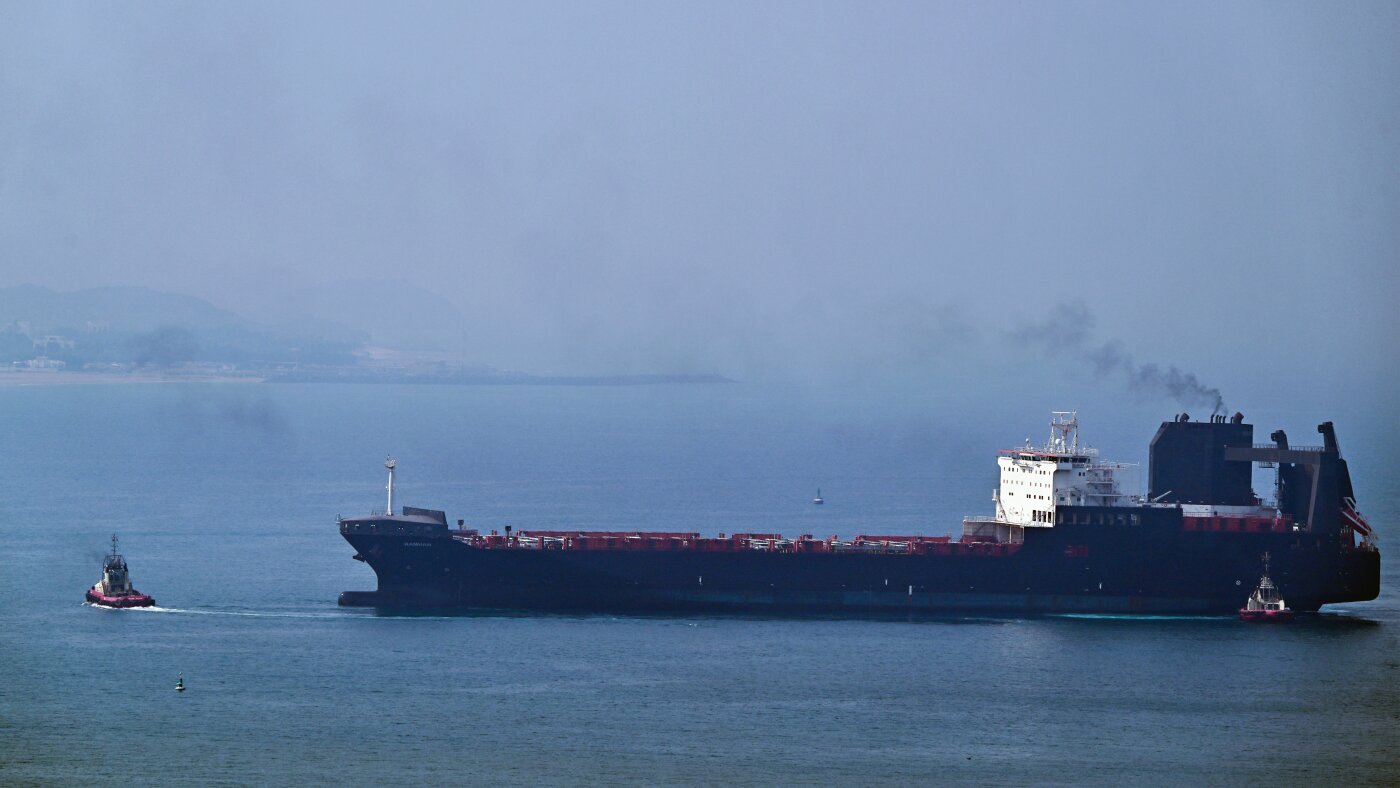
A tugboat guides a ship at the Khor Fakkan Container Terminal, the only natural deep-sea port in the region and one of the major container ports in Sharjah Emirate, along the Gulf of Oman, on July 14.AFP via Getty Images hide caption In late June, shortly after the United States and Iran agreed on a ceasefire, the International Maritime Organization (IMO) announced an operation to move trapped ships and more than 11,000 seafarers out of the Strait of Hormuz.
The strategic international waterway has been effectively closed by the Iranian regime since the U.S.and Israel attacked Iran at the end of February.The IMO said the operation would be carried out in close cooperation with Iran, Oman, all other coastal states in the region, the United States and the maritime industry.
Listen to NPR's State of the World podcast, a human perspective on global stories in just a few minutes, every weekday.The ships were directed to take a route along the southern side of the Strait of Hormuz, hugging Oman's coastline, rather than a route along Iran's coastline on the northern side of the strait."Over 100 ships out of the 600 plus that were in the area … managed to get out," says John Canias, a former seafarer and now a maritime operations coordinator with the International Transport Workers Federation, who took part in discussions about the evacuation.The operation ground to a halt a couple of days later after a vessel, a Singapore-flagged cargo ship called the Ever Lovely, was attacked while using the route closest to Oman, according to MarineTraffic, which tracks ship movements.Ship traffic around the Strait of Hormuz stalled again.Although no one claimed responsibility, Iran's Revolutionary Guard criticized the operation because it was done without any kind of Iranian involvement, according to the state broadcaster IRIB, and that only Iran could decide...