


Meteorite that crashed into NJ home holds building blocks of life, scientists say
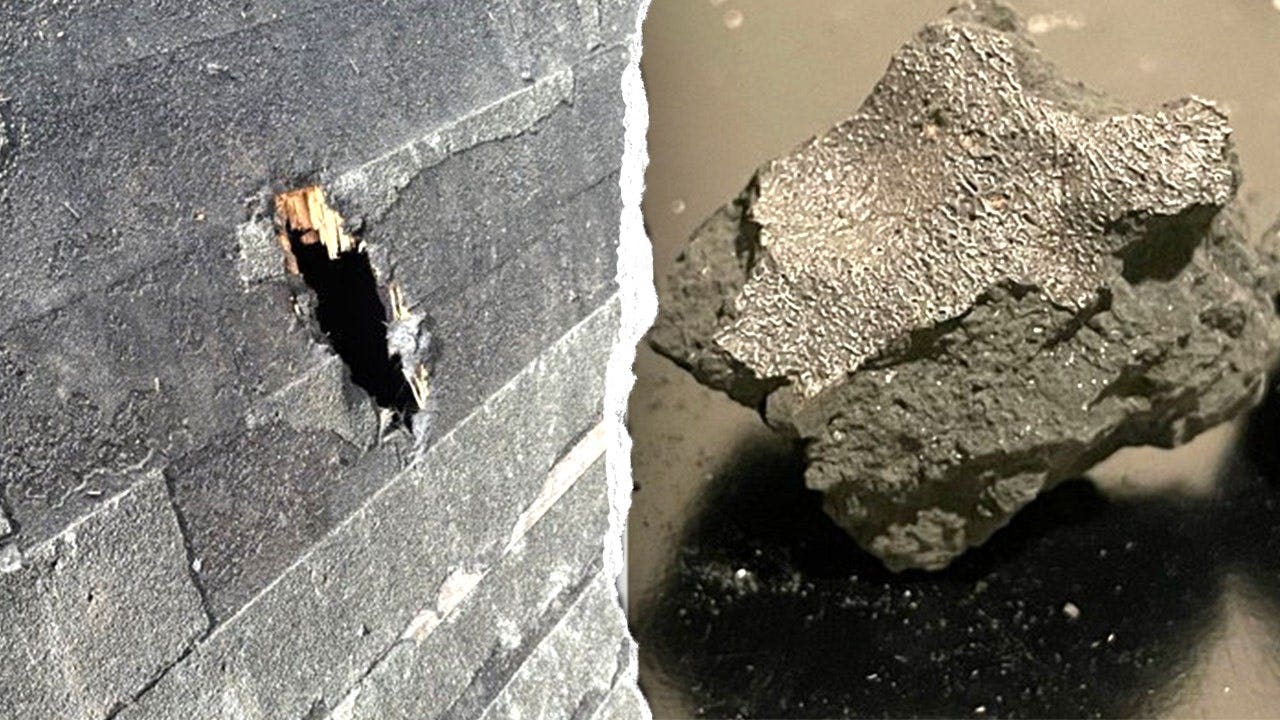
A meteorite that crashed through the roof of a New Jersey home two years ago contains some of the building blocks of life, scientists say — and is among the rarest space rocks ever recovered.The meteorite fell in Hillsborough, New Jersey, on July 16, 2024, and is the subject of a recent study published in Science Advances on July 15 — just shy of its two-year anniversary on Earth.The homeowner heard a "loud crash" at the time and found a hole in the ceiling that "covered the bed, carpet and surrounding areas," according to a release from the SETI Institute, a private research organization based in Mountain View, California.ANCIENT ARTIFACTS FOUND BENEATH CAPE CANAVERAL SPACE FORCE STATION AS ONE MYSTERY STILL STUMPS RESEARCHERS"I smelled a strong sulfur-like odor and saw many black fragments," said the homeowner, in a comment originally given to the scientists and researchers at SETI and NASA. No one was injured at the time, though the property was damaged.Scientists say the Hillsborough meteorite contains some of the chemical building blocks of life and ranks among the rarest meteorites ever recovered.(SETI Institute via SWNS)"The meteorite had broken into many fragments, including dust, and a strong sulfur-like odor was present in the 122 air," said the report.Researchers identified it as a rare intermediate CM1/2 carbonaceous chondrite, one of only two witnessed meteorite falls of that subtype.SCIENTISTS FIND 'SIGNS OF LIFE' INSIDE 5,300-YEAR-OLD MUMMY IN REMARKABLE DISCOVERY"Our cameras in Northford, Connecticut, and Douglassville, Pennsylvania, as well as a doorbell camera in Wayne, New Jersey, captured the meteor, and from that we measured its trajectory.
...The path traced back to low in the asteroid belt," said Mike Hankey, operations manager for the American Meteor Society, in a SETI Institute statement.NASA said the meteorite preserves some of the oldest material in the solar system, recording chemical processes that occurred more than 4.5 billion y...