


FIRST ON FOX: Sean McCann, a Democratic candidate for Congress in Michigan’s 4th Congressional District, has taken at least $57,600 in contributions from energy groups while supporting Green New Deal policies that were projected to increase utility costs, records show.McCann’s record on energy is resurfacing as he wages an uphill campaign to unseat Rep.Bill Huizenga, R-Mich., and raises questions about his approach to federal energy policy.
McCann first served as the Kalamazoo city commissioner from 1999 to 2008.He would then go on to serve in the Michigan House from 2011 to 2015 and in the Michigan Senate from 2019 to 2023.
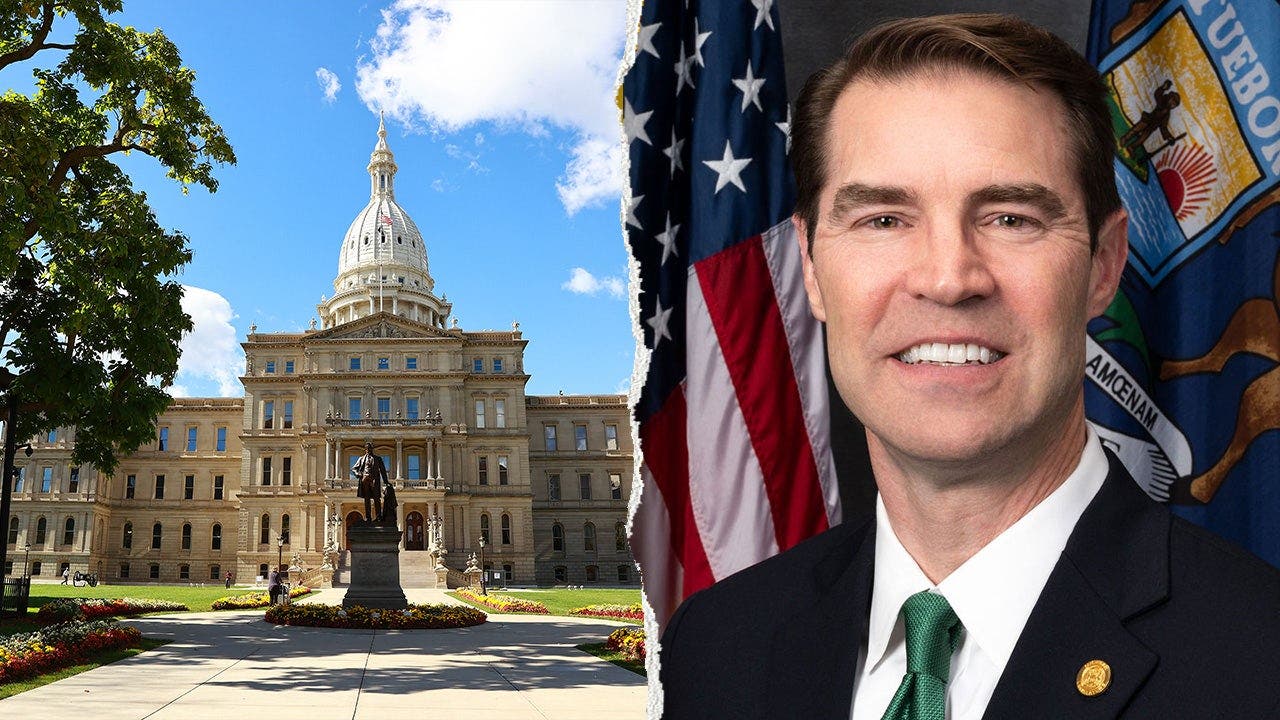
During his time in the Senate, he served as chair of the Senate Energy and Environment Committee.Since 2011, records show that McCann has accepted at least $57,600 from the DTE Energy PAC, a Michigan-based energy group, and CMS Energy Corporation Employees for Better Government.He also accepted at least $560 in food and beverages from energy lobbyists since 2021.DTE, in particular, provides energy for millions of customers in the state and describes itself as a politically active organization.DAVID MARCUS: IN BOOMING DETROIT, VOTERS SKEPTICAL OF SOCIALISM SNAKE OILThe Michigan State Capitol building is seen on October 8, 2020 in Lansing, Michigan, pictured alongside Sean McCann, Democratic candidate for Congress in the state's fourth district.
(Rey Del Rio/Getty Images; Michigan Senate)"DTE Energy is an active participant in the political process and encourages its employees to participate in the process.DTE Energy supports public policies that promote its commitment to sustainable, reliable, affordable and safe energy," the group states on its website.Notably, according to FEC records, the group has donated to candidates on both sides of the aisle, including Rep.
Bob Latta, R-Ohio, a top Republican on the House Energy and Commerce Committee.McCann has also supported policies projected to increase utility costs, such as SB 271 of 2023 �...