


Bass Inside Safe teams went to these places again and again. But so did the homeless
This is read by an automated voice.Please report any issues or inconsistencies here.
See more from the L.A.Times in Google Search.
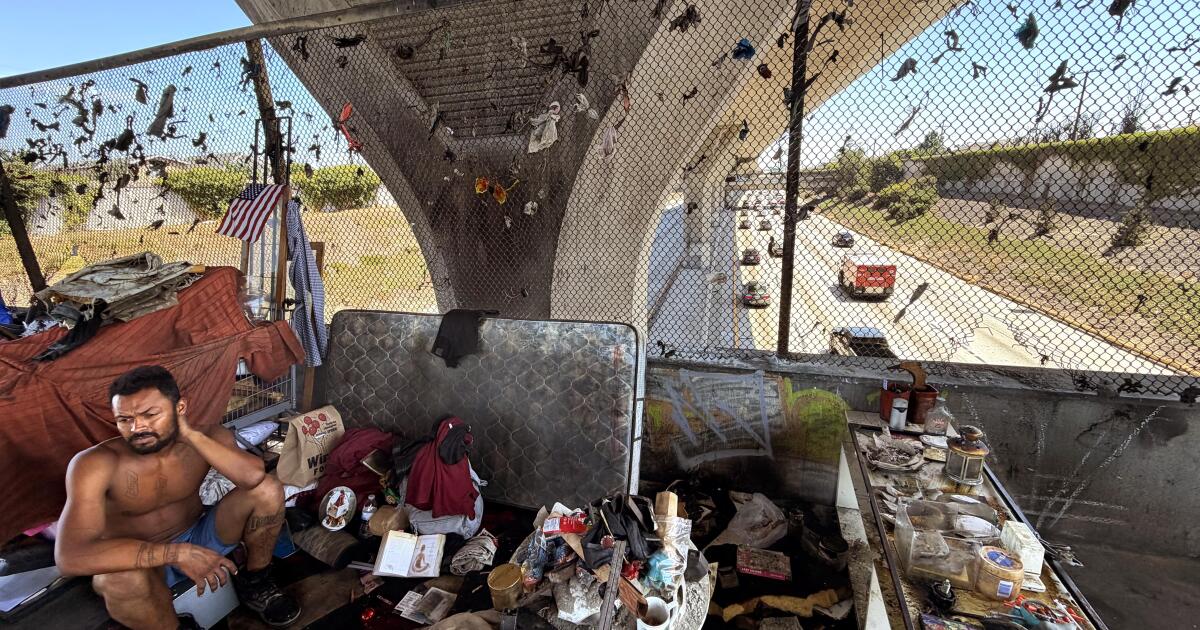
Set us as preferred Abigail Aguirre has been sleeping terribly.Too many times, she said, residents of a nearby homeless encampment have partied late into the night — sometimes yelling, sometimes blasting music.The noise is especially hard on her husband, who frequently leaves for his job before 5 a.m.“Oh my God, they don’t let us sleep,” said Aguirre, whose home sits just east of the 110 Freeway in South Los Angeles.
“They do drugs in there.They play the loud music.
They don’t care.”Three years ago, workers with Mayor Karen Bass’ Inside Safe program moved dozens of homeless people from Aguirre’s neighborhood into nearby hotels and motels.Sanitation crews cleared the streets and sidewalks of trash.
But more people, and their tents, kept arriving, not just near Aguirre’s home but on many of the east-west streets that pass over the 110 south of downtown: 43rd, 49th, 51st and Vernon Avenue, to name a few.About This StoryThe Times’ reporting on Mayor Karen Bass’ Inside Safe program was undertaken as part of the USC Annenberg Center for Health Journalism’s 2025 Data Fellowship.Unsheltered homelessness — people living on the street or in their vehicles — went up nearly 8% citywide in this year’s homeless count, dealing a setback to Bass, who is running for reelection and has made homelessness a core part of her agenda.The streets that line the 110 Freeway between 42nd and 58th are a potent symbol of the challenges facing Bass and her program.According to records obtained by The Times, outreach workers carried out Inside Safe operations 25 times on that one-mile stretch during her first three years as mayor, returning again and again to bring people indoors.During one operation, Inside Safe brought 42 people inside.
A month later, 54 more people came indoors.On other occasions, progress was measured...