


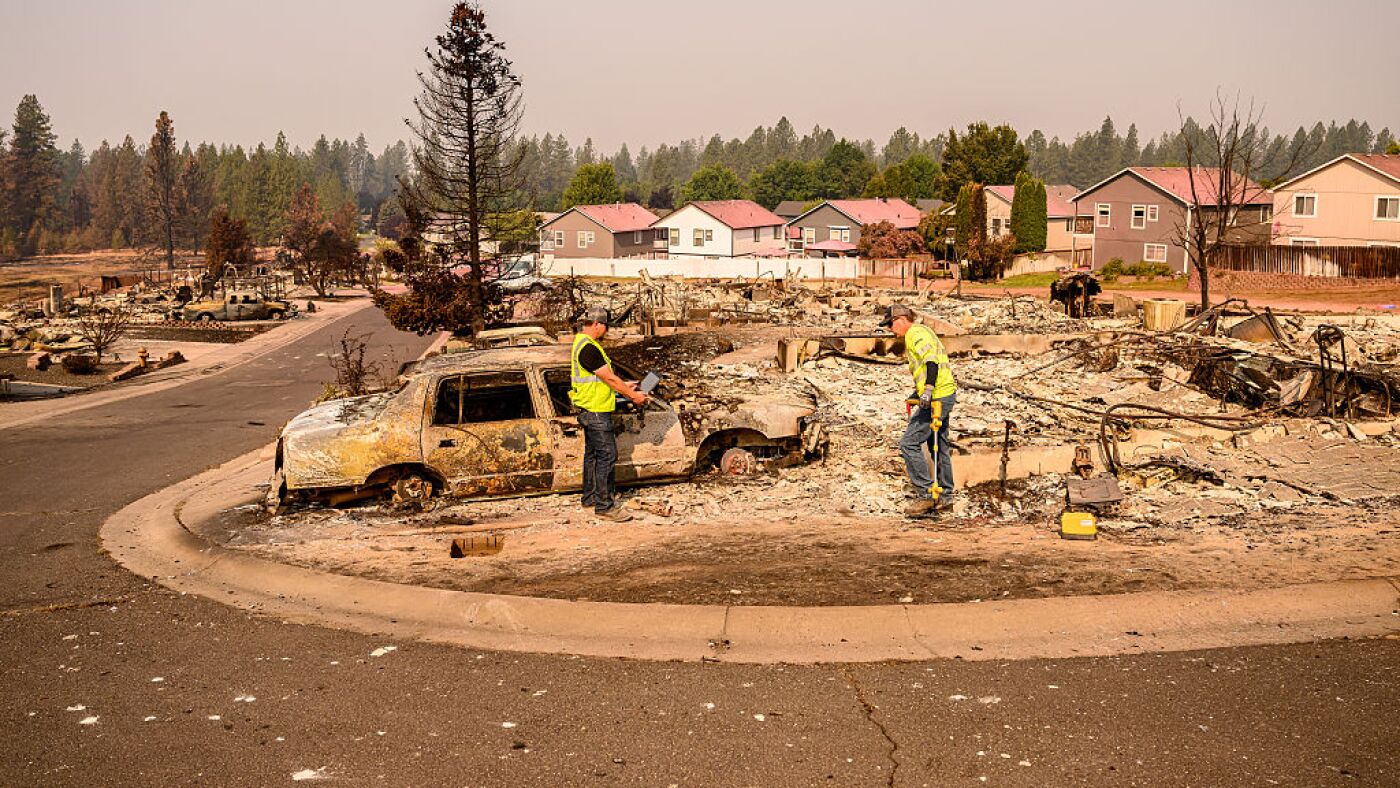
When two different wildfires threatened Dave Kokot's house in Spokane, Wash., earlier this month, he and his family packed up keepsakes as they prepared to leave.Kokot was less worried about the house itself.
He knew he'd given it the best possible chance of surviving the flames."You don't know how the house would go through a fire, but I think ours would have done fine," Kokot says.The siding on Kokot's house is made of fire-resistant materials, instead of wood.He'd cleared the flammable vegetation around the perimeter and made sure tree limbs weren't touching his home.
Research shows those precautions help houses resist the onslaught of tiny, burning embers carried by the wind, the main reason wildfires spread so rapidly in extreme conditions.Kokot made those preparations because he spent his career thinking about wildfire safety, mostly as a fire protection engineer at the Spokane Fire Department.Recently, he's been pushing Washington state regulators to make those preparations mandatory for residents in areas at high risk of burning.Washington has been developing new wildfire safety regulations for several years, including building codes for homes constructed in risky areas and rules for managing plants and vegetation.
But restrictions that affect people's homes and gardens can be unpopular.After public pushback, state legislators backtracked and repealed some of the requirements.Other Western states have also struggled to pass wildfire regulations affecting homeowners' properties.
While flood risk is managed by the federal government, wildfire regulations are up to state and local governments.The result is a patchwork of rules."It's up to the political will of a community to adopt a building code to address wildfire," says Ryan Maye Handy, who works on community wildfire planning at Headwaters Economics, a land use think tank.
"What we're increasingly seeing is many different interpretations of how to reduce that risk.It is literally all over the map."Loa...