


Kaleigh and Cody Brendle spend time together at their parents' New Jersey home before Kaleigh's move across the country for law school.They say they have helped each other navigate life as two blind people.
Claire Harbage/NPR hide caption Catch up on what you missed with our Education newsletter, sent weekly.BRICK, N.J.— Cody and Kaleigh Brendle grew up near the Jersey Shore, going out on their grandfather's boat on weekends, learning to swim and riding bikes together."I was the annoying little sister — like, 'Wait for me, wait for me!'" said Kaleigh.
She remembered standing by in awe at summer camp as her fearless older brother scaled rock-climbing walls and went down waterslides."I was like, 'Wow, he's doing all this — maybe I can try.'"The siblings said they've always relied on each other for support navigating life as two blind kids, now adults.
Cody, 27, lives at home with his parents, and Kaleigh, 23, is starting law school across the country.Both say there were, without question, many challenges growing up with disabilities.But the two of them are also part of the "ADA generation" — people who came of age under the safeguards of the Americans with Disabilities Act of 1990.And in 1999, the year Cody was born, the Supreme Court handed down the Olmstead decision.
It reinforced the ADA's integration mandate, which says people with disabilities should get to learn, live and work in their communities rather than in institutions.The government made that promise after people with disabilities fought against segregation in institutions, which have a long history of abuse and neglect.
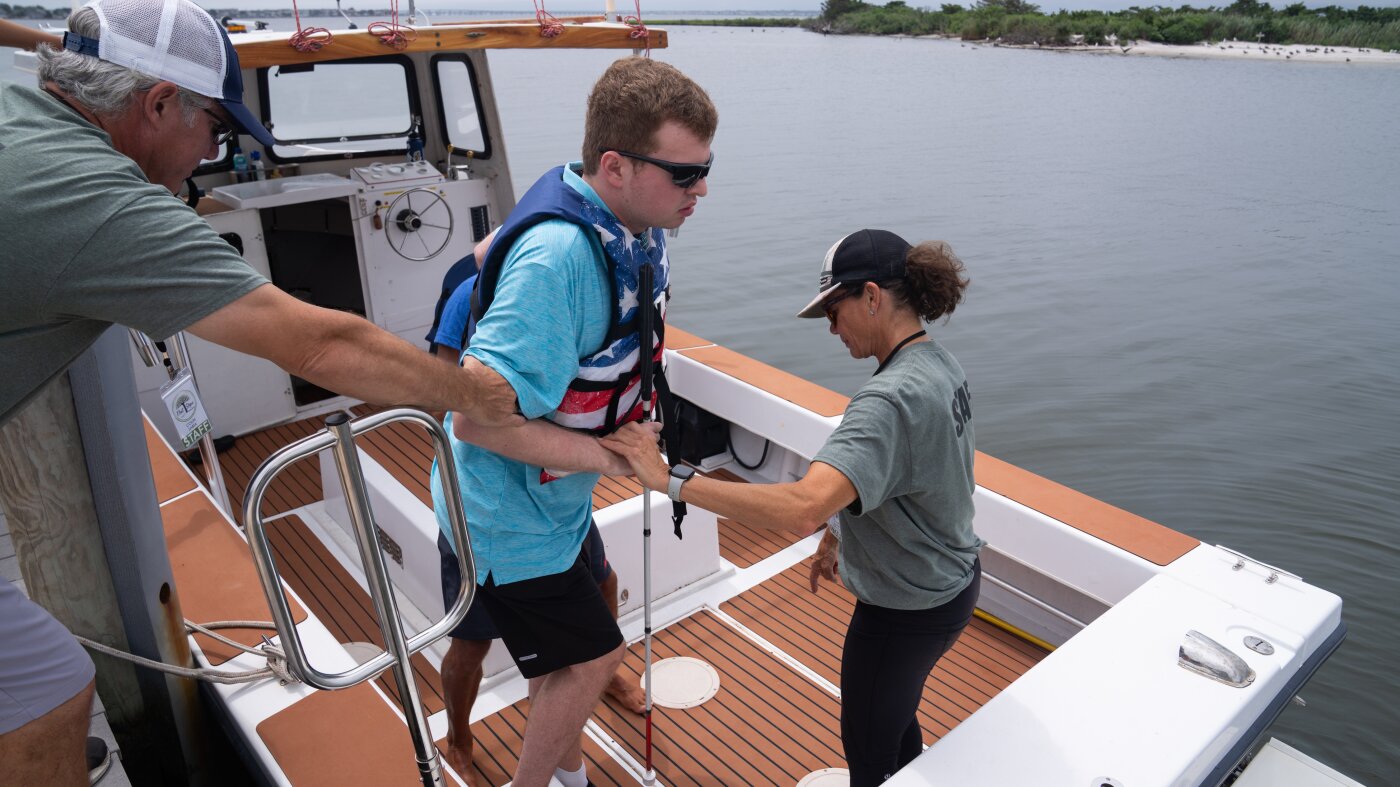
Cody Brendle's community-based program, Next Steps, drives him to activities in the community, including grocery shopping, dance classes and job training.Claire Harbage/NPR ...