


A federal court in South Carolina ruled that the state's rules for mail-in-voting violated the constitution last week.The Fourth Circuit Court of Appeals ruling relates to South Carolina's mail-in ballot laws and certain allowances it makes for voters over the age of 65.Typically, voters looking to send mail-in ballots must meet certain criteria, such as being out of the country during the early voting period or being disabled.SUPREME COURT RULES ON MAIL-IN BALLOTS RECEIVED AFTER ELECTION DAYAn absentee ballot for the 2020 U.S.election.
A federal judge on Tuesday blocked the U.S.Postal Service from implementing part of President Donald Trump's executive order tightening mail-in voting rules ahead of the 2026 midterm elections.
(Caroline Brehman/CQ-Roll Call, Inc via Getty Images, File)A state law removed those requirements for all voters over the age of 65, however, and the fourth circuit's ruling found that provision to be unconstitutional."By granting voters aged sixty-five and older unconditional access to absentee-by-mail voting while conditioning that same option for younger voters on eligibility categories, documentation, and a rigid deadline, the state allocates voting opportunities unequally based solely on age," U.S.Circuit Chief Judge Roger Gregory wrote in the order.The case arose after a group of younger voters sued the South Carolina Elections Commission in 2023, arguing the rule violated the 26th Amendment.A voter casts their ballot at a polling location.
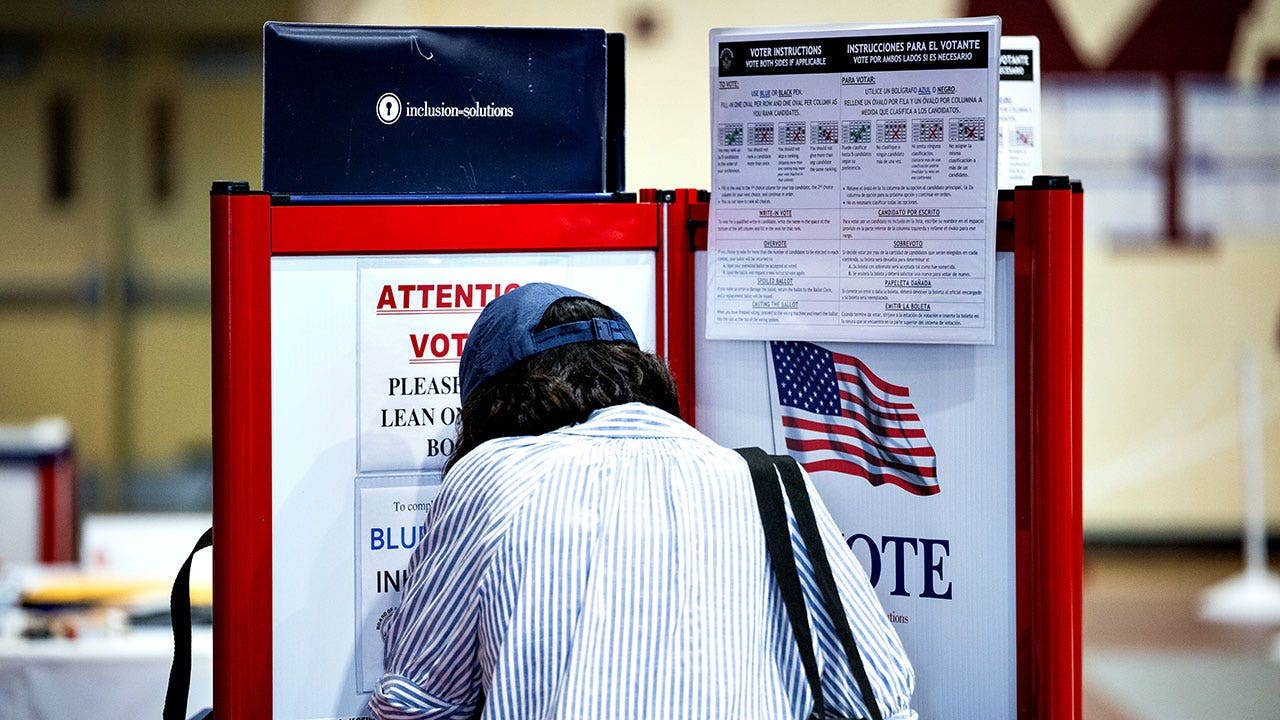
(Graeme Sloan/Bloomberg via Getty Images)A lower court initially dismissed their argument, but the case continued on appeal until it appeared before the Fourth Circuit.FEDERAL APPEALS COURT REJECTS TRUMP BID TO ENFORCE MAIL BALLOT ORDER AHEAD OF MIDTERM ELECTIONSThe new ruling sends the case back to lower courts with specific instructions on how to decide the case.Gregory wrote that either all South Carolina voters must be entitled to vote absentee without restrictions, or none of them can be.That...