


Errol Flynn had a penchant for underage girls. His trial barely tarnished him
See more from the L.A.Times in Google Search.
Set us as preferred Errol Flynn was poised for one more getaway.On the screen, in a series of daredevil adventures, the actor had extricated himself from a hundred impossible predicaments.
He had escaped a Confederate prison and the Spanish Inquisition, Nottingham Castle and Nazi Europe.He had survived bandito ambushes and cutthroat plots, shipwrecks and crash-landings and high-sea duels.
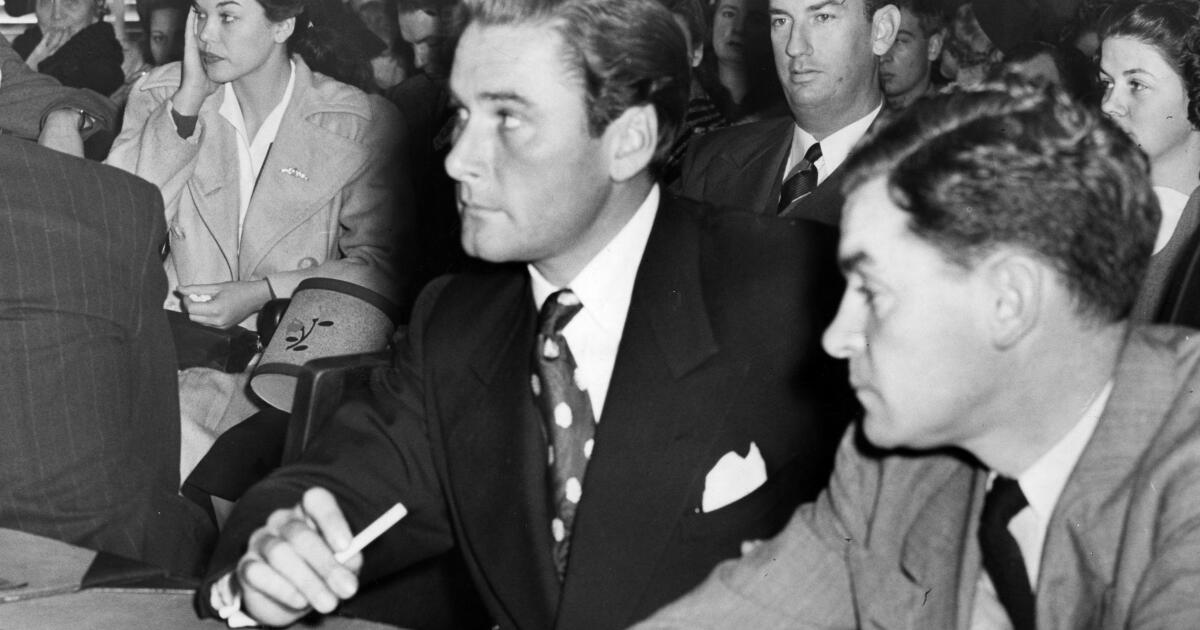
He was a close-call specialist.Now, in early 1943, the 33-year-old Flynn — the country’s biggest movie star — was plotting his flight from the American justice system.He was on trial in Los Angeles, charged with the statutory rape of two teenage girls.
He had the best defense attorney his fortune could buy, but he was taking no chances.Mexico waited.“I had no intention of going to jail,” Flynn would write in his memoir.
“My two-engine plane was out at Burbank, waiting, so that if I got a bum rap, I’d get out there, hop in, and leave America and my screen career forever.”In this series, Christopher Goffard revisits old crimes in Los Angeles and beyond, from the famous to the forgotten, the consequential to the obscure, diving into archives and the memories of those who were there.Born on the Australian island of Tasmania, Flynn had an uncommonly colorful background, which he recounted with self-mythologizing verve in his memoir, “My Wicked, Wicked Ways.” As a young man, by his account, he smuggled diamonds, oversaw coconut plantations, dynamited fish, captained schooners and hunted killer cannibals in the New Guinea jungle.It was common to say that his hell-for-leather personal life bled into his film persona.
He became an international superstar in 1935 in “Captain Blood,” as a wrongly accused doctor who escapes slavery and takes up piracy.In 1938, he brought a jaunty brio to “The Adventures of Robin Hood” that forever defined the character.When World War II hit, Flynn tried to join but was deem...