


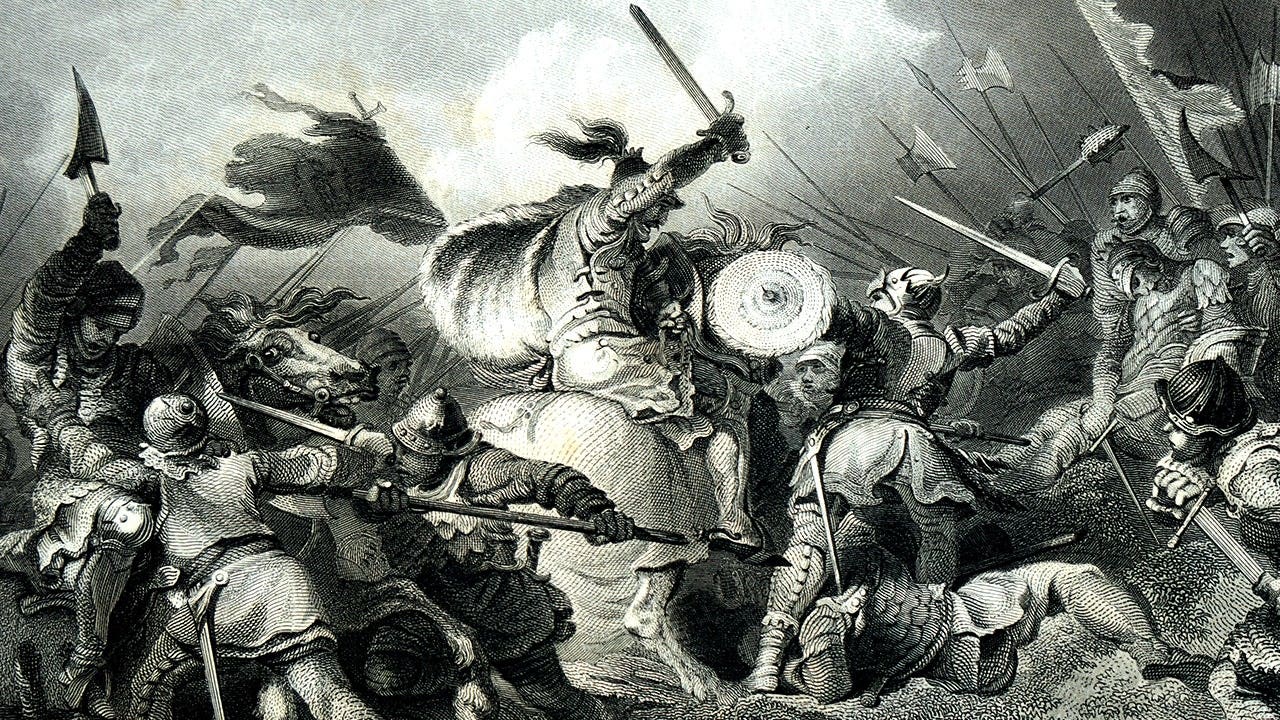
A lost letter from a pope could rewrite the story of one of history's most famous battles — nearly 1,000 years after it was fought.The University of East Anglia announced the new research, which sheds light on the Norman Conquest of England in 1066, in August.Professor Tom Licence was examining historical records when he came across previously overlooked excerpts from a lost papal letter that was preserved in the Vatican archives, he said.ROYAL DECREE FROM NOTORIOUS 'SPIDER KING' REDISCOVERED IN VERY UNEXPECTED LOCATIONThe letter suggests Pope Alexander II may have backed William the Conqueror's invasion of England because the English had sided with his rival — offering a new explanation for the events that led to the Battle of Hastings.In the letter, Alexander described England as being led astray by an "evil head" and used striking religious language that Licence said branded the English as "followers of Satan."New research could reshape historians' understanding of the Norman Conquest of England and the events surrounding the Battle of Hastings in 1066.(Photo12/Universal Images Group via Getty Images)The Battle of Hastings, one of the most consequential battles in English history, has traditionally been viewed as a fight over who had the rightful claim to the English throne: King Harold II or William of Normandy.It has not typically been viewed as part of a broader political and religious struggle involving the papacy, but Licence said the events of 1066 may have been closely tied to a bitter power struggle between Pope Alexander II and his rival, the antipope Honorius II.ARCHAEOLOGISTS UNCOVER MASSIVE ARTIFACT DEPICTING PHARAOH THOUGHT TO HAVE CHALLENGED MOSES IN EXODUSLicence's research suggests England may have sided with Honorius, potentially giving Alexander another reason to support the Norman invasion.Licence told Fox News Digital he wasn't personally surprised by the connection he made.The Battle of Hastings has traditionally been understood as a str...