


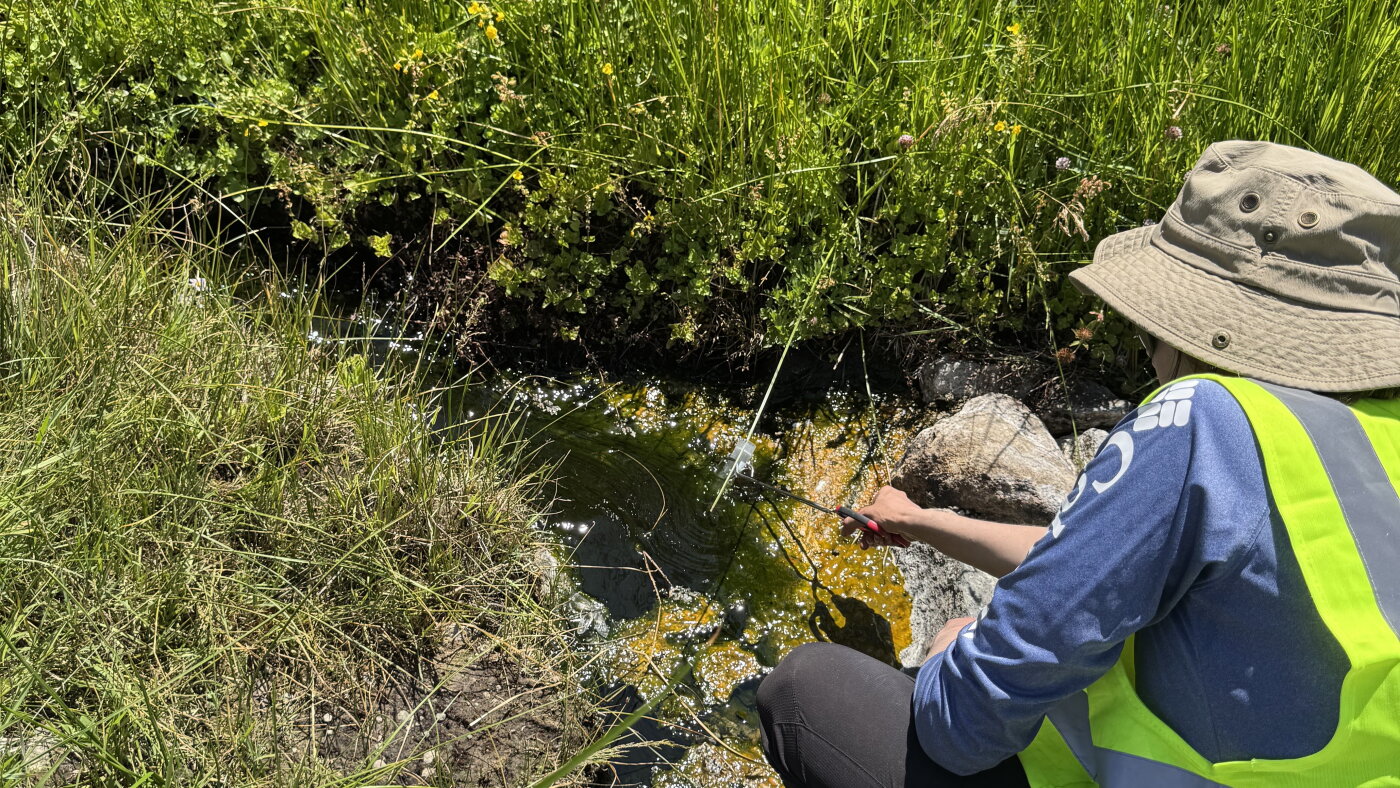
Angela Oliverio, a microbiologist at Syracuse University, studies the edge of what's possible."There's a very deep curiosity and desire to understand life at its limits and at its most extreme," she says."And where that boundary is and what truly are our constraints."It's not unlike ultra-elite athletes who push themselves "to the absolute max of what we think is humanly possible," she says.
"But in this case, we're just expanding it to life more generally" — specifically, microscopic life.Oliverio studies organisms called extremophiles, so named because they thrive in unusually harsh conditions, like high temperatures.The title holders in this regard are simple organisms like bacteria and a group called Archaea, with certain species living at or above 212°F, the boiling point of water.But Beryl Rappaport, a PhD student in Oliverio's lab, says that until now, that same ability to beat the heat has been less studied in eukaryotes — a group whose members include many different species, from humans to single-celled amoebas.
These organisms have more complex cells that contain a nucleus and other structures.Rappaport says part of the reason may simply be that scientists haven't found the right eukaryotes yet."So few have been described, especially in detail.
We have a lot to learn from them."Now, she and her colleagues have added a remarkable new organism to the pantheon: a species they call the fire amoeba that nudges a key temperature limit for complex cells upwards by another five or so degrees.The findings were published in the journal Cell.This may seem like a modest improvement, but Oliverio considers the sub-4-minute mile for runners, which was long thought to be impossible.
Once one athlete achieved it, however, it was just weeks before it happened again."It wasn't so much the incremental amount that this record was broken by, as much as the proof that it was possible," she says.To make this discovery, the researchers and their colleagues went on someth...