


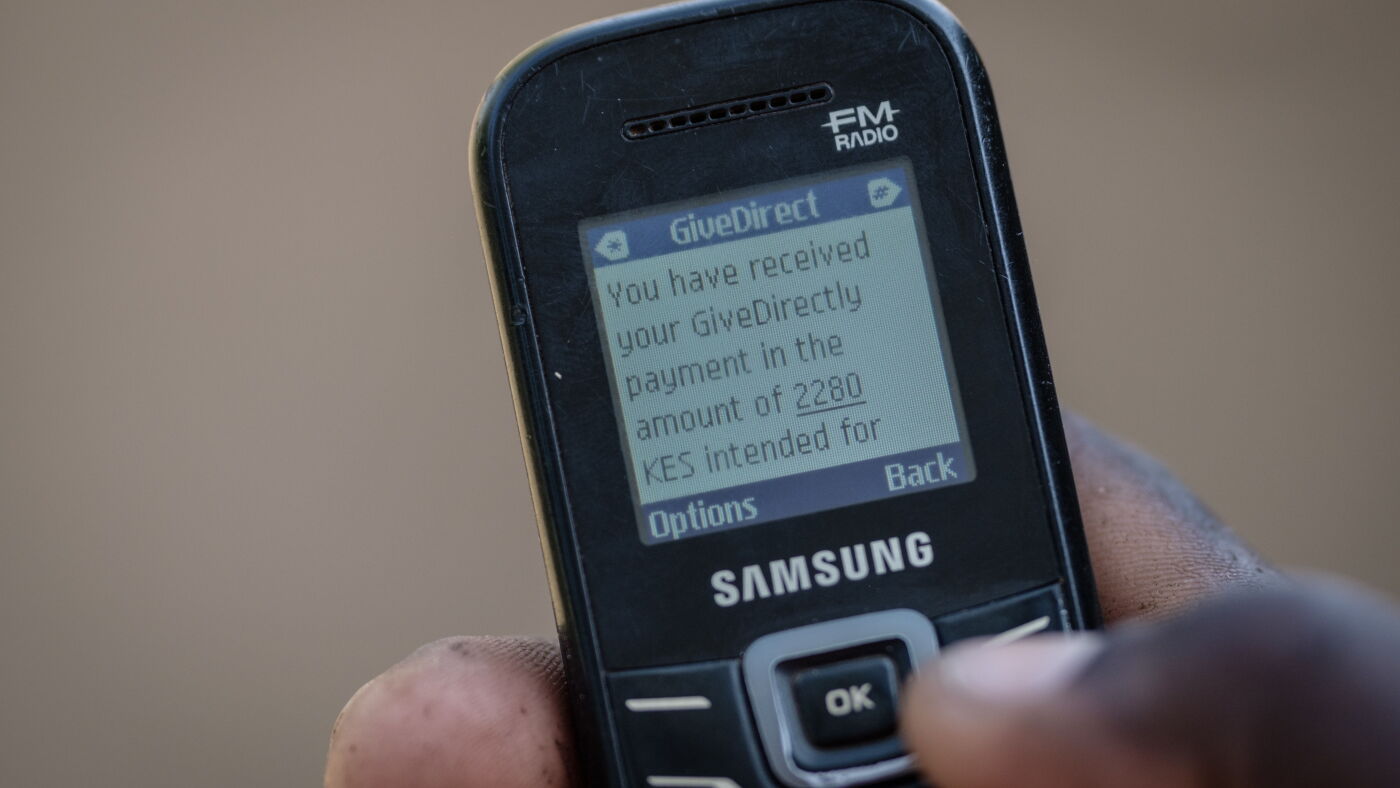
Cash transfers, aimed at lifting families out of poverty, are delivered by mobile pone.Yasuyoshi Chiba/AFP/via Getty Images hide caption Since the early 2000s, countries have tried to lift people out of poverty with a simple program — giving them cash.The idea is that a lump sum will help the poorest of the poor buy food, pay for school fees or build a business — like raising livestock — to make more money.Study after study has shown these cash transfers are a reliable way to help families in extreme poverty build a source of income and support their own basic needs.
The West African nation of Liberia is one of the countries that has seen success with cash transfers.The average amount that the government gives to a needy household per year is $250, which goes a long way there.
The money goes to one member of the household to manage for the whole family.And it's usually a woman."One of our key design components is that we target the female in the house," says Aurelius Butler, Liberia's national coordinator for social protection.Liberia, which is among the 10 poorest countries in the world, has a high rate of gender inequality.Women face harassment and discrimination and lack opportunities in the workplace.
In many families, the male head of household typically controls the funds, says Butler, and may not give their partners the money to cover basic needs for themselves and their family — like soap or food.By targeting women in the cash aid program, Butler says the aim is to give them some economic control.Some men were not happy with that setup."A lot of the men reported that they felt like they were being excluded," Butler says.So Liberia came up with a new approach.With funding from the World Bank, the Liberian government and the nonprofit organization GiveDirectly designed a new cash transfer experiment: give both partners equal m...