


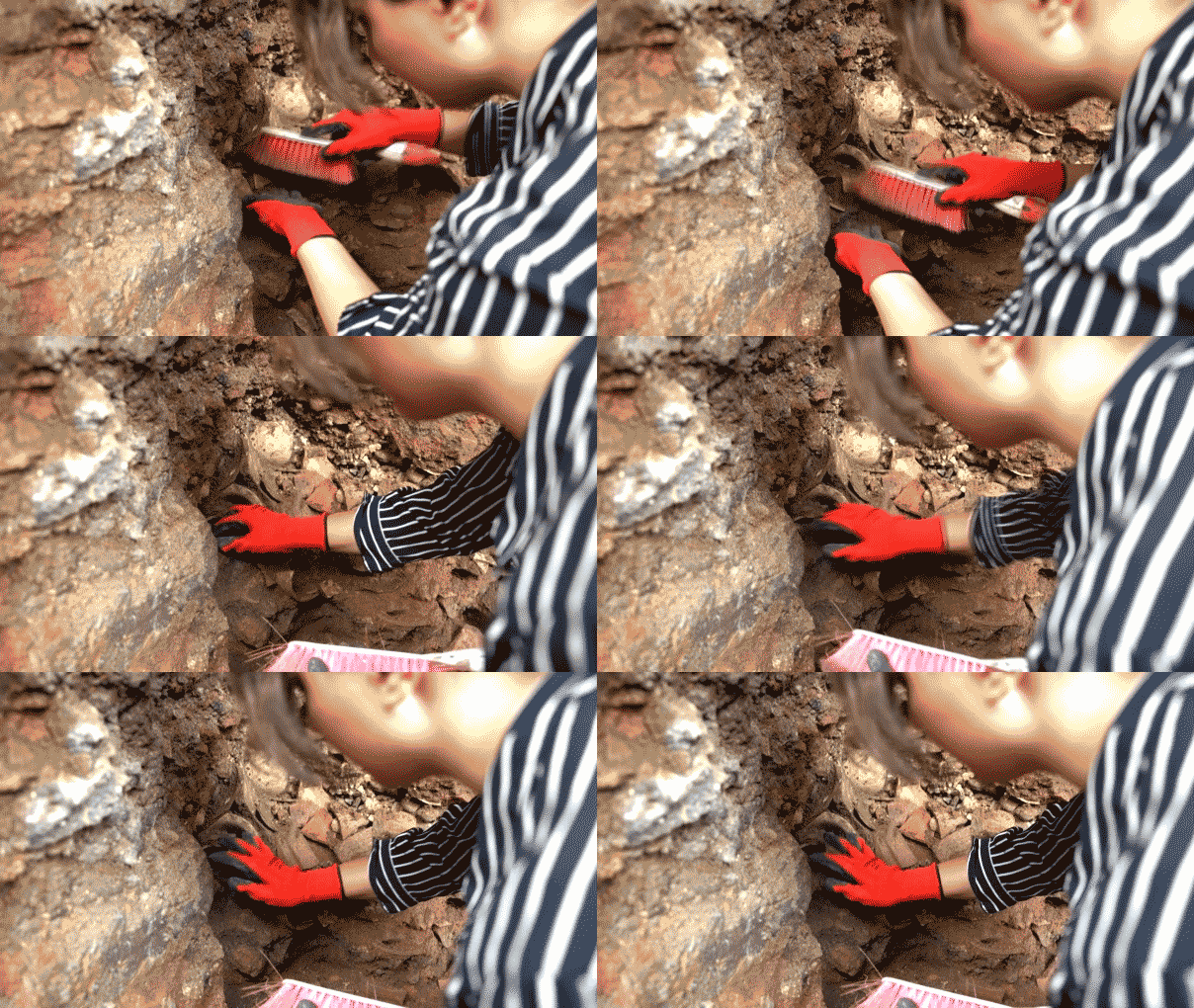
Workers renovating a bustling city boulevard stumbled across a piece of the ancient past — a cache of pottery dating back roughly 1,000 years.The discovery was made amid ongoing excavations in Tbilisi, the capital city of Georgia in the Caucasus region, south of Russia.The artifacts were found roughly 20 feet beneath Rustaveli Avenue, Tbilisi's main thoroughfare.ARCHAEOLOGISTS UNCOVER MASSIVE ANCIENT SITE DURING RAIL PROJECT, INCLUDING RARE ROMAN FINDPictures show archaeologists examining the intricately decorated pottery fragments, as well as centuries-old jugs and various shards.The roadwork is part of a larger project to upgrade Rustaveli Avenue with new pedestrian crossings, improved signage and other improvements, according to Reuters.Workers renovating Rustaveli Avenue in Tbilisi uncovered intricately decorated pottery fragments during a project to upgrade the thoroughfare.(Reuters)David Lordkipanidze, director of the Georgian National Museum, told Reuters the discovery was not entirely unexpected given Tbilisi's history."Tbilisi is very rich with archaeological material ...
so it's very logical to find workshops of different periods," he said.ANCIENT SHIPWRECK GIVES UP DAZZLING TREASURES AFTER MORE THAN 1,300 YEARS UNDERWATERLordkipanidze also pointed to Tbilisi's long history as a crossroads for cultures and commerce."Tbilisi was always multicultural," he said. Researchers are studying pottery believed to go back to between the 10th and 11th centuries in Tbilisi.(Reuters)"[It's been] a real center for the region, particularly an economic center."CLICK HERE TO SIGN UP FOR OUR LIFESTYLE NEWSLETTERThe pottery appears to date between the 10th and 11th centuries, when Tbilisi was under Arab rule and served as an important stop along the Silk Road.Additional studies, including 3D scanning, will help researchers more precisely determine the artifacts' age.CLICK HERE FOR MORE LIFESTYLE NEWSGeorgia, cradled between Europe and Asia, forms part of the Caucasus reg...