


A martini with Ayad Akhtar, the novelist remaking autofiction for the social media age
This is read by an automated voice.Please report any issues or inconsistencies here.
See more from the L.A.Times in Google Search.
Set us as preferred It’s not easy to categorize Ayad Akhtar.This, he might tell you, is precisely the point.
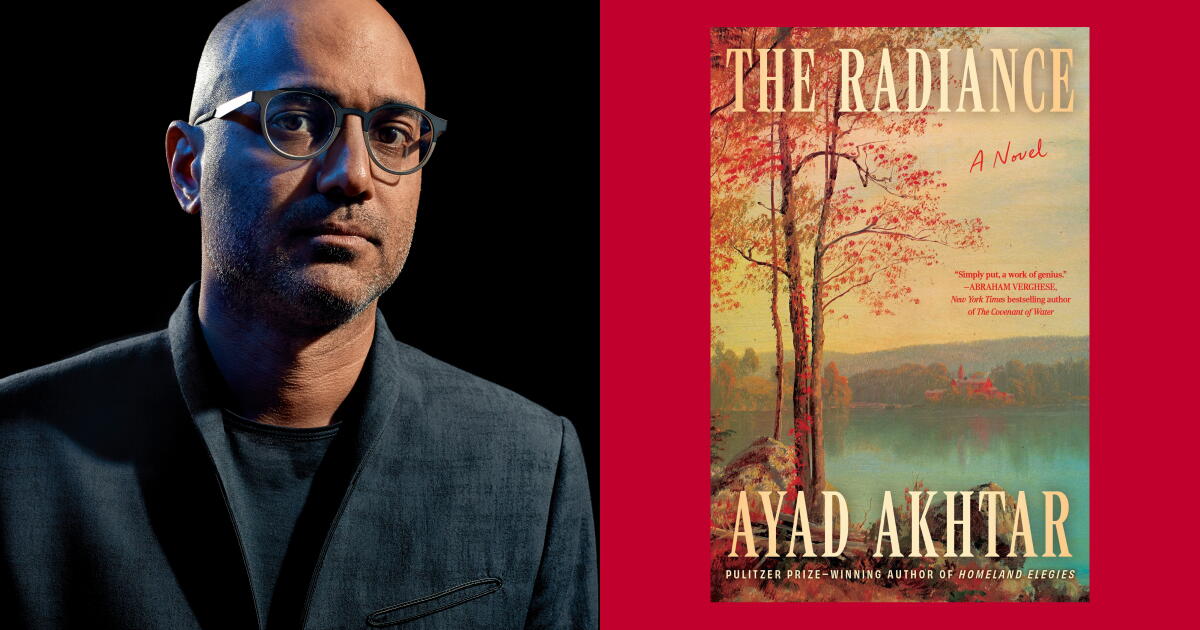
On the one hand, he’s a celebrated playwright, recipient of the 2013 Pulitzer Prize in drama for “Disgraced.” On the other, he’s the author of three novels — two of which, 2020’s “Homeland Elegies” and the just released “The Radiance,” blur the line between fact and fiction in vivid and provocative ways.When we meet, over a drink at the Oyster Bar in Manhattan’s Grand Central Station, I admit I’m not sure what to call these books, which is one reason I find them compelling.
Akhtar laughs as he takes a sip of wine.“I think that’s right,” he says.
“I think there is something about voice that is primary.And it’s voice that drives the work.”On the Shelf The Radiance By Ayad Akhtar S&S/Summit Books: 304 pages, $29If you buy books linked on our site, The Times may earn a commission from Bookshop.org, whose fees support independent bookstores.In part, that’s because both “Homeland Elegies” and “The Radiance” are narrated in first person, which means voice is the most essential tool Akhtar has to create character.
But even more, it’s because of the chances he takes, in both content and form.“The Radiance” begins in the aftermath of a hit and run, its narrator hospitalized with a ruptured spleen and other internal injuries.
He very nearly dies.“I’ve struggled for a few years now,” the character confides, “to understand the state I was in — or, rather, to describe it clearly in language.” This, of course, is the struggle faced by any narrator, fictional or otherwise.
How do we translate, or transfer, experience into words? What is gained or lost in that exchange? In the case of “The Radiance,” such questions only grow more pronounced as we realize that...