


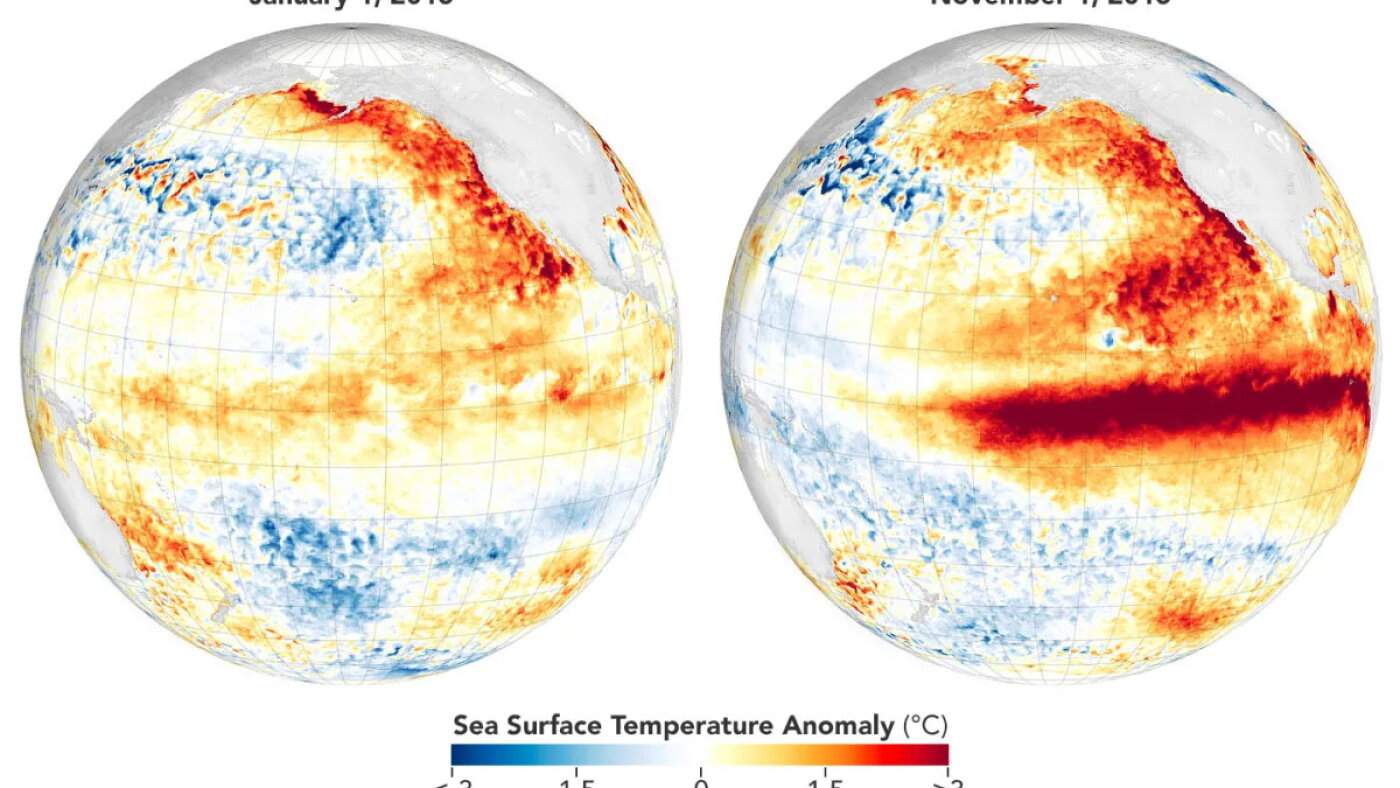
The powerful El Niño climate pattern brewing in the Pacific Ocean is already influencing extreme weather around the planet.Federal forecasters say it could become the biggest yet, far outpacing any in recorded history and ultimately impacting millions of people.With that intensity also comes opportunity.
Climate experts say studying this El Niño in detail could help them understand the complex phenomenon better, potentially leading to more accurate forecasts to help communities prepare for droughts and floods.During the last strong El Niño in 2015-16, the National Oceanic and Atmospheric Administration (NOAA) mounted a rapid response research effort to gather observations.The agency sent a research ship, planes, weather balloons and unmanned aircraft into the Pacific to collect data about the atmosphere.
After it wrapped up, NOAA staff recommended the agency be ready with a similar effort for the next strong El Niño.Now, an even stronger El Niño is here, but NOAA will be responding with a scaled-back research effort.The agency is sending a handful of unmanned watercraft to sail into the El Niño zone, but says it won't be matching the field campaign from last time.
Any other research projects depend on Congress passing a budget, something that may not happen until December, when El Niño is already peaking.The Trump administration is also trying to eliminate NOAA's research office, the primary scientific arm that studies events like El Niño, as part of that budget process.Since Trump began his second term, NOAA has lost more than 2,000 staff, largely due to retirements and firings.Ten weather and climate researchers who spoke with NPR say this record-breaking El Niño is a crucial case study, because aspects of the naturally occurring climate pattern still aren't well-understood.
El Niño is one of the biggest forces on the planet affecting weather, bringing destructive rainstorms and floods to some regions, and severe droughts to others.Better and earlie...