


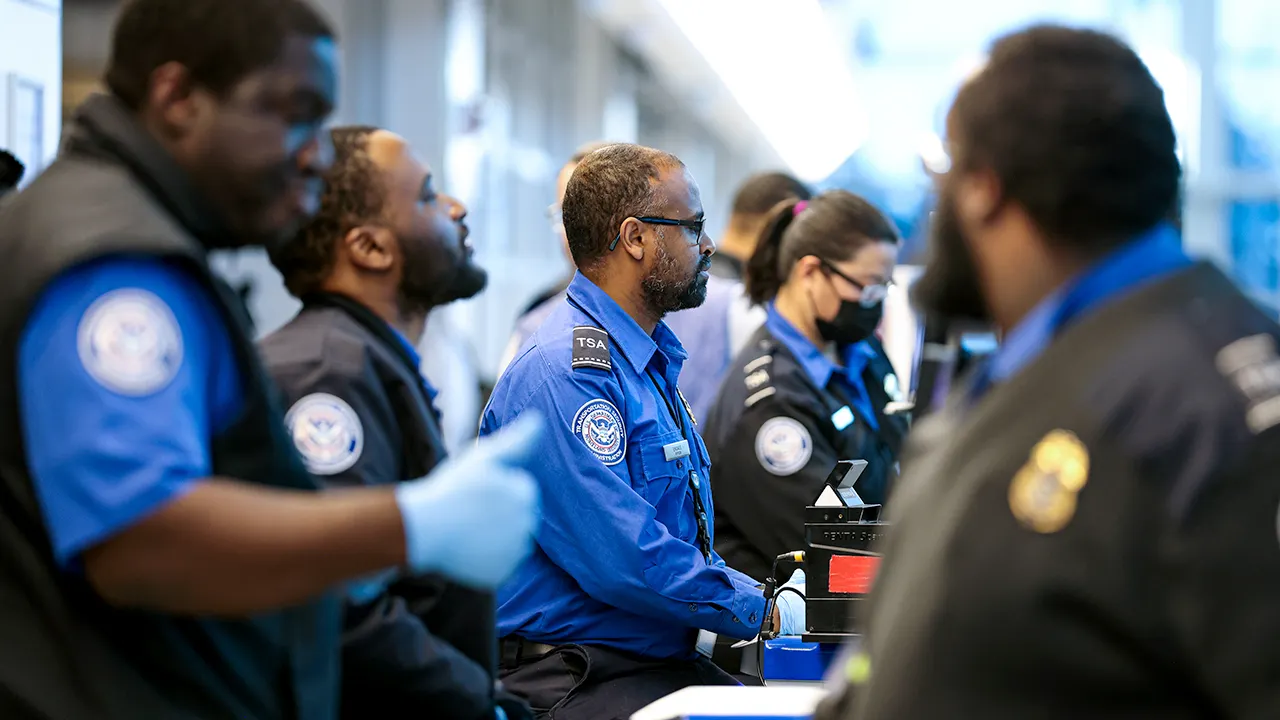
The next time airport travelers hand over their ID at a security checkpoint, the Transportation Security Administration (TSA) officer they encounter may be standing instead of sitting.The TSA has directed the officers assigned to verify passengers' identification to remain on their feet, saying the new rule is intended to reinforce security and create a more welcoming experience.The union representing workers, however, argues it could negatively affect both safety and comfort.POPULAR PANTRY STAPLE COULD GET YOU STOPPED AT AIRPORT SECURITY UNDER LITTLE-KNOWN TSA RULE"This welcome change reinforces both our security posture and our commitment to hospitality by having these officers on their feet and alert," the agency said in a statement to multiple news outlets."All officers must meet fitness for duty requirements to be capable of performing their vital national security function," it added.TSA officers may now be standing, not sitting, while checking travelers' IDs at airport security checkpoints.(Pedro Portal/The Miami Herald/Tribune News Service via Getty Images)The move comes nearly two months after TSA Administrator David Cummins took the helm of the agency and launched an initiative to improve the passenger experience.The American Federation of Government Employees (AFGE) TSA Council 100, which represents TSA officers, criticized the new policy, saying it was not consulted before the change was implemented at most TSA-staffed airports across the U.S.TRAVELERS CLASH AFTER TSA SHARES SURPRISING GUIDANCE ABOUT AIRPORT ETIQUETTENot all U.S.
airports are staffed by TSA officers, however.About 20 airports, including San Francisco International Airport and Kansas City International Airport, use private security screeners under the TSA's Screening Partnership Program.The union has reportedly argued the chairs provide basic ergonomic and safety support for officers who spend long hours standing and walking on hard floors, and said it plans to challenge the change.The ...