


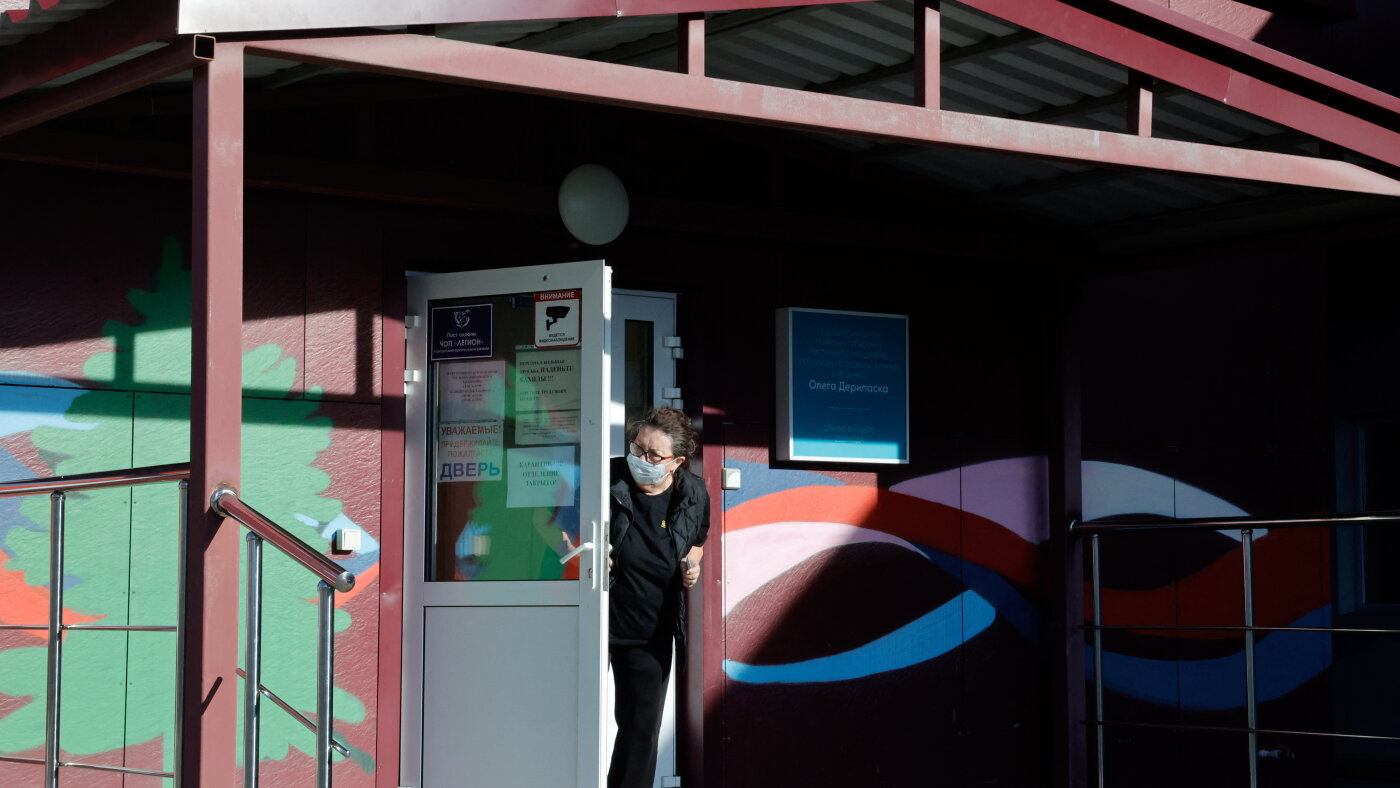
A woman wearing a face mask walks past the Irkutsk Anti-Plague Research Institute of Siberia and the Far East, founded in the 1930s to monitor strains of dangerous pathogens.Tatyana Makeyeva/AFP/via Getty Images hide caption A 28-year-old woman died in Russia last week and, since then, speculations about the case have ricocheted around the globe.The woman was a lab technician at a Russian research institute that studies the plague.
As unverified rumors have circulated that she may have contracted the disease from a lab leak, President Trump, the World Health Organization and other leaders are asking for more information.A security person wearing a face mask looks out from the door of an infectious diseases hospital in the town of Shelekhov, where an employee of the Irkutsk Antiplague Research Institute had died.
Tatyana Makeyeva/AFP/via Getty Images hide caption Russia has insisted this is not a health emergency and stated that its health authorities have not found dangerous pathogens in any of the deceased woman's contacts.But there are still far more questions than answers.That uncertainty has global leaders and health experts turning to a law that obligates countries, including Russia, to share exactly this type of information.It's called the International Health Regulations or IHR.On Wednesday, at a WHO press conference, Director General Tedros Adhanom Ghebreyesus invoked IHR as the best way to determine current situation in Russia and determine the appropriate response."We don't yet have the full picture of this event," he said.
"Timely, complete and transparent information sharing under the international regulations is essential to clarify conflicting reports and enable an accurate assessment of po...