


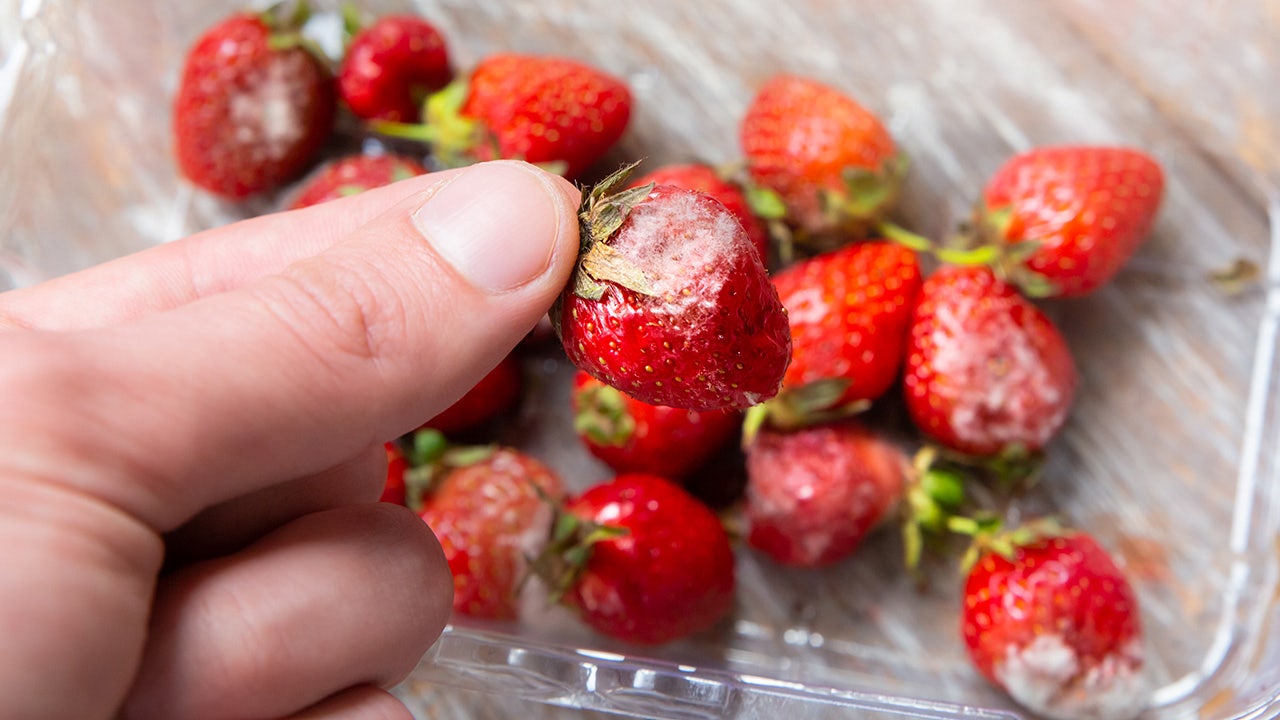
Finding a moldy piece of produce prompts a familiar kitchen gamble, but the risk depends on what's growing and what it's growing on, experts say.A recent survey out of Germany found that nearly 1 in 3 people cut mold off food before eating the rest, a habit that may not remove all toxins.Fewer than half of respondents knew that cooking or baking does not destroy mycotoxins, which are produced by certain molds and can be invisible in foods.More than a quarter thought heat could destroy them, while another quarter were unsure. SCIENTISTS SAY YOU'VE BEEN THROWING AWAY PERFECTLY GOOD MEAT BECAUSE OF ONE COMMON MISTAKEThe survey, which was conducted by Germany's Federal Institute for Risk Assessment, measured reported habits and knowledge, not toxin levels in food or illness.The report highlighted the limits of relying on sight to judge food safety. Visible mold can leave people wondering whether to cut away the spot or throw the food out.
(iStock)"Visible mold is reliably recognized and triggers intuitive avoidance," the authors wrote."But this instinct does not work when food contains toxins without visible mold."But what to do about moldy food really depends on the item, according to Brian Labus, Ph.D., an infectious disease epidemiologist and associate professor at the University of Nevada, Las Vegas School of Public Health."Those things are gross, but they're not the kind of thing that's going to make you sick."People often confuse ordinary spoilage with the kinds of germs that cause foodborne illness, he told Fox News Digital.GREEN BANANAS AREN'T NECESSARILY BAD — EXPERTS EXPLAIN THE HIDDEN HEALTH PERK"Most of the stuff that we're talking about, especially with fruits and vegetables, it's not going to be something that's going to cause a foodborne illness," Labus said.
"Those things are gross, but they're not the kind of thing that's going to make you sick."People often confuse ordinary spoilage with the kinds of germs that cause foodborne illness, an epidemi...