


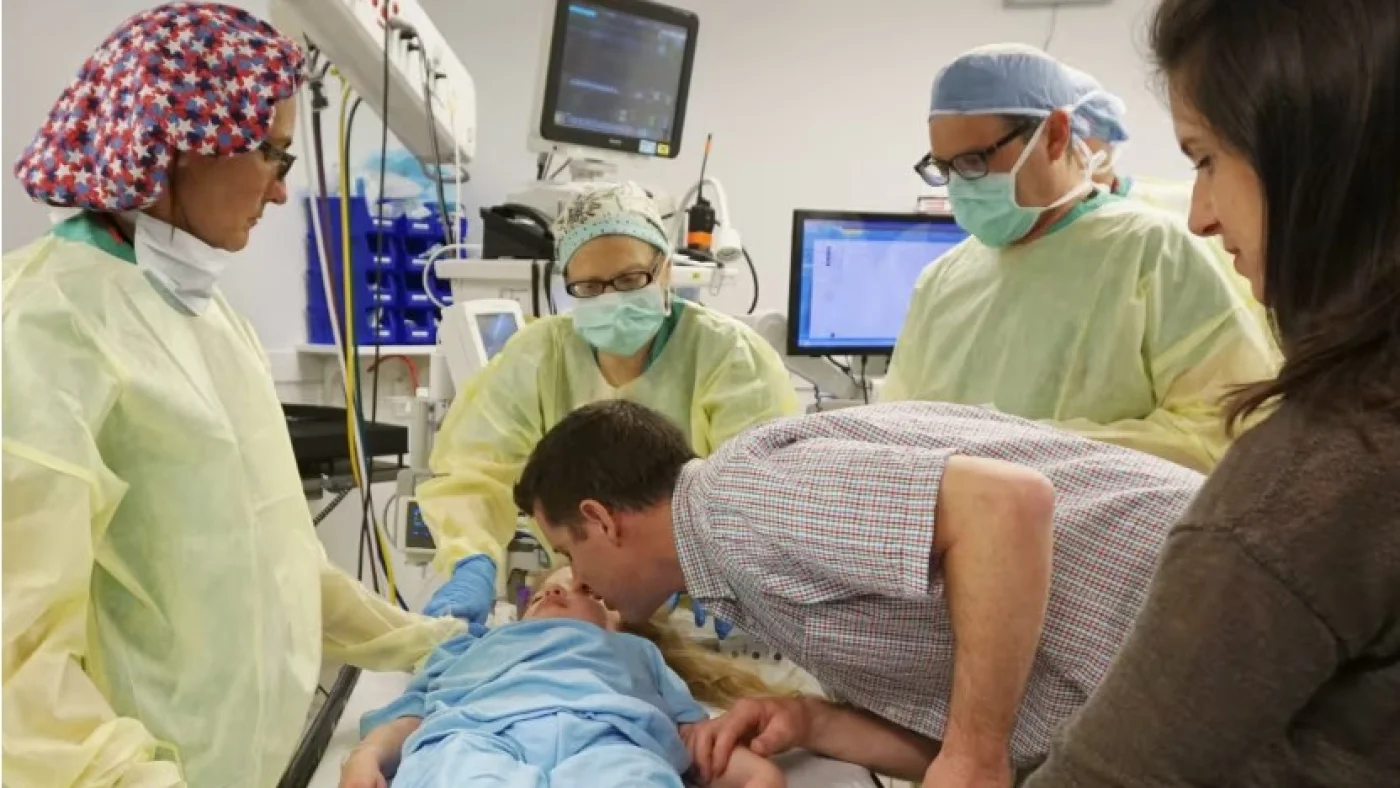
For stories on the science of healthy living, subscribe to NPR's Health newsletter.When Eliza O'Neill was little, she was one of those kids who always needed to have an accessory, like a hat or a scarf."She would always go get my high heels from the closet and clop around in those — which she scared us to death," says her mom, Cara O'Neill, a pediatrician in Columbia, S.C.But by the time Eliza turned 3, her parents noticed she was falling behind on developmental milestones.She was diagnosed with a pragmatic speech delay, meaning she had learned a lot of words, for example, but she wasn't using them in a typical way in social situations.In 2013, one of Cara's colleagues suggested testing Eliza for a group of metabolic disorders — just to rule them out.But the test came back positive for something called Sanfilippo syndrome.Cara remembered learning about the rare inherited disease back in medical school."When they said the word, it all kind of came rushing back," she says.
"And it was just this bale of dread, like, oh, my goodness, this is horrific."Children with Sanfilippo have a faulty gene that leaves them unable to break down heparin sulfate, a molecule critical to normal cell function.As it builds up in the body, it causes severe complications.Kids with Sanfilippo lose their ability to speak and walk.
They have seizures, and they usually don't live past their teens, according to the Cure Sanfilippo Foundation, which the O'Neills started and continue to run.For Eliza's dad, Glenn O'Neill, it took a little while after learning Eliza's test results for the diagnosis to sink in."It wasn't really until I got home that I realized how quickly the degeneration happened," he says."And that was really the point where we said, 'Gosh.
Whatever we need to do, we need to do it now.'"At Nationwide Children's Hospital in Columbus, Ohio, researcher Haiyan Fu had been working on a gene therapy in mice for Sanfilippo since the late-1990s.The therapy used a modified virus to ...