


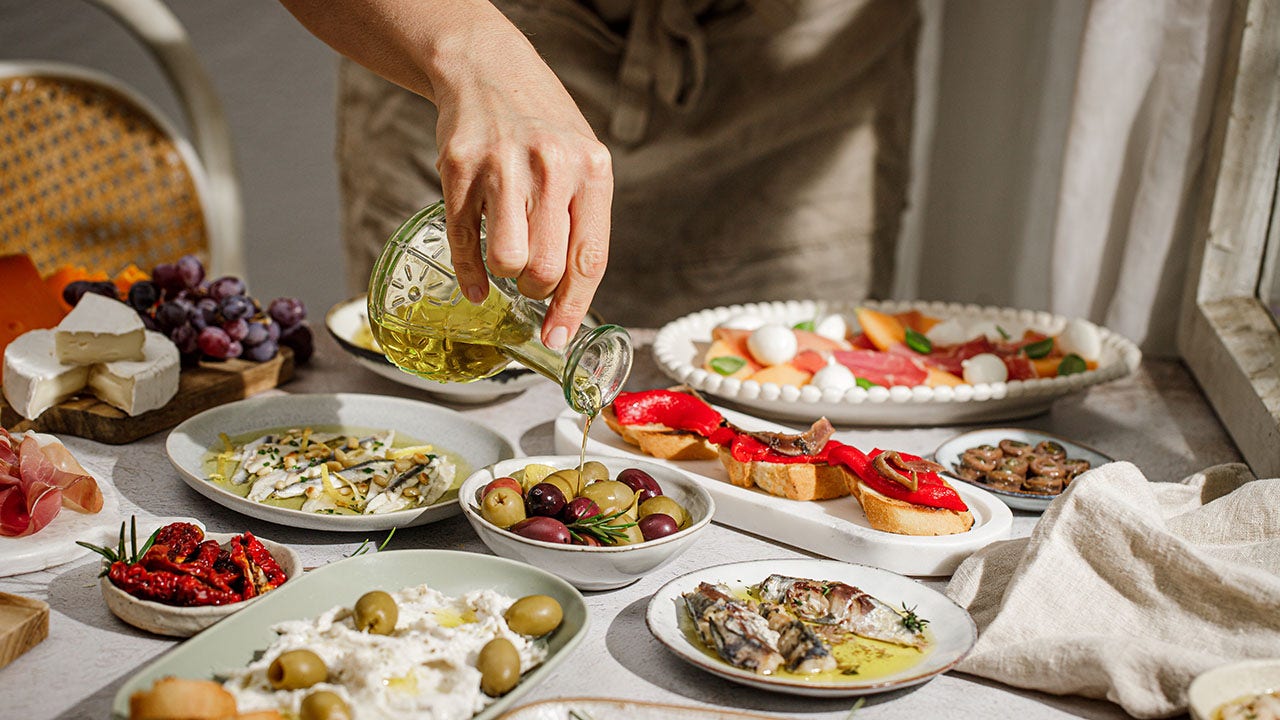
A simple change to the order in which you eat could help blunt blood sugar spikes, new research suggests, but experts say it's not necessarily a "quick fix."In a study published in the journal Diabetes in October, mice that received olive oil 15 minutes before glucose — a simple sugar the body uses for energy — had a smaller early rise in blood sugar than mice given glucose first or glucose alone.The researchers also saw the effect in mice with type 2 diabetes and severe insulin deficiency.The researchers also tested other dietary fats, suggesting the response may not be unique to olive oil.
The experiment offers clues about why food order may matter.BUTTER, BEEF TALLOW DEBATE ISN'T OVER AS HEART EXPERTS WARN OF RISKS AND US GUIDELINES DIFFER ON FATS"Our findings suggest that the order in which nutrients reach the gut can engage a coordinated hormone-nerve response that changes how quickly the stomach delivers glucose to the intestine," corresponding author Dr.Daisuke Yabe of Kyoto University said in a statement.A study in mice found that olive oil before glucose blunted early blood sugar rise.
(iStock)When the mice received fat before sugar, their stomachs released food into the intestine more slowly and their blood sugar rose less sharply at first.THE 8 HEALTHIEST BEANS YOU SHOULD BE EATING MORE OFTEN, ACCORDING TO NUTRITION EXPERTThe researchers also found that giving the mice fat first triggered early increases in two hormones, glucagon and GLP-1.Although glucagon is usually known for raising blood sugar, the researchers found that the two hormones appear to work together to help limit the rise in glucose.Yabe said the group's research is inspired by practical approaches people can sustain.
"Meal-sequencing is appealing because it merely changes how a meal is eaten rather than requiring people to avoid entire food groups," he said.BEST FOODS FOR REDUCING DANGEROUS BELLY FAT AND PROTECTING HEART HEALTHThe researchers, however, said further studies are need...