


Review: 'Queen at Sea' explores the tricky moment when consent is fogged by dementia
This is read by an automated voice.Please report any issues or inconsistencies here.
See more from the L.A.Times in Google Search.
Set us as preferred Early in “Queen at Sea,” there’s a sex scene.It’s brief and shows little, but the fleeting moment will inform everything that happens in writer-director Lance Hammer’s crushing second feature.
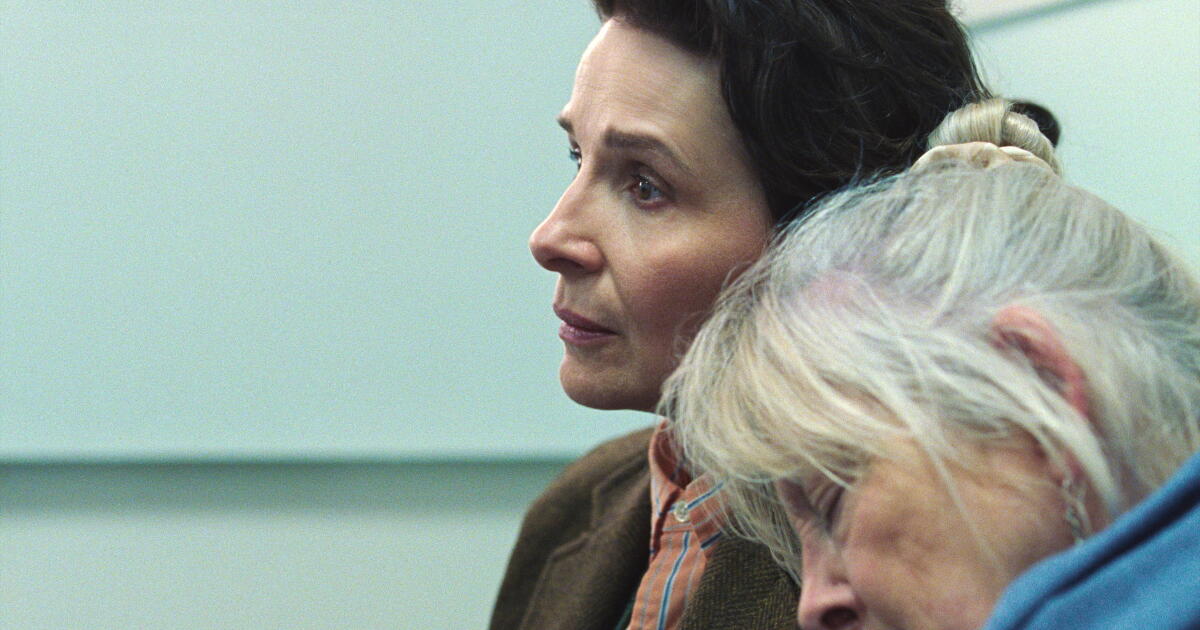
This movie about consent and dementia — and ultimately, far much more — hinges on a questionable act that provokes a hasty emotional reaction.In the process, a family tries to come to the aid of its ailing matriarch, presented with only a series of unappealing options, each more unbearable than the next.Juliette Binoche is beautifully fragile as Amanda, the dutiful daughter of Leslie (Anna Calder-Marshall), who herself has been married to second husband Martin (Tom Courtenay) for 18 years.
Amanda and her teenage daughter Sarah (Florence Hunt) visit the older couple’s London home one morning, shocked to open their bedroom door to find Martin on top of Leslie, thrusting away.But embarrassment quickly gives way to anger for Amanda: Leslie has advanced dementia and her doctor has told Martin that he can no longer have sex with Leslie because she doesn’t possess the mental acuteness to give consent.
Furious at her stepfather, Amanda phones the police, hoping the authorities can put a scare into him.But Amanda’s call has unintended consequences.When the police arrive, they arrest Martin, advising Amanda that she take her mother for a “forensic medical examination” — or, as Amanda puts it bluntly, a rape exam — to ensure she has not been injured.
Amanda’s rage quickly morphs into panic because she knows how dependent the childlike Leslie is on her husband, who functions as her primary caregiver.She just wanted to teach Martin a lesson, but soon, social services intervene to determine whether the elderly couple has to be separated for Leslie’s safety.
Movies From a new “Resident Evil” r...