


Trump's global health strategy is emerging. What will the Democratic Congress say?
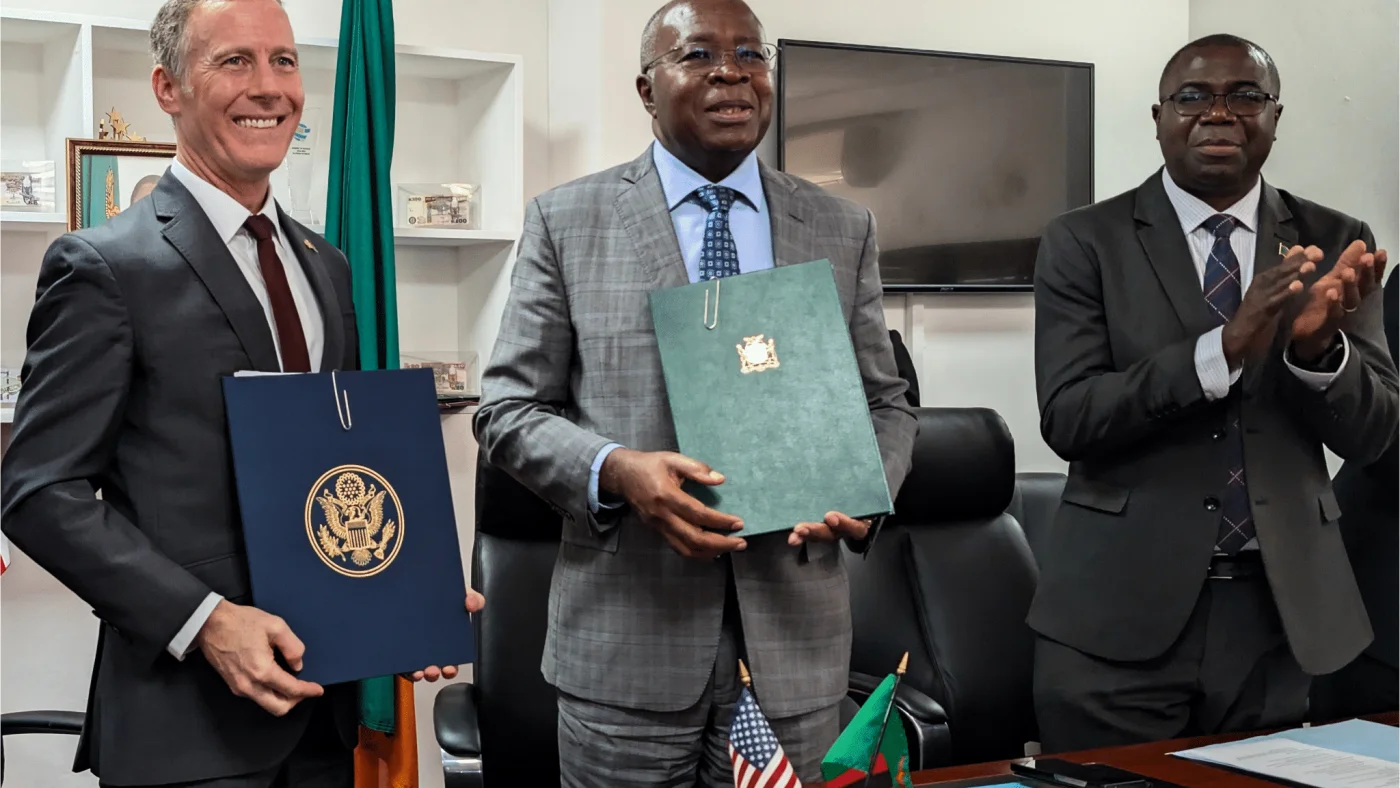
At an October meeting, signed copies of the health cooperation memorandum of understanding between the U.S.and Zambia are displayed by U.S.
Embassy Chargé d'Affaires Mich Coker (left) and Zambia's Minister of Finance and National Planning Situmbeko Musokotwane (center).Minister of Health Roma Chilengi (right) applauds.
U.S Embassy in Zambia hide caption By all appearances, it was a classic government ceremony.Officials in suits.
Big black chairs around a wooden table.A cluster of microphones.
It happened on October 8 in Lusaka, Zambia.Amid applause, U.S.
and Zambian officials signed a global health agreement, called a Memorandum of Understanding or MOU.But Mich Coker — the Chargé d'Affaires at the U.S.Embassy in Zambia — said this agreement was anything but classic."This MOU represents a fundamental shift," he said, speaking at the signing ceremony.
He explained that the relationship between the two countries was moving "from a traditional donor-recipient model to a true partnership, one grounded in Zambian leadership, in Zambian ownership and in shared accountability."Global health experts on all sides of the political spectrum and all over the world agree with Coker that there's been a fundamental shift in the U.S.approach to global health."The shift that's currently unfolding is very large and it's very rapid," says Janeen Madan Keller, acting co-director of the Global Health Program at the Center for Global Development.The story of this fundamental shift starts at the beginning of the second Trump Administration with months of global health turmoil — Madan Keller and other experts say — but has given way to a clearer strategy.
One with big goals, a short timeline and a lot less transparency than what came before.Here is a look at where things stand now and how a Congress controlled by the Democratic Party might impact the n...