


From transmission lines to pipelines: What the Senate's permitting reform bill could mean for California
This is read by an automated voice.Please report any issues or inconsistencies here.
See more from the L.A.Times in Google Search.
Set us as preferred The U.S.Senate has advanced a major permitting reform bill that could fundamentally change how the federal government approves and builds energy and infrastructure projects, opening the door for new transmission lines, pipelines and renewables in California and across the nation.
The Bipartisan American Affordability and Jobs Act, or BAAJA, would be the most sweeping overhaul of federal energy and infrastructure permitting in decades, and the most consequential energy law since President Biden’s Inflation Reduction Act of 2022.It is is expected to move to the House for consideration in early December.Experts say it has become an important test of where lawmakers are willing to draw the line when it comes to weakening environmental protections in favor of faster infrastructure development.
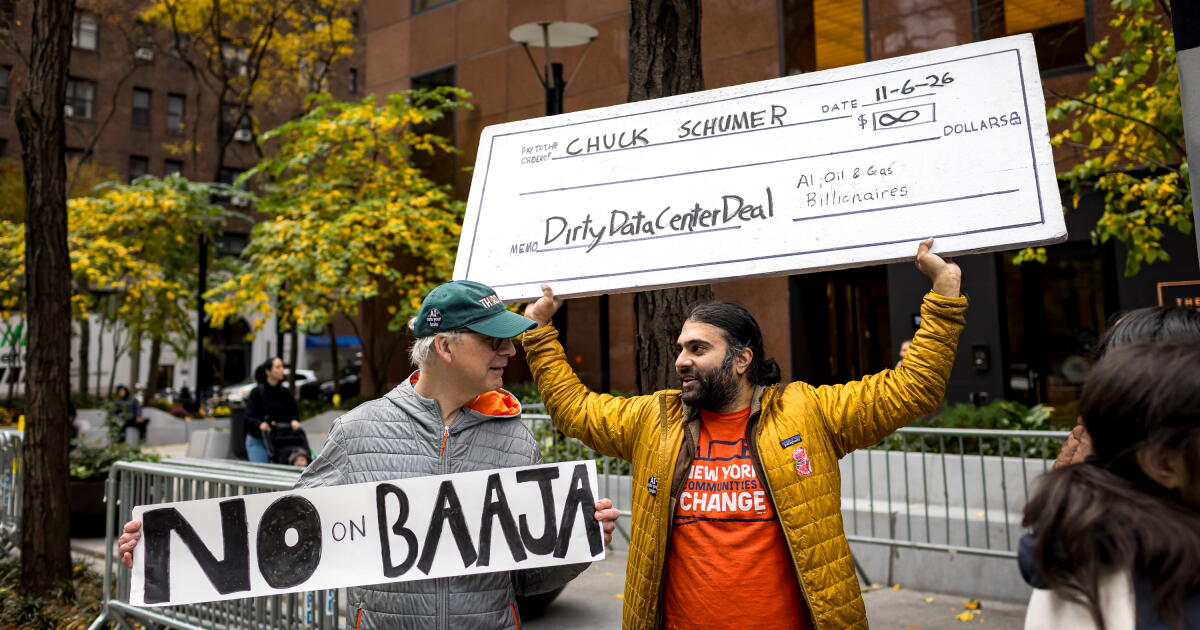
The bill would make it significantly easier to address the bottlenecks slowing the clean energy transition, but would also make it easier to build fossil fuel infrastructure and data centers.The Senate on Thursday voted 62 to 33 to pass the bill, with 15 Democrats in favor, including Minority Leader Chuck Schumer of New York.Both California senators, Adam Schiff and Alex Padilla, voted against it, saying it achieves some critically important priorities but falls short on others.
Climate & Environment President Trump urged senators to back a bipartisan bill to speed federal approval of energy and infrastructure projects, ahead of a key procedural vote Monday.The bill is notably broad and includes provisions that would overhaul the National Environmental Policy Act, the Endangered Species Act, the Clean Water Act and the Historic Preservation Act in an effort to narrow the scope of some environmental reviews, shorten permitting timelines, limit opportunities for litigation and change how certain projects are treated....