


In 'Blade Runner 2099,' Michelle Yeoh and Hunter Schafer find connection amid secrets and loneliness
This is read by an automated voice.Please report any issues or inconsistencies here.
See more from the L.A.Times in Google Search.
Set us as preferred There are no easy answers at the end of “Blade Runner 2099.” The eight-episode limited series builds on the sci-fi world of Ridley Scott’s 1982 film “Blade Runner” and Denis Villeneuve’s 2017 sequel “Blade Runner 2049.” And like those films, it culminates with purposeful ambiguity.“What I love about both films is that there’s so much debate about what the endings mean,” says creator and showrunner Silka Luisa, speaking via video call.“Everyone has a different interpretation of what would happen afterwards.
I wanted to give that experience to audiences too.”The series, now streaming on Prime Video, imagines a post-revolution Los Angeles, where the bioengineered humanoid replicants have risen up and taken power from the humans, now second-class citizens.It’s a reversal from the movies, where humans build the replicants for labor and ultimately suppress them.“The actual war itself I was less interested in,” Luisa says.
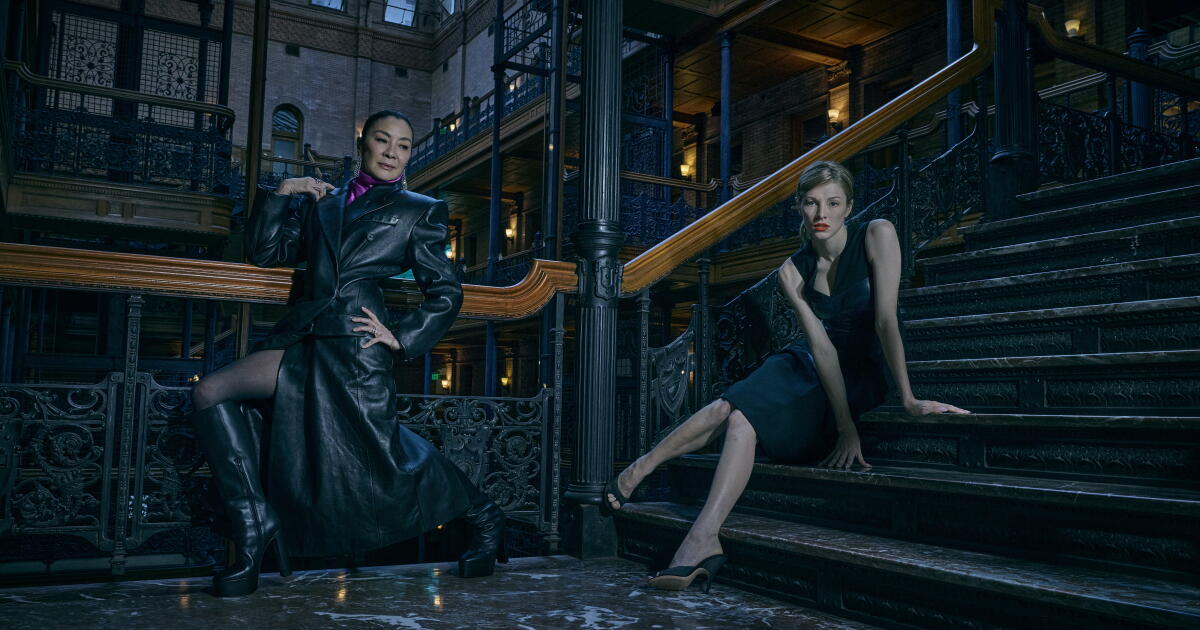
“I wanted to know what would they do with winning.And what would happen to us when we’d lost.”That supposition created a compelling backdrop for a more intimate story between fierce replicant blade runner Olwen (Michelle Yeoh) and determined but down-on-her-luck human Cora (Hunter Schafer).
Cora takes on the identity of a blade runner in hopes of a better life only to find herself in too deep at the LAPD when a group of replicants go rogue.She and Olwen find an unlikely collaboration as they track down the group, which includes Marek, Olwen’s former partner.It was the companionship that develops between Olwen and Cora that interested Yeoh, 64.
“They realize how much they needed each other by the end of their journey,” she says, speaking with Schafer via video call from Los Angeles.“It’s about them discovering not just what is important to the w...