


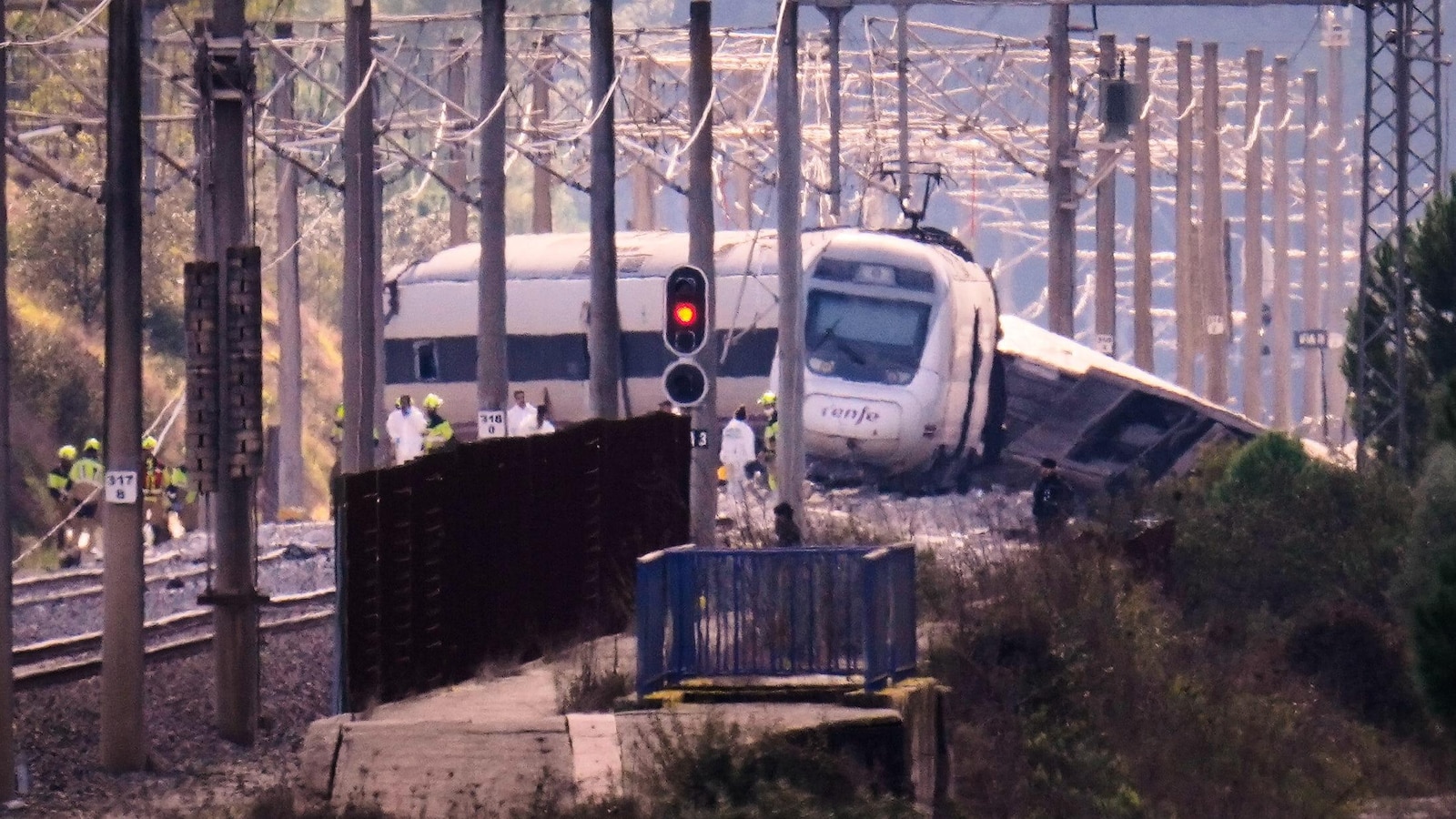
BARCELONA, Spain -- The deadly train wreck in southern Spain has cast a pall over one of the nation’s symbols of success.The collision Sunday killed at least 41 people and injured dozens more, according to officials as of Tuesday.“It is undoubtably a hard blow, and I have to work so it doesn’t affect the credibility and strength of the network,” Spanish Transport Minister Óscar Puente told Spanish national radio RNE when asked about the knock to the reputation of the rail system.Here's a look at the history of a rail network that became a crown jewel of contemporary Spain, by the numbers.The number of years since Spain inaugurated its first high-speed AVE, which means “bird” in Spanish.Both before and after that milestone, successive Spanish governments devoted tax revenues and European Union development aid to its high-speed rail network that quickly caught up with and surpassed high-speed pioneers Japan and France.The first high-speed train to speed across Spain preceded the opening of the 1992 Summer Olympic Games in Barcelona by two months.Both marked high points in Spain’s recent history after it emerged from the economic doldrums and cultural and political isolation of the 20th-century dictatorship of Gen.Francisco Franco.How many kilometers, equal to 2,400 miles, of high-speed rail that Spain has laid over the last three-plus decades for its 49 million residents.Only China — with 45,000 kilometers (28,000 miles) for its 1.4 billion people — has more high-speed track, according to the International Union of Railways.Spain's commitment to high-speed rail, which the railway union defines as rails for trains going 250 kph (155 mph), has helped Spain shed its reputation of often being behind the industrial curve compared to other leading economies.Spain’s train builders have been able to capitalize on its domestic expansion.
A Spanish consortium built Saudi Arabia’s high-speed line connecting the holy cities of Mecca and Medina that opened ...