


President Richard Nixon paved the way for a new relationship with China in the 1970s, but it came at a time as Beijing’s influence was growing globally."I think China's rise is inevitable.It's not rising.
It's already risen.But the question is how China would behave," said former People’s Liberation Army Senior Colonel Zhou Bo.Zhou is now a Senior Fellow at the Center for International Security and Strategy at Tsinghua University.
He began his service with the PLA in 1979, a time when China’s military was experiencing rapid changes."I think the United States military is definitely the strongest in the world," Zhou said."When China celebrates its centenary of the founding of the People's Republic of China, that is the goal for us to become world-class military by 2049.
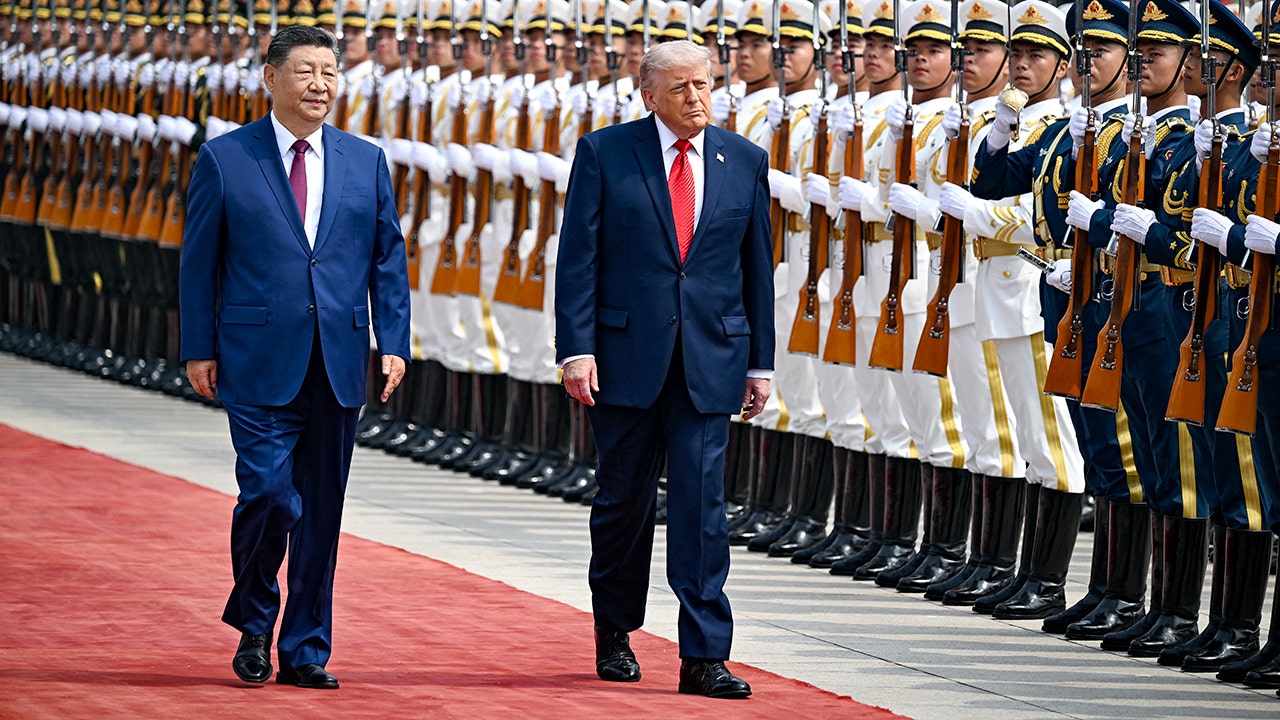
That means we believe we can only catch up with the United States militarily by that time."President Donald Trump participates in a welcome ceremony with China's President Xi Jinping at the Great Hall of the People.(Mark Schiefelbein/AP Photo)Throughout Chairman Mao Zedong’s leadership, China’s military grew in troop size to as many as 6.5 million.
As Deng Xiaoping became China’s paramount leader, he put an emphasis on quality over quantity and began reducing troop numbers while pushing to advance technology.Over the next several decades, China would build up its naval forces, nuclear warhead stockpile and missile arsenal to rival the U.S.RELATED: CHINA’S GRIP ON RARE-EARTH MAGNETS COULD CRUSH US DRONE INDUSTRY BEFORE IT GROWS"I would say between the two countries there is an element of competition," said Zhou."I believe even in the military field, China's strength is growing.
And is closing with that of the United States."The military threat has paved the way for the new space race and U.S.questions over the close relationship between China’s space program and its military."I think the Chinese position is very easy to understand.
We have so many troubles on Earth, and why should ...