


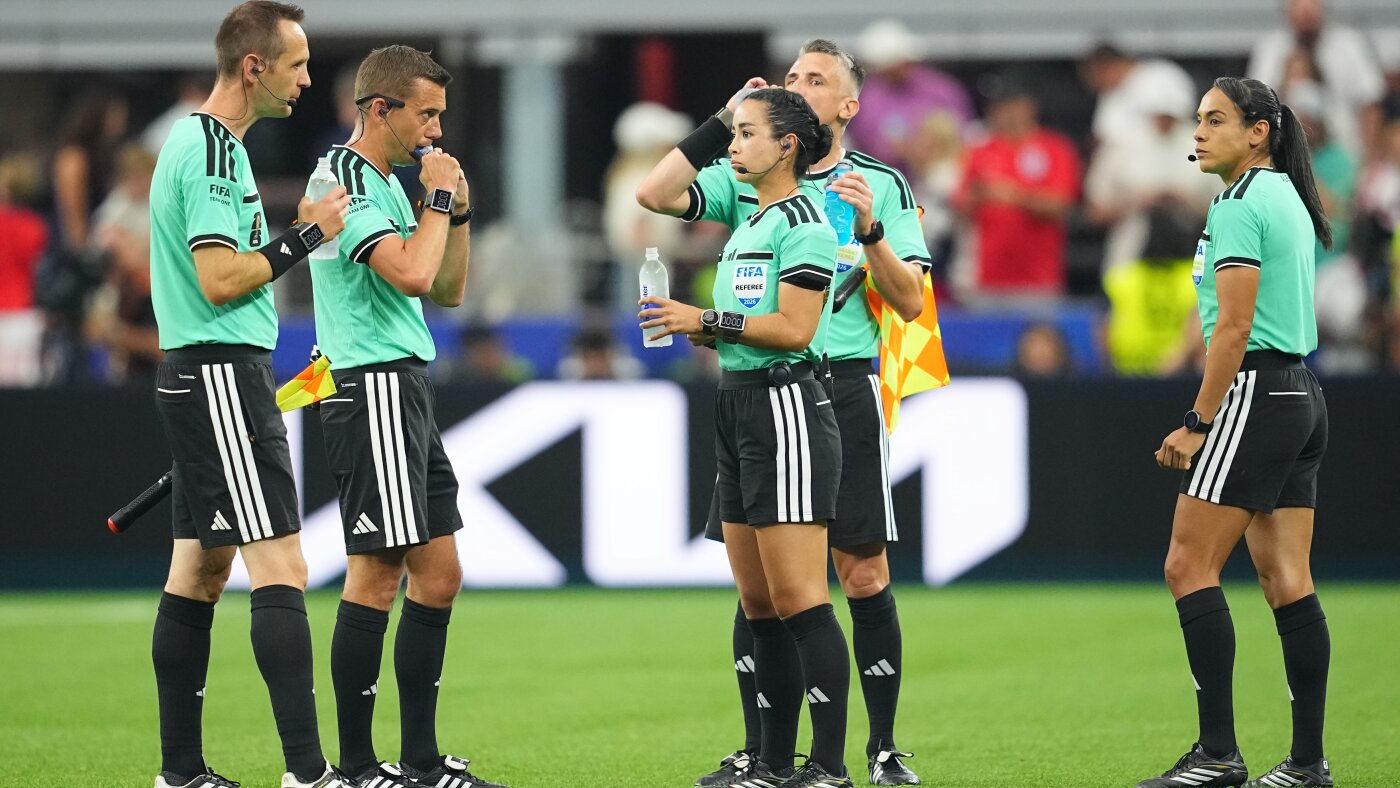
LOS ANGELES — For the first time in World Cup history, FIFA is mandating all soccer players take hydration breaks to protect them from the threats of extreme heat.But the new rule has sparked criticism from two very different groups.Some experts have warned that this summer's World Cup — co-hosted by the U.S., Mexico and Canada — could be the hottest in the tournament's history.
In response to concerns about extreme heat, FIFA implemented three-minute hydration breaks midway through each half regardless of temperatures.But some critics say they're interrupting the game's flow and give coaches a chance to shift momentum in their team's favor, while some scientists have said the breaks are too short to make a significant impact on cooling and rehydration when conditions are sizzling."When we look at the three minute hydration breaks, we're really looking at this as a way to mitigate anything that could potentially lead to an incident or an emergency," said Joshua L.
DeVincenzo, assistant director of applied research services at Columbia University's National Center for Disaster Preparedness.Here's a look at the heat risks players face and what the hydration breaks can do:This World Cup is the first to implement mandatory three-minute cooling breaks midway through each half, regardless of temperatures or whether stadiums are enclosed and/or air conditioned.The governing body said it was to "ensure equal conditions for all teams, in all matches," and the rules draw upon the experiences of past tournaments, including the FIFA Club World Cup in the U.S.last summer where temperatures soared into the 90s F (mid-30s C) and above in many areas.Some coaches said the breaks make sense when temperatures are extreme, but they questioned whether they were necessary at every match.Athletes pushing themselves physically in hot and humid conditions risk getting what's called exertional heat illness.
It happens when the body's temperature gets too hot and is accompanied by si...