


For more than two decades on the Army Staff, part of my job was recommending which nations received American weapons, training and doctrine, and which did not.The choice rarely came down to which weapon system performed best on a range.
It came down to alliance.A country that trained on American equipment, spoke our tactical language and built its systems around our supply chains stayed tied to Washington for a generation.One that turned to Moscow or Beijing drifted into someone else’s orbit.That lesson has stayed with me.
Great powers rarely prevail because they possess the single best weapon; they prevail because other nations choose to build their militaries, economies, and, ultimately, their futures around their systems.Washington risks forgetting that lesson in today’s race to build the world’s dominant computing platform.ROBERT MAGINNIS: TRUMP’S ANKARA REMARKS REVEAL A GRAND STRATEGY HIDING IN PLAIN SIGHTWhile Washington argues over which chatbot drafts the sharper essay, Beijing is building something far more ambitious than a single flagship model.
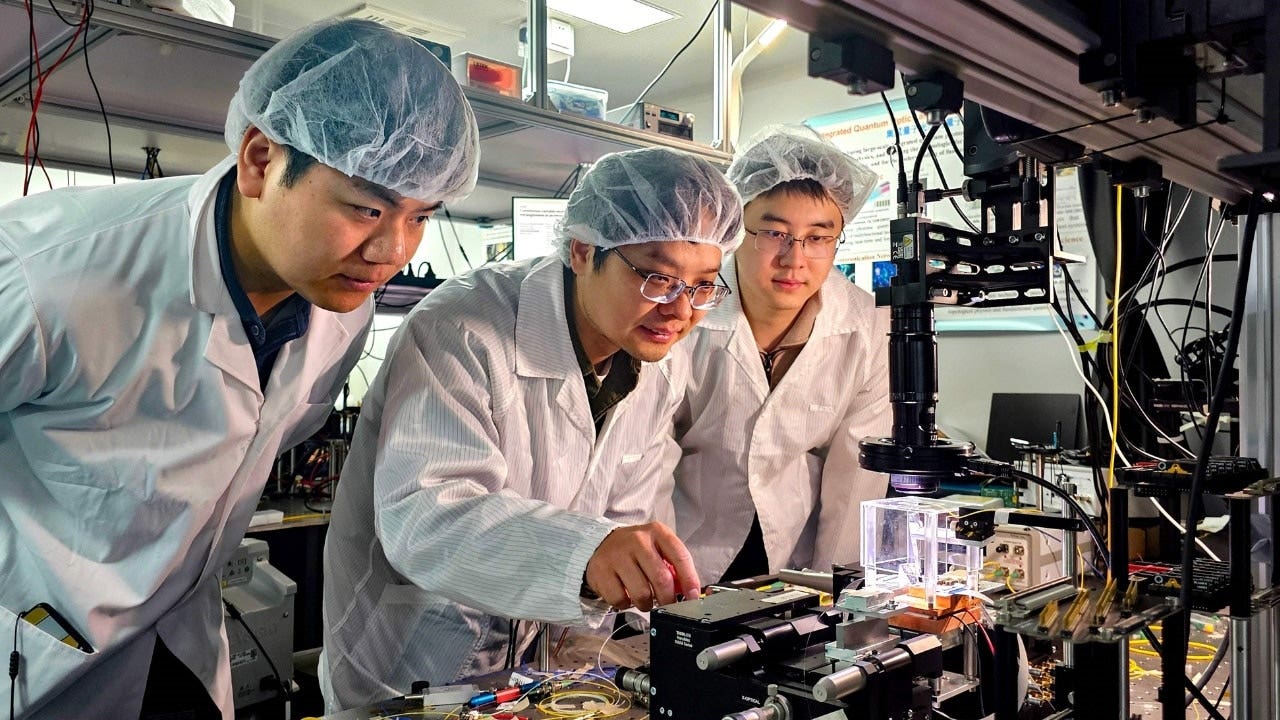
That distinction separates today’s technology race from tomorrow’s world order.Consider that China’s Huawei is preparing to double production of its Ascend processors in 2026, pushing toward 1.6 million chips, and Chinese developers at DeepSeek have already tuned their newest models to run specifically on that Huawei silicon.SEN TODD YOUNG: THE HIDDEN DANGER CHINA’S SHIPS COULD BRING TO OUR SHORESWang Jianwei C, a professor at Peking University, tests an integrated photonic quantum chip with doctoral students Jia Xinyu L and Zhai Chonghao in a laboratory of Peking University in Beijing, China, Feb.
18, 2025.(Xinhua via Getty Images)Meanwhile, congressional hearings and cable news segments keep asking which model scores highest on the latest benchmark, an interesting question but not the decisive one.History’s great wars were won not by the single best weapon, but by nations able to generate e...