


'A five-alarm fire': Western reservoirs that supply California fall to record low levels
This is read by an automated voice.Please report any issues or inconsistencies here.
See more from the L.A.Times in Google Search.
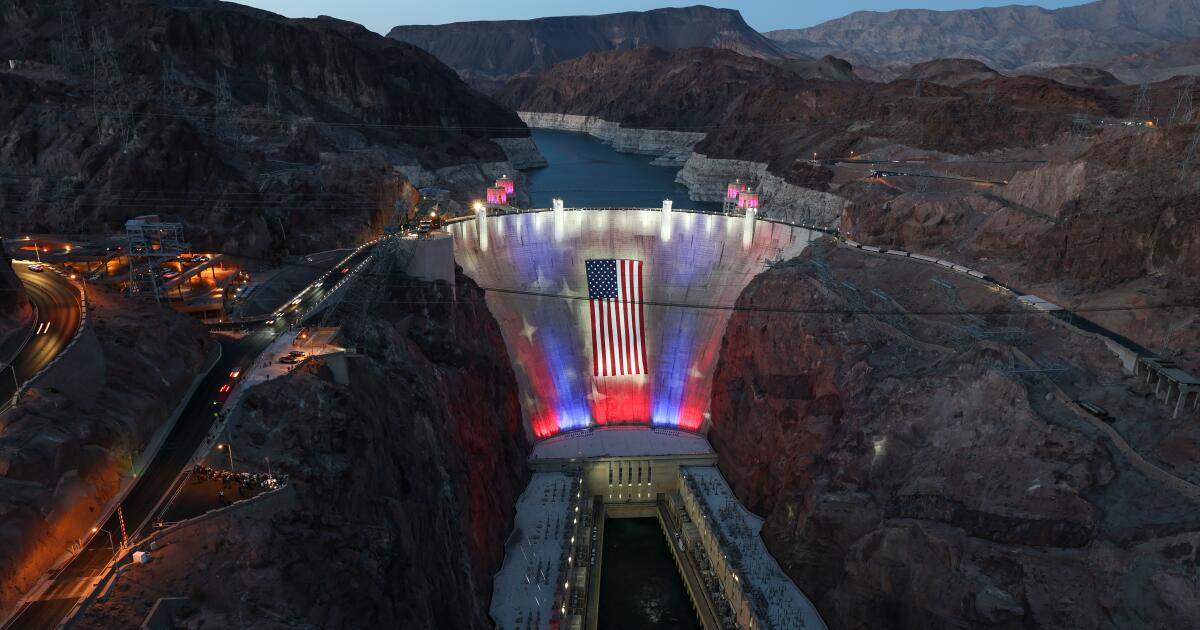
Set us as preferred Lake Mead and Lake Powell, the country’s two largest reservoirs, have fallen to their lowest combined levels on record, a grim marker in the deepening water crisis across seven states that depend on the Colorado River.The two reservoirs are now lower than the previous record in 2023, researchers say.“It’s a hell of a milestone,” said Jack Schmidt, director of Utah State University’s Center for Colorado River Studies.“Really a teaching moment to all of us of the severity of the crisis.” Climate & Environment The source of the Colorado River in the Rocky Mountains is drying up, threatening a critical water lifeline for about 35 million people and 5 million acres of farmland across the Southwest.Lake Mead near Las Vegas, the country’s largest reservoir, is now 27% full.Lake Powell on the Utah-Arizona border, the second-largest, is at just 23% of capacity.
If it drops another 33 feet, water won’t reach its intakes to generate hydroelectric power.Schmidt and five other researchers wrote in a white paper that the new low underscores the urgency of using less water.They predicted the reservoirs will keep setting new records every day until snows come and bring the next seasonal pulse of runoff.It’s unclear whether the strong El Niño conditions this year might provide some relief.
The latest three-month forecast by the National Weather Service predicts above-average rainfall along the river and in much of the Southwest through October.The Colorado River provides water for about 35 million people and 5 million acres of farmland, from the Rocky Mountains to northern Mexico.The water was originally divided among the states in 1922 under an agreement that overpromised what the river could provide.For decades, so much water has been taken that the river seldom meets the sea in Mexico, and its ...