


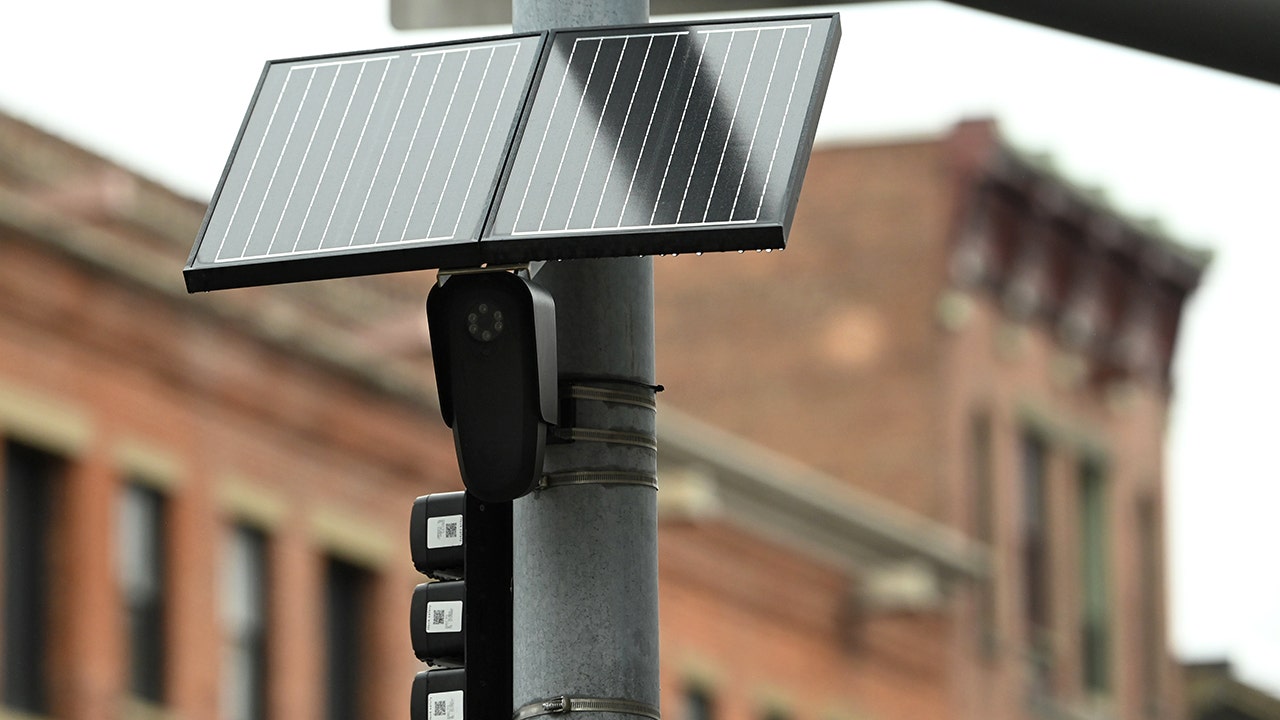
The cameras that scan your car on your commute to work have quietly become one of the most widespread surveillance tools in America. They record vehicle sightings, feed searchable databases and, when agencies choose to share data, can connect searches across jurisdictional lines. Recent courts have upheld the particular ALPR networks before them, but they have left open whether a denser, more revealing system could cross the constitutional line.What are ALPRs? Flock cameras are used in towns across the nation as license plate readers.A Colorado woman was accused of porch theft after police relied on surveillance tech, including Flock cameras, that incorrectly linked her vehicle to the scene.
(Lori Van Buren/Albany Times Union via Getty Images))Automated license plate readers (ALPRs), which are usually small, solar-powered cameras mounted on a pole, building or police car, capture and record where tens of millions of drivers go every day.Flock Safety, one of the leading ALPR vendors, has exploded in popularity with law enforcement, municipalities and businesses in recent years.The ACLU estimates that there are between 80,000 to 100,000 Flock cameras deployed nationwide. Flock’s own marketing claims that it is present in more than 6,000 communities, working with more than 1,000 businesses, and more than 5,000 law enforcement agencies nationwide, resulting in billions of vehicle scans per month.LICENSE PLATE CAMERAS AT HOME DEPOT AND LOWE’S SPARK PRIVACY FEARSHow it works:ALPRs photograph every passing car, capturing details like license plate number, make, model, color, and other distinguishing features like roof racks, bumper stickers, and scratches to create what Flock calls a "vehicle fingerprint." This information is then uploaded to a searchable database that can be shared with other agencies when the owning department enables it, typically without a warrant.Privacy concerns abound. Privacy advocates, online creators, and concerned citizens argue that...