


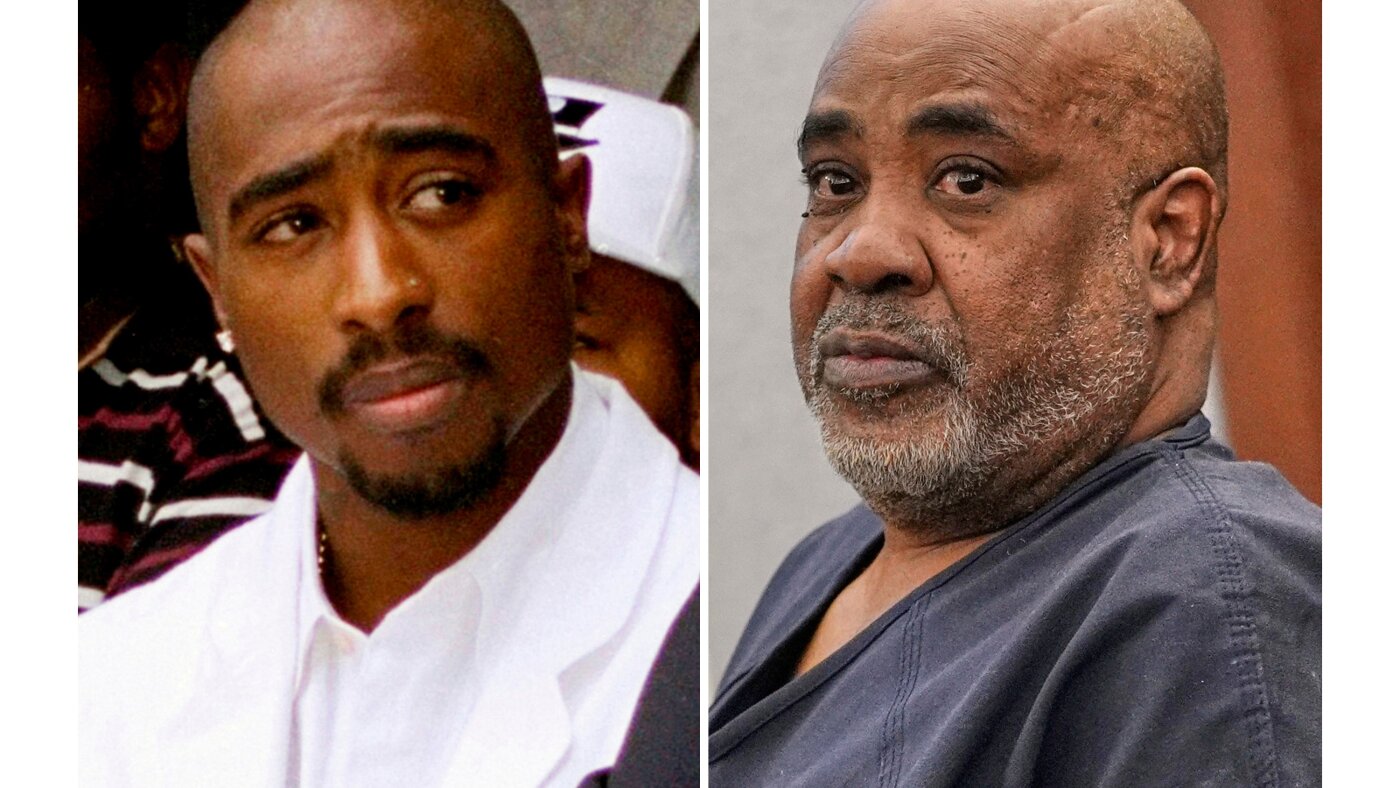
LAS VEGAS — A Nevada judge ruled on Tuesday that the recording of an interview the man accused in the killing Tupac Shakur gave to police in 2008 could be used at his upcoming trial.Judge Carli Kierny found that the interview is admissible in Duane "Keffe D" Davis' trial, which is scheduled to start Aug.10.Davis, 63, is charged with murder in Shakur's 1996 killing and faces life in prison without parole if convicted.
Prosecutors allege Davis orchestrated the killing.Shakur's death is considered one of the most notorious unsolved murders in the United States.The case went cold until Davis began making public statements about it, including in a book he co-wrote in which he said he was in the Cadillac and provided the weapon used to shoot Shakur.Defense attorney Michael Sanft argued that a 2008 interview Davis gave law enforcement was supposed to be confidential, and that detectives explicitly told him the interview was not supposed to be used against him."I sang because they promised I would not be prosecuted," Davis wrote in his book "Compton Street Legend."Prosecutors argued there was no basis to exclude the interview from the trial, which is expected to take about four weeks.
They argued the interview was no longer inadmissible when Davis chose to write his book and speak publicly about what happened.Davis' attorney unsuccessfully tried to block the use of the book in the upcoming trial, arguing that it was fictionalized to make a profit and impossible to determine which parts, if any, he wrote.Kierny determined Davis adopted the book as his own, citing an interview in which he described the book as the "real truth."The 2008 interview was used in former Los Angeles Police Department Detective Greg Kading's book "Murder Rap: The Untold Story of the Biggie Smalls & Tupac Shakur Murder Investigations." Portions of the recording were also played in documentaries, including the recent documentary "Sean Combs: The Reckoning."Shakur was killed Sept.
7, 1996, in L...