


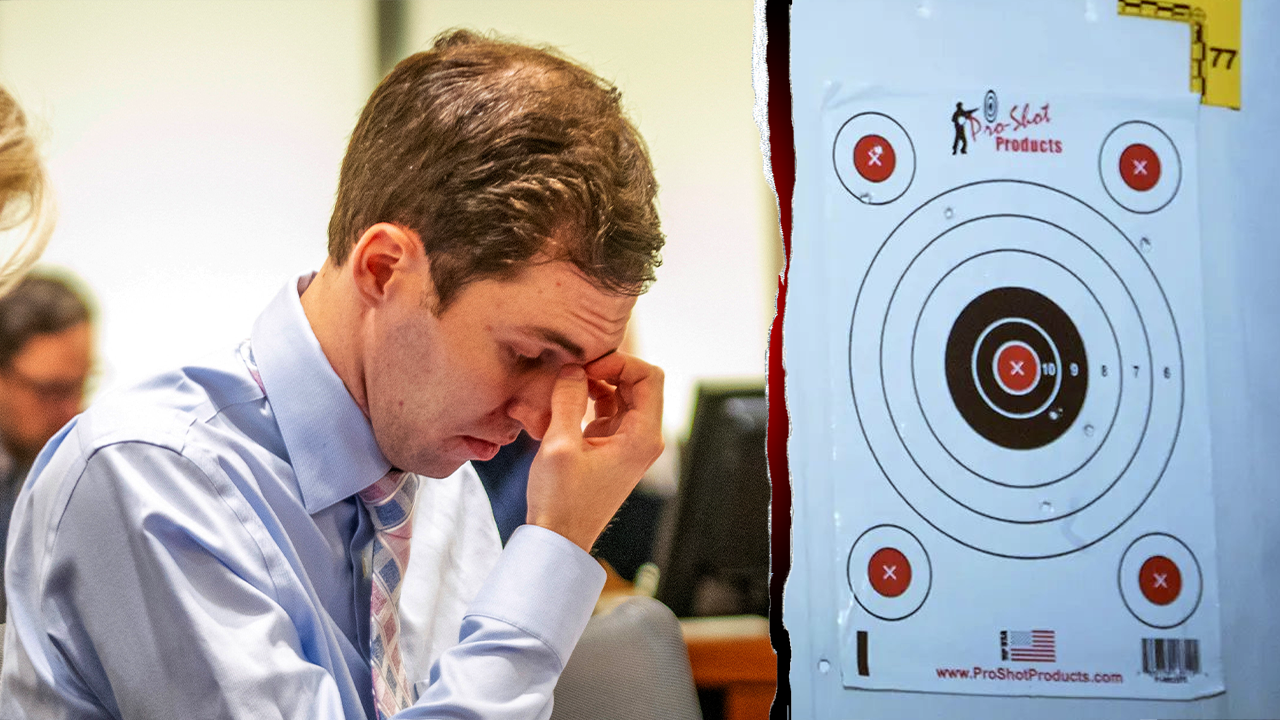
Accused Charlie Kirk assassin Tyler Robinson allegedly "seldom hit the bullseye and sometimes missed the target completely" when taking practice shots with the suspected murder weapon, according to Utah prosecutors, who opposed the defense team's attempt to have the potential death penalty taken off the table before trial.They are attempting to illustrate that the defendant knowingly put other people at great risk of death if he took a shot at Kirk from a rooftop, toward a crowd of thousands.Kirk, who was taking questions from the audience at a small stage in the campus courtyard, was struck in the neck.Robinson's defense, in a previous filing, argued that the fatal gunshot came from above the crowd and did not travel through it.
They noted that only one shot was fired, it struck the intended victim, and no bystanders were shot.ACCUSED CHARLIE KIRK ASSASSIN TYLER ROBINSON ASKS JUDGE TO TAKE POTENTIAL DEATH PENALTY OFF TABLEAn image of shooting targets is displayed during a preliminary hearing for Tyler Robinson, who is accused in the fatal shooting of Charlie Kirk, at the Fourth District Courthouse in Provo, Utah, Thursday, July 9, 2026.(AP Photo/Spenser Heaps, Pool)In order to seek capital punishment, prosecutors need to prove an aggravating factor at trial — which they have alleged to be that the shooting created a great risk of death to someone other than Kirk and that Robinson knew of that danger.The defense wants to have the aggravator stricken before trial, which would eliminate the risk of a potential death sentence if he is convicted.Tyler Robinson, accused in the fatal shooting of Charlie Kirk, appears during a hearing in 4th District Court in Provo on Tuesday, Feb.
3, 2026.(Trent Nelson/The Salt Lake Tribune via Pool)The allegations came in a reply made public Tuesday, in answer to the defense team's earlier brief.
The filings come in the wake of a week-long preliminary hearing in early July aimed at determining whether there is enough probable cause ...