


Police operation takes unexpected turn when officers stumble upon ancient burial cave
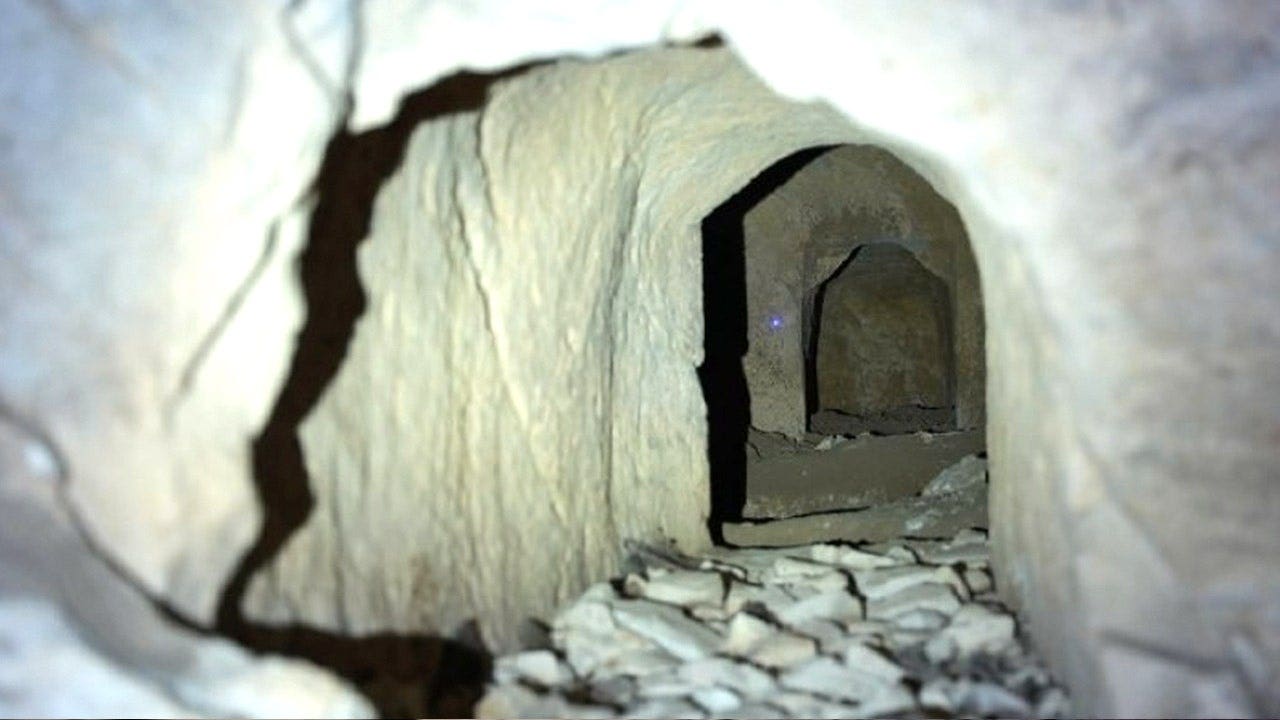
Israeli police recently stumbled on an ancient burial cave in an unlikely place while carrying out an operation in Jerusalem.The discovery was announced by the Israel Police, Israel's civilian law enforcement agency, on Aug.24.While carrying out an operation related to what police described as a "violent family conflict" in Silwan, a village in East Jerusalem, officers came upon the cave.ARCHAEOLOGISTS MAKE UNUSUAL FIND NEAR SITE WHERE ARK OF THE COVENANT WAS ONCE KEPTThe operation followed a deadly clash between feuding families that erupted into gunfire and Molotov cocktail attacks, according to The Jerusalem Post.The violence prompted police to launch an operation aimed at locating those involved in the conflict.Israeli police recently discovered an ancient rock-cut burial cave while carrying out an operation in Jerusalem's Silwan neighborhood.
(Israel Police)"As part of the activity, Jerusalem Border Police officers conducted searches in Silwan and accompanied government authority representatives at a compound where individuals involved in the incident reside," police said in a translated statement.Officers then found the burial cave beneath a building — along with other "archaeological finds."ANCIENT GOLD RING UNEARTHED AT GRAVE CARRIES 2,000-YEAR-OLD SECRET MESSAGE"Representatives of the Israel Antiquities Authority arrived at the scene, and an initial examination indicates that the graves date to the Second Temple period," police said."Security forces are securing the scene to allow for the continued handling and examination of the finds."Israeli police said security forces secured the archaeological site so authorities could continue examining the newly discovered finds.(Israel Police)Rock-cut burial caves were commonly used as family tombs in Jerusalem during the Second Temple period, though officials did not provide a more precise date for the newly discovered graves.CLICK HERE TO SIGN UP FOR OUR LIFESTYLE NEWSLETTERThe Second Temple period lasted from...