

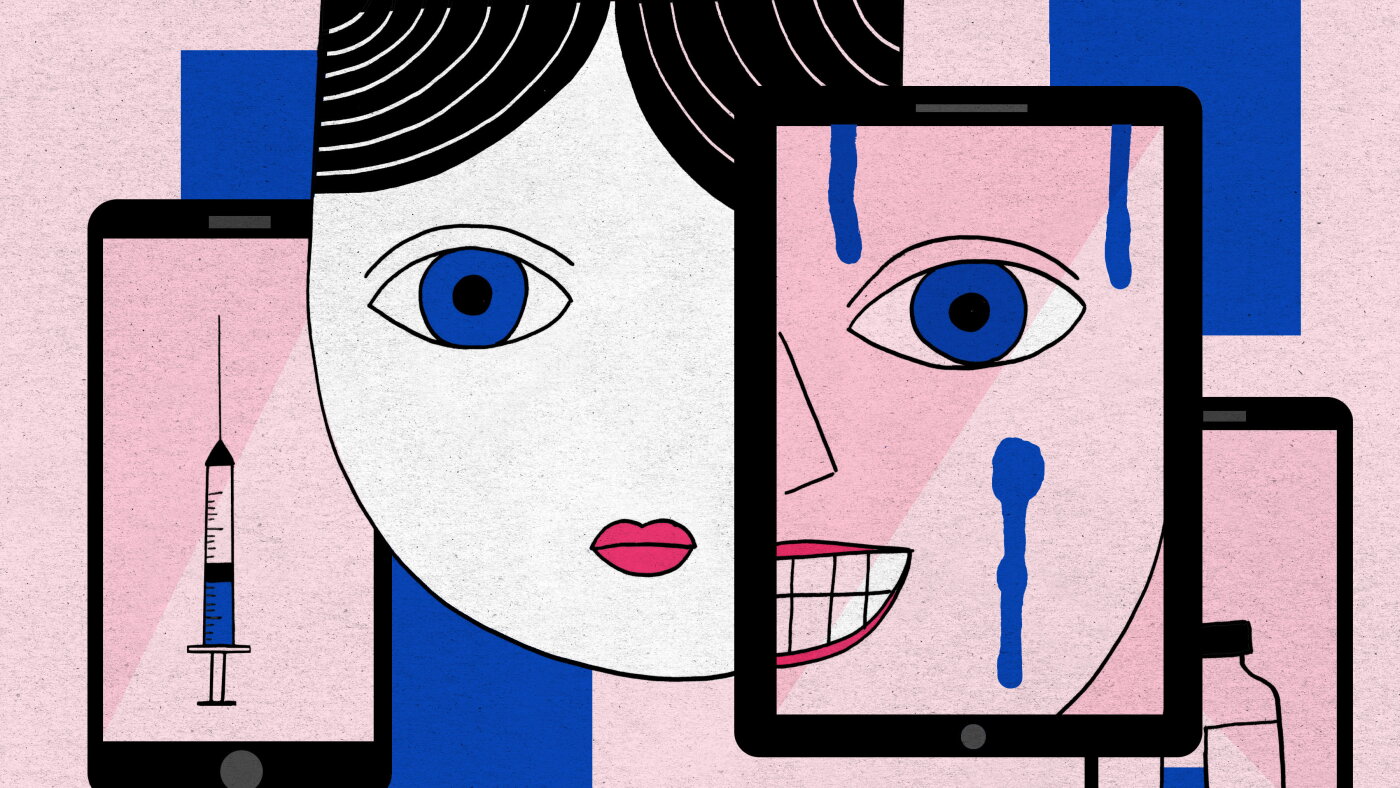
Copper peptides have become the darling of social media skin care hacks.People are smearing the electric-blue tincture on their face or drawing the concoction up in syringes.The compound, known as GHK-Copper, or simply GHK-Cu, has gained a massive following because of claims it can deliver firm and wrinkle-free skin, better hair and other anti-aging benefits.The interest, in part, reflects the broader peptide-craze that has increasingly entered the mainstream wellness and longevity space.As with many of these trendy peptides, GHK-Cu isn't an approved drug, but it does have considerable scientific research behind it.
Topical copper peptide serums and creams have been on the market for decades and studied in human trials.What has changed recently is how people are administering this peptide: Instead of slathering it on their face, many are opting to take it as a subcutaneous injection.Sometimes it's "stacked" with other peptides that are promoted for tissue repair and anti-aging.There is no data from published human studies to show this practice is safe and effective.
And the risks are compounded by the fact that many people are sourcing the injectable formulations from a grey market of online sellers."I think GHK can have a major role in helping enhance longevity," says Dr.Warren Ladiges, a professor at the University of Washington School of Medicine who has been involved in studying the peptide for many years."But injecting yourself without really knowing what it's going to do? I wouldn't do that to myself," he adds.Despite the recent surge in popularity, the peptide has a history that stretches back more than fifty years.The focus on skin healthIn the early 1970s, a chemist named Loren Pickart first isolated GHK – a string of three amino acids Glycyl-L-histidyl-L-lysine – after noticing that bathing liver cells in the lab with plasma from younger adults helped revive them.By collecting blood from medical students and comparing it to their older professors, h...