


Salvadorans with TPS dont know how long their protections will last. Dont panic, advocate says.
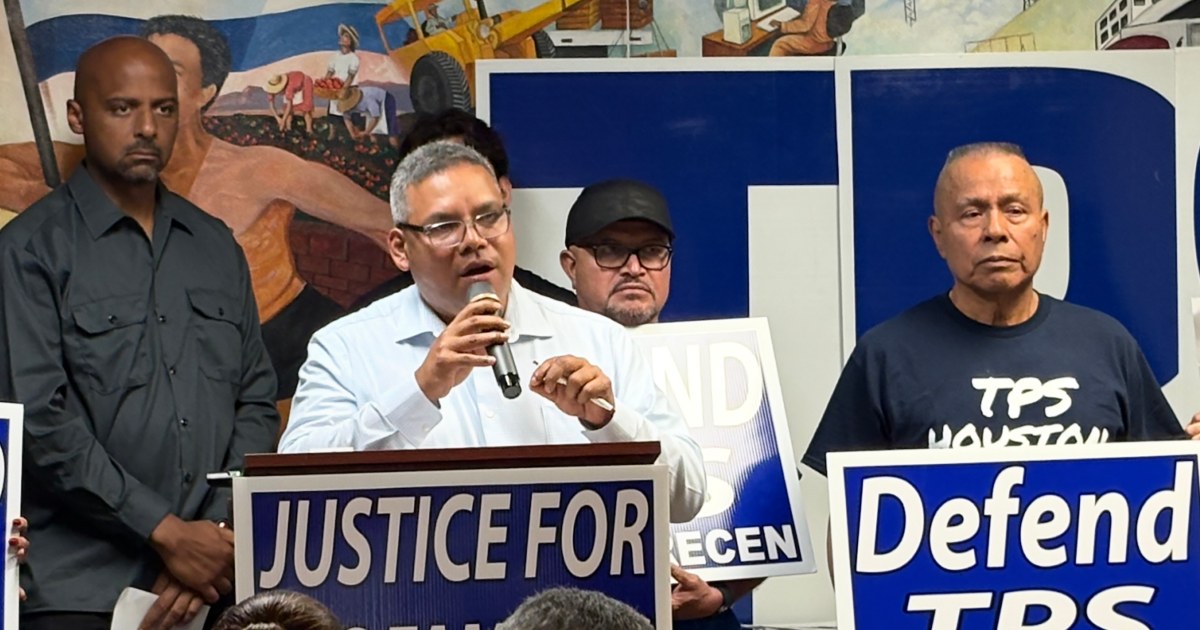
HOUSTON — José Palma’s face lights up when he remembers leaving El Salvador in 1998 at the age of 23 for the U.S., with the dream of working, learning English and building a family.Twenty-eight years later, his life is divided between paperwork, community hearings, and a family full of love and varying immigration statuses: Palma, who lives in Houston, has U.S.
citizen children — two of whom are still young — and a wife who’s a legal permanent resident, and he’s a beneficiary of Temporary Protected Status, which allows eligible immigrants from certain countries to live and work in the U.S.without fear of deportation.
As the national coordinator of the National TPS Alliance, Palma has been answering a lot of questions from Salvadorans with TPS: Their immigration protections were set to expire last week, but the Department of Homeland Security announced that Salvadorans will retain TPS protections — including work authorization — for now until an announcement is made at a later date.But there’s uncertainty among Salvadoran TPS holders about what could come next and what happens now with work permits or driver’s licenses that have expired or are about to expire.
Immigrants from countries that have lost their TPS designation, including Haiti and Nicaragua, have lost their work permits and ability to be in the U.S.legally, and they face deportation.
Palma has lived under TPS protection since 2001.“Everything we’ve built is in danger of collapsing,” he said.“Twenty-five years is not a short time.
It’s a lifetime.”Palma said that amid the uncertainty, Salvadoran TPS holders and their families have been dealing with real consequences: People are being asked not to return to work by their employers, families fear the loss of their health insurance and parents are unsure if they will be able to continue driving vehicles in the United States.Advising cautionPalma recommended one thing to Salvadoran TPS beneficiaries: “Don’t panic or ...