


Ancient teeth pose a mystery: What made those strange grooves?
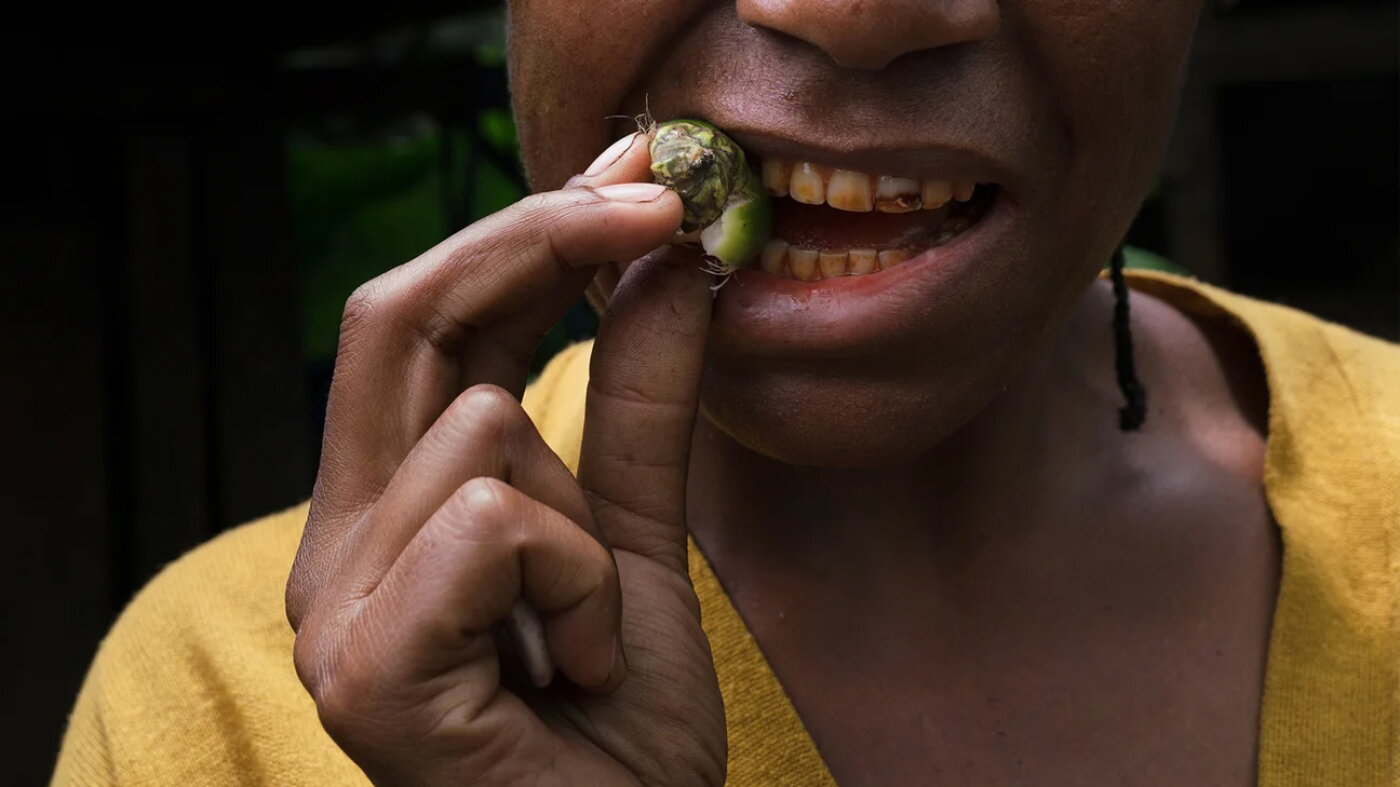
About 600 million people today chew on betel nuts —- the brownish green seeds of certain palm trees that are about the size of a walnut.Betel nut users say they get all kinds of benefits — relief from indigestion, fresh breath, an energy boost.The medical community notes that long-term betel nut use can damage teeth, increase the risk of heart disease, and lead to oral cancer due to the chemicals within.Still, many people in Asia and the Asian Pacific are addicted to chewing them.
Betel nuts are considered the world's fourth most commonly used mind-affecting substances, after tobacco, alcohol and caffeine. A new study, published in Science Advances, finds this love affair with betel nuts is nothing new.In fact, it's likely very, very old.
By looking at ancient teeth, researchers uncovered what they think is an early stage in the practice, when hunter-gatherers had a habit of sucking on betel nuts, possibly for their painkilling effects. "It's a chance archaeological discovery that reveals an initial stage in the development of this common drug used today," says Adam Brumm, a professor of archaeology at Griffith University in Australia who led the research, "We think it might have started with hunter-gatherers just sucking on the nuts, almost as though they were gobstoppers."Outside researchers find the evidence compelling though not conclusive — and further note that drug use has longstanding and deep roots among humanity: The instinct to experiment and expand our horizons with substances is part of human nature, says José Capriles, associate professor of anthropology at Penn State University, who has found drugs used by humans a thousand years ago in South America.How did scientists uncover this ancient betel nut usage? The answer involves two puzzling sets of teeth, fake saliva — and some personal experimentation.On an archaeological dig in Sulawesi, an island in modern-day Indonesia, Brumm and his colleagues excavated some very old human remains.They...