


A Supreme Court battle over whether certain noncitizens with criminal records are entitled to bond hearings during lengthy deportation proceedings could become a public safety concern by making it harder for the federal government to keep some detainees behind bars, legal experts warn.The Trump administration is asking the justices to take up Genalo v.D.C., a case involving a Dominican citizen with four criminal convictions who has been detained by Immigration and Customs Enforcement while fighting removal.The dispute centers on a Second Circuit precedent requiring a bond hearing when mandatory immigration detention becomes "unreasonably prolonged." At that hearing, the government must prove by clear and convincing evidence that the detainee poses a flight risk or danger to the community.MACHETE-WIELDING MS-13 GANGSTER WANTED FOR MURDER WALKS FREE AFTER BIDEN-APPOINTED JUDGE RELEASES HIM: DHSChad Mizelle, chair of litigation at the America First Policy Institute and a former acting associate attorney general and Justice Department chief of staff, told Fox News Digital the implications extend beyond immigration law."We are talking about criminal aliens here," Mizelle said.
"Those are individuals who have been accused of or convicted of an aggravated felony.Accused or convicted of murder.
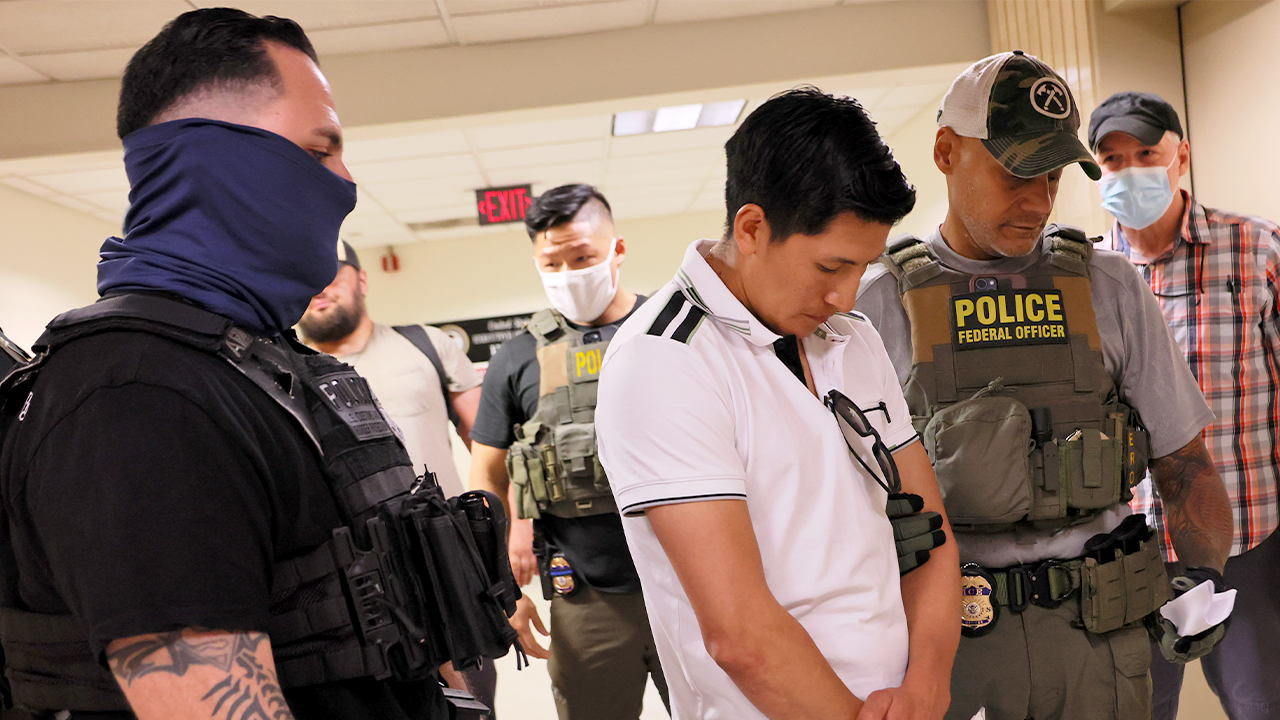
Accused or convicted of child rape.Accused or convicted of grievous harm upon another human being."Federal agents detain a man after attending a court hearing in immigration court at the Jacob K.
Javitz Federal Building on June 30, 2025 in New York City.((Photo by Michael M.
Santiago/Getty Images))"So these are the worst of the worst individuals," Mizelle continued."Do we want those individuals walking the streets, re-committing, harming other individuals?"Mizelle argued Congress imposed mandatory detention on certain noncitizens with criminal records to keep them detained during removal proceedings, while the Second Circuit’s prolonged-detention rule could incentivize some de...