


Cathy Tie, the founder and CEO of Origin Genomics, replenishes nutrients sustaining cells the New York City startup is using to test its technology for repairing defective genes.Mackenzie Calle for NPR hide caption For stories on the science of healthy living, subscribe to NPR's Health newsletter.Cathy Tie slips on a white lab coat bearing her name and the logo of her startup: Origin Genomics.
"Welcome!" she says as she leads an NPR reporter, photographer and videographer on an exclusive tour of Origin's labs located in New York City.Tie, CEO of Origin, asked NPR to withhold the exact location for security reasons."We'll head into the lab," she says.
Once inside, Tie snaps on a pair of blue rubber gloves and points to a gray metal tank on the floor that looks like a giant thermos."This is a cryogenic storage unit that has liquid nitrogen inside, which is where our embryos are stored," she says.Tie twists open the black lid, letting wisps of white fog from the liquid nitrogen swirl out from the tank.
Tie gently slides out a long metal rod cradling frosted glass tubes at the end."So as you can see, there's four tubes in here," Tie says."Each tube can contain up to 10 embryos." Tie pulls out frozen human embryos carrying disease-causing mutations from a cryogenic storage unit at Origin Genomics new labs.
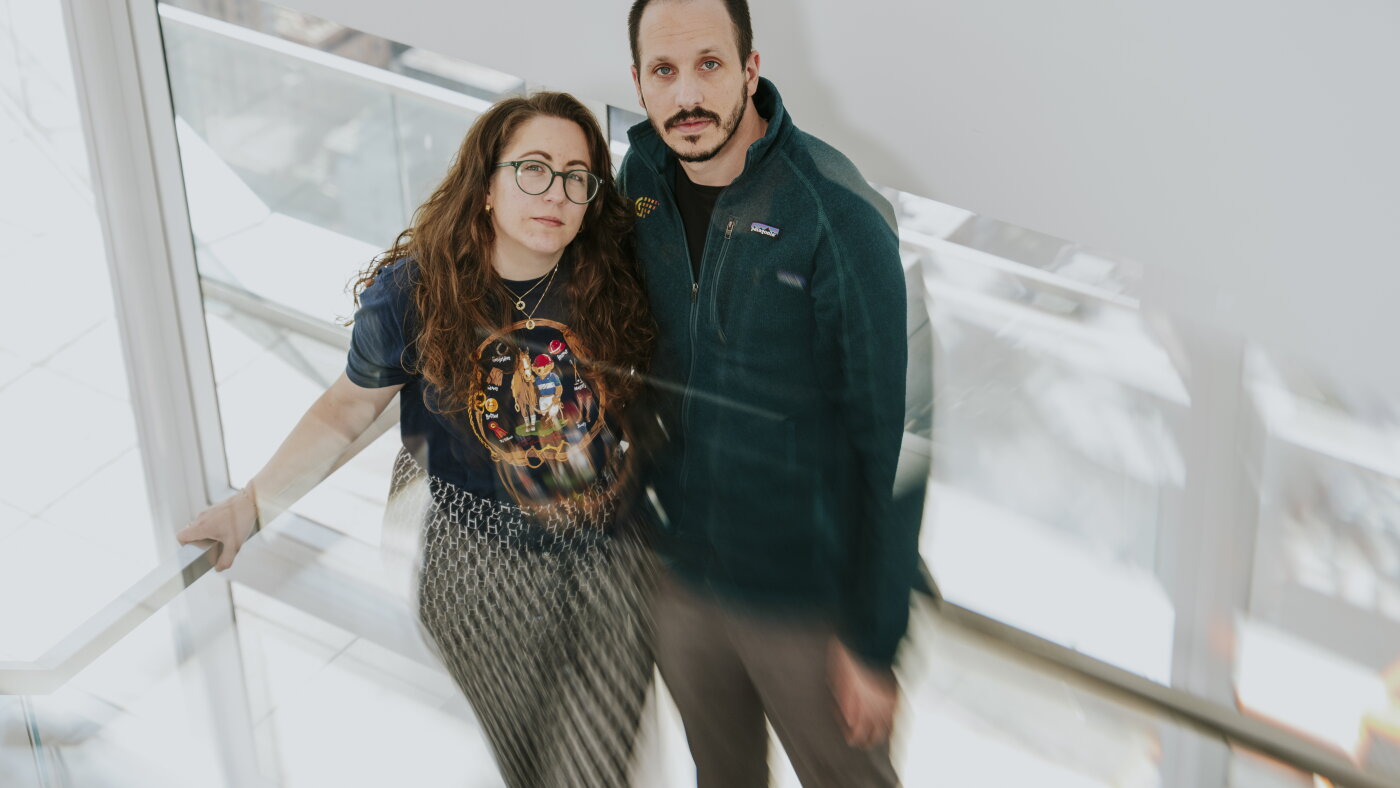
Mackenzie Calle for NPR hide caption These embryos were donated by couples whose families have been plagued for generations by life-threatening genetic disorders.Later, a wife and husband who donated some of those embryos tell us about their dream of having healthy children with the help of gene editing.But first, Tie explains how Origin's scientists extract stem cells from the embryos to test the company...