


The U.S.Supreme Court on Thursday allowed New Hampshire officials to reject student IDs as a valid form of identification when voters cast their ballots in next month's midterm elections.A lower court judge previously found that state officials had improperly gone further than a new law restricting the use of student IDs to obtain a ballot, ruling that officials still had to consider student IDs alongside other evidence when voters lacked other means of verifying their identity.But the Supreme Court took issue with the judge intervening this close to the elections.ARIZONA VOTER LAW FIGHT REACHES SCOTUS AS ELECTION GROUPS WARN ‘ABSURD’ CONSEQUENCE COULD ENSUEThe U.S.
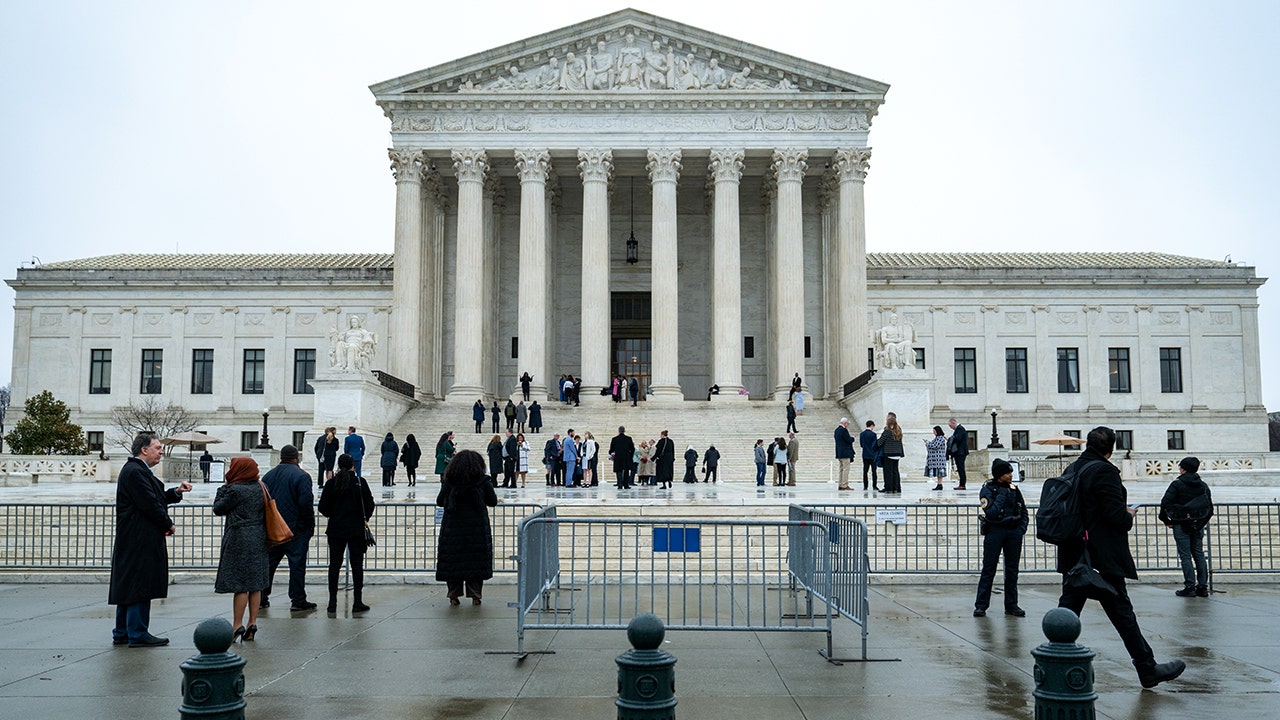
Supreme Court allowed New Hampshire officials to reject student IDs as a valid form of identification when voters cast their ballots.(Annabelle Gordon/Bloomberg via Getty Images)The high court has said orders handed down too close to an election can cause voter confusion, an idea known as the Purcell principle.
The court cited the recent legal back-and-forth over Missouri’s redistricting maps."Here, the District Court did not point to anything that would justify deviating from that principle," the majority wrote in its opinion.Justice Ketanji Brown Jackson dissented, saying the rule did not apply since the lower court judge was helping ensure the public received accurate information.JACKSON RIPS INTO SUPREME COURT COLLEAGUES' 'SERIOUS LEGAL ERROR' ON TRUMP MAIL-IN VOTING ORDERThe high court has said orders handed down too close to an election can cause voter confusion.(Graeme Sloan for The Washington Post/Getty Images)"When a federal court determines that material misrepresentations are being made about a State’s election rules, an injunction to prohibit that conduct does not contribute to public confusion, it prevents that very problem," Jackson wrote.
"I would not disturb a clearly justifiable federal-court order issued to ensure that the public receives accurate information about a State’...