


Why even a fraction of a degree can escalate climate change impacts
Countries have gathered at the annual climate change negotiations at the COP31 summit in Turkey to discuss how to achieve a goal that is increasingly unachievable.A decade ago, countries agreed to limit climate warming to 1.5 degrees Celsius (2.7 degrees Fahrenheit).
Now, that goal is out of reach.Globally, average temperatures are already close to 1.5 degrees Celsius warmer than they were before the Industrial Revolution.Heat-trapping emissions from burning fossil fuels are still rising in the atmosphere, and most countries are not on track to meet their climate pledges to cut emissions by transitioning to cleaner energy.The best-case scenario for the planet is now 1.7 or 1.8 degrees Celsius of warming (roughly 3 degrees Fahrenheit), according to a recent United Nations study.
If fossil fuel emissions stay on their current path, the world would be around 2.8 degrees Celsius (5 degrees Fahrenheit) hotter by the end of the century.While the difference between 1.5 and 2 degrees Celsius may seem tiny, scientific research shows those increments can produce dramatically different outcomes for the planet.More warming raises the risk of extreme weather globally and could lead to the collapse of some of the planet's most sensitive ecosystems.
Loading..."The crucial point is that every fraction of a degree matters," says Tim Lenton, climate professor at the University of Exeter.
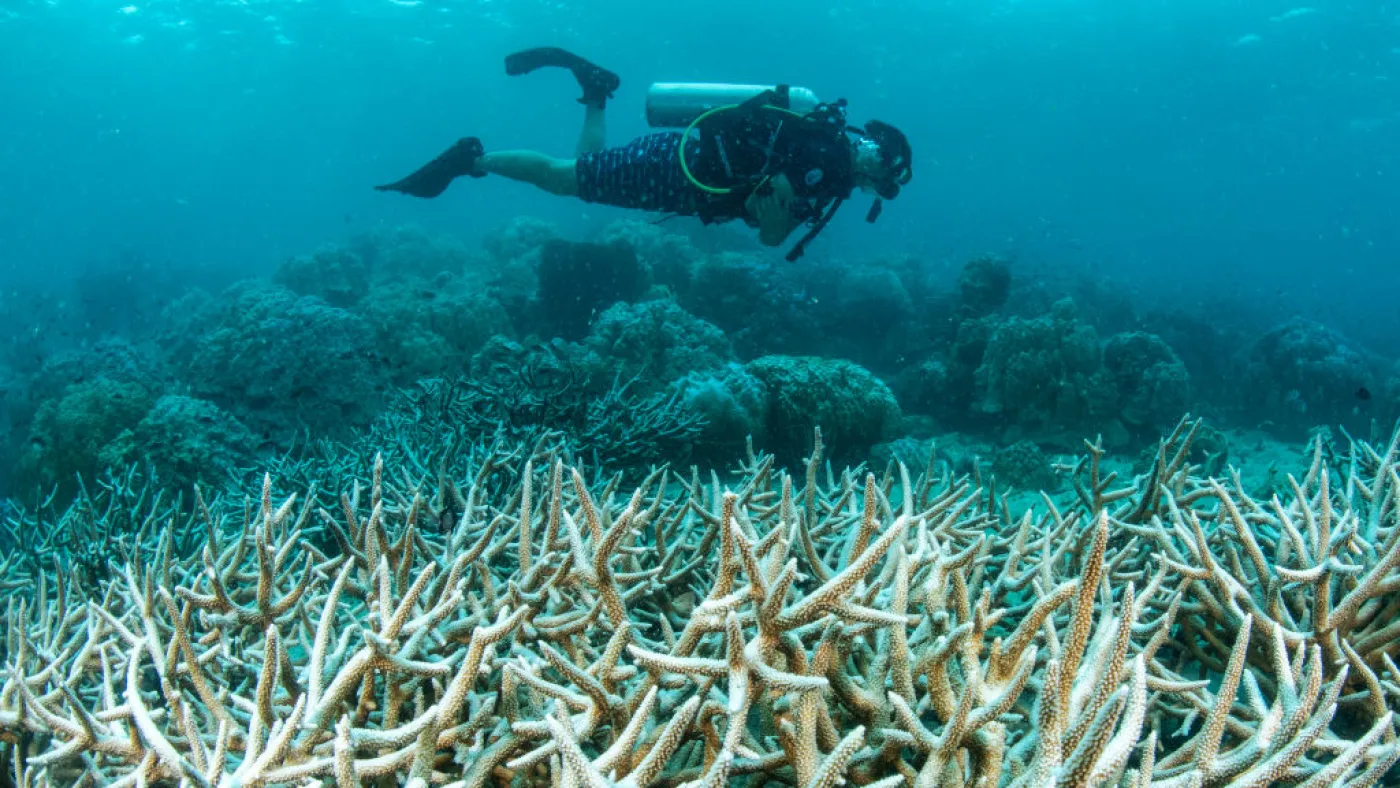
"Every fraction of a degree that we avoid is really able to do a huge amount of limiting harm."Corals are architects of an entire ecosystem.As they grow, they create the framework that supports vast numbers of other species, making reefs biodiversity hotspots.
They're also vital to hundreds of millions of people who depend on them for food and livelihoods.Corals are also highly vulnerable to heat.Prolonged marine heat waves cause corals to bleach, turning them white, which can eventually kill corals.
Since the late 1990s, there have been four global bleaching events.With a historically strong ...