


Commentary: How SoCal became the nation's dairy queen
This is read by an automated voice.Please report any issues or inconsistencies here.
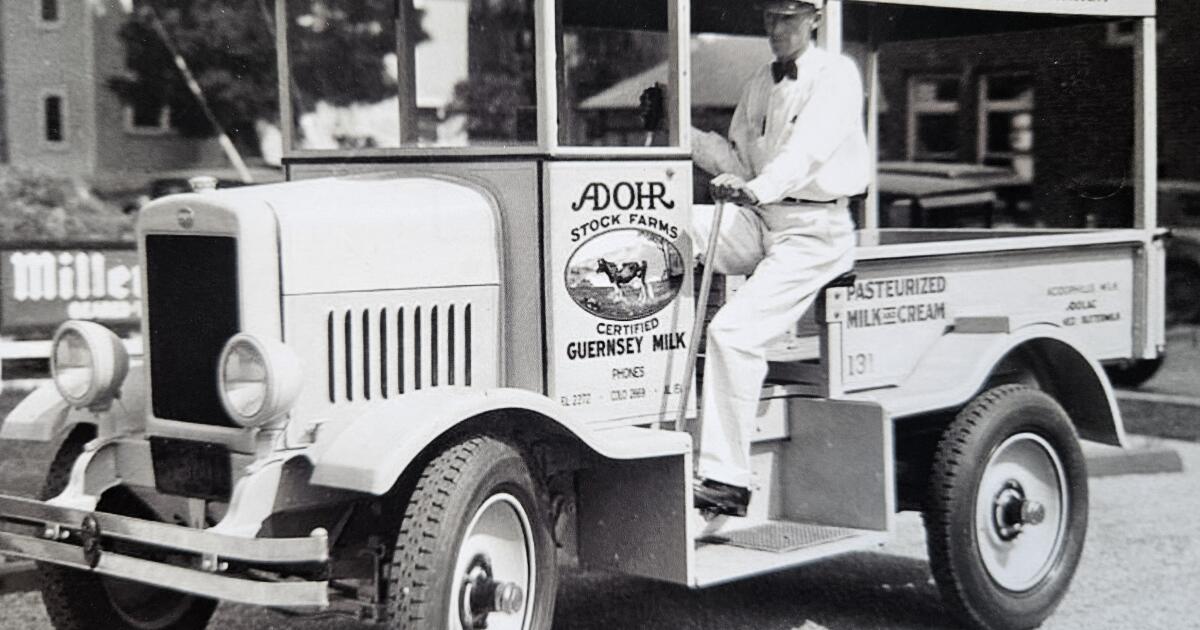
Got milk?If you’d asked that question around Southern California even into the 1950s, the answer would have been a big full-dairy-fat “yes,” pails and gallons and maybe even acre-feet of milk.As the 19th century turned into the 20th, hundreds of thousands of cows were living on hundreds of small dairy farms cast across the broad plain of what is now crowded with homes, streets, businesses and freeways.Dutch, French, Portuguese and Belgian families each kept a few, a dozen, or a couple of hundred milk cows on land that’s now too expensive even to keep chickens.
The Lescoulies’ cows were in Venice; a Mr.Martin kept his on Primrose Avenue in Hollywood, where the early farmhouse was lately priced at about $2 million.These little farms sold their milk to dairies that bore wonderful names like Calla Lily, in Glendale, Golden Poppy, in Downey, Santa Monica Dairy, in Venice, and Baldy View dairy, in Whittier.Within a few decades, in Southeast Los Angeles County, cows outnumbered people by as much as 30 to one.
The place we now know as Cerritos was once named “Dairy Valley” and was home to not quite 3,500 people and 100,000 cows.The community we know as Cypress was, until 1956, called “Dairy City.”A few of those dairy operations survive today.Los Angeles is a complex place.
Luckily, there's someone who can provide context, history and culture.By continuing, you agree to our Terms of Service and our Privacy Policy.
Why bring our dairy history up now?Because both President Donald J.Trump and his Health and Human Services secretary, Robert F.
Kennedy Jr., are on a dairy kick.They’ve stood the longtime food pyramid on its pointy head, instead promoting lots of meat and whole milk foods over a healthier diet grounded in whole grains and vegetables.The U.S.
Agriculture Department has posted an image of Trump leaning forward on his knuckles on the Oval Office desk, a bel...