


Review: Sylvia Plath haunts 'Sylvia Sylvia Sylvia,' an ambitious but shapeless new work, at Geffen Playhouse
This is read by an automated voice.Please report any issues or inconsistencies here.
Poor Sylvia Plath has found little rest in the afterlife.The New Yorker’s Janet Malcolm had choice words for the army of Plath’s biographers.She likened this species of writer to “the professional burglar, breaking into a house, rifling through certain drawers that he has good reason to think contain the jewelry and money, and triumphantly bearing his loot away.” Plath, the deserted wife of fellow poet Ted Hughes, mother of two young children, died by suicide at age 30, leaving behind a collection of poems that anatomized her mental descent in scorching language that secured a permanent place in American letters.
More than 60 years have passed since her death in 1963, yet the literary myth that has taken the name Sylvia Plath lives on.I confess I’m not impervious to the posthumous allure.
When visiting friends who were staying in the Primrose Hill area of London a few years ago, I would pass by the flat that Plath shared with her husband there and stare wonderingly at the town house, adorned with a blue plaque commemorating its former resident.“Sylvia Sylvia Sylvia,” a new play by Beth Hyland that opened Thursday at the Geffen Playhouse, is set in a different apartment that the couple shared.This cozily claustrophobic home is located in Boston’s historic Beacon Hill district in the period before they had children and were striving anxiously to realize their early promise.
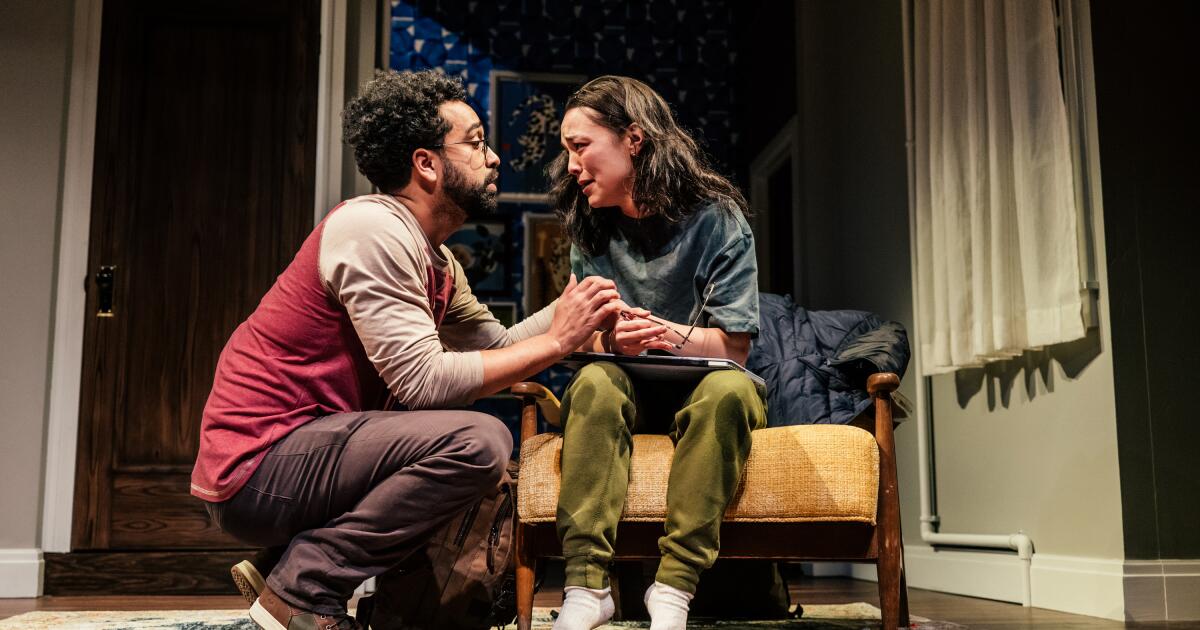
As Sylvia (Marianna Gailus) and Ted (Cillian O’Sullivan) confront the problems that will eventually drive them apart, two contemporary married writers who have taken up residence at the Boston address grapple with many of the same issues (marital discord, competitive egos and mental health woes) as their more famous literary predecessors.World premieres are risky, and the writing for this one hasn’t yet settled.The play’s split focus, moving between 1958 and the present, is a sign of con...