


Robots have gotten very good at moving fast, repeating steps and doing jobs that would wear you and me out.But ask a robot to pick up something delicate, oddly shaped or slightly different from the last item it handled, and things can get a little complicated quickly.That is where a new collaboration between ABB Robotics and PSYONIC comes in.
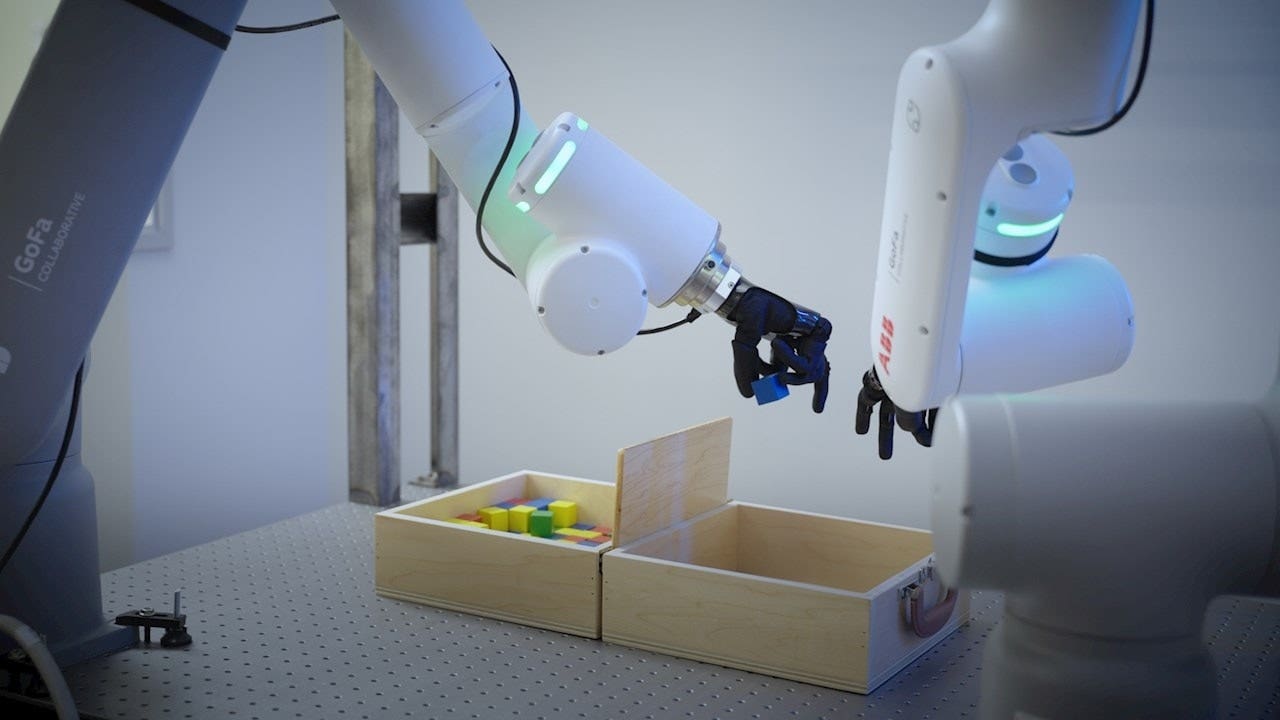
ABB Robotics is working with PSYONIC, a California bionics company, to explore whether real-world touch and motion data from human prosthetic use can help train robotic arms.In other words, the same kind of bionic hand that helps a person grip a tool, pick up a fragile object or adjust pressure in real time could help teach robots how to do those tasks better.Sign up for my FREE CyberGuy ReportSOFT ROBOTIC ARMBAND GIVES PROSTHETIC HAND USERS NATURAL CONTROLThe PSYONIC Ability Hand can capture touch, motion and grip-force data from real human prosthetic use.(ABB Robotics)The collaboration centers on PSYONIC's Ability Hand and ABB's GoFa cobot.
The Ability Hand was originally developed for prosthetic use.It has multi-articulating fingers, pressure sensors, vibration feedback and flexible mechanics that help it conform to irregular objects.
That combination is important because human grip isn’tt one fixed action.You hold a coffee cup differently than a screwdriver.
You handle an egg differently than a phone.Most of us do that without thinking about it.For robots, that instinctive adjustment is hard.
ABB and PSYONIC want to explore how movement, contact and grip-force data from the Ability Hand can help train robots to handle objects that are fragile, uneven or unpredictable.ABB's GoFa cobot brings the industrial side of the equation, offering the accuracy and repeatability needed to test those movements in a controlled way.
The result could be a robot arm that learns from real human handling data, then applies that information to factory and warehouse tasks.Industrial robots can already lift, move, weld, sort and assemble ...